
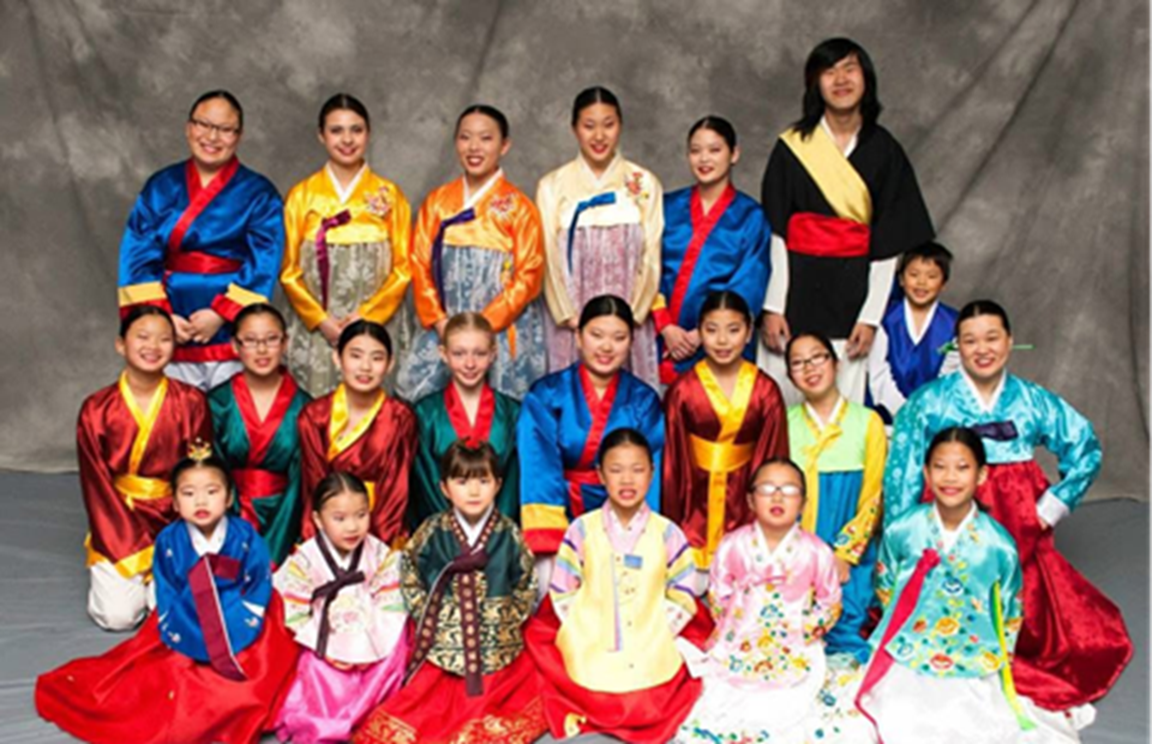
Figure 1: Jae Nelson (dressed in blue in the upper right hand corner) alongside his Korean drumming peers. Jae is ethnically Korean, but was raised in Chinese immersion.
By Jenny Liang, Associate Reporter at China Insight
An (asterisk) * depicts that the interviewee’s name has been changed for their privacy.
All pictures provided property of the interviewee.
“Was I wanted? Do they [my biological parents] want to find me?” Rachel Yang confessed her years of personal turmoil to me. Each time she thinks about her birth parents, she is flooded with grief.
“Ongoing consistent grief.”
Her papers indicate that she was abandoned in a cardboard box at the doorway of an orphanage. Rachel was a week old, and her only belongings were old cotton clothes and a note scrawled with her birthday.
When I asked the young woman if she ever had a crisis of identity, she laughed. “That’s my whole life.” As a Chinese adoptee raised in a majority homogenous setting, Mrs. Yang envied her Caucasian friends, wishing she looked more “European.”
For much of her life, a question constantly haunted her. What am I? Who am I really?
This makes me wonder – how does Yang’s experiences match with other Chinese adoptees?
In my last article, I discovered how the featured interviewees, who were raised fully or mostly in American culture, had varied experiences with identity and cultural dysphoria. Nonetheless, they all regretted not being more involved with their heritage. All three wished they were able to speak Mandarin.
In the second article of this series, I continue highlighting the stories of Chinese adoptees who were raised immersed primarily in American culture. What were their experiences? And what regrets do their families have in regards to their cultural upbringing? For the parents, I wanted to know why they chose to adopt a child from China, and the unique challenges they faced raising a son or daughter from another cultural background.
These adoptees understand varying amounts of Mandarin, and some were involved in cultural activities.
Rachel Yang
Rachel was adopted from Dangyang, a Hubei city located on the banks of the winding Yangtze river. Besides housing ancient temples and stunning scenery, the city is also known for being the global hub for spectacles and glasses (China Travel Note).
Over two decades ago, Yang was found outside a city orphanage and institute for children and elderly residents. According to Rachel, the elderly helped care for the children. The girl was in foster care for around a year until she was adopted by older German-American parents through Christian Services, an adoption agency. Rachel has two younger sisters, all adopted from different areas in China.
“My parents weren’t able to have kids and wanted to adopt at some point.”
When I asked her why they chose to adopt from the People’s Republic of China, she hesitated. “I’m not sure. I believe China is more open to international adoption.” Her parents were concerned about the realities of having an interracial family and felt more comfortable with Chinese children. They wanted healthy children under the age of two, which essentially “limited it to girls,” as available boys often had physical defects.
The whole process took around a year after her parents submitted the paperwork. They were issued personality assessments by the social workers, and the Chinese matched their personality and age with Rachel. The process for her middle sister took under a year, while her youngest sister took six years.
Noticing my bewildered expression, Mrs. Yang explained that Chinese international adoption became very popular. “There were stacks and stacks, and my parents were at the bottom.”
Her first memory, Rachel told me, was when her parents were leaving the United States to adopt her middle sister. “I was excited to have another sister from China like me,” she shared. She was attached to her parents, and she would cry in distress during the two weeks they were gone.
Rachel Yang remembers going to the store and picking up a little bunny rattle for her sister. When the family was reunited, Rachel gave her bunny rattle to her sister.
She threw the rattle back and began to cry.
Then, the sisters both started crying.
Luckily, Rachel said, they became good friends after.
Since her adoption, Rachel returned to China once, when she was ten. The experience was utterly surreal, Rachel mentioned. While they were touring the Forbidden City and enjoying the food, she realized something weird:
“Everyone looked like me. My parents were the ones that didn’t fit in appearance-wise.”
Growing up in the suburbs of Minnesota, Rachel always knew that she was adopted. Her parents told them their stories and read books on adoption, where they learned adoption happened over a course of time. “I used to think that every kid was adopted. I thought that was how kids came to be.”
“You just went to an orphanage and picked up a kid.”
After she learned that most kids weren’t adopted, Rachel then came to the logical conclusion that every Chinese child was adopted. Her parents had to walk her through the process and it took until she was eight or nine years old to truly understand. “It was not rare but unique.”
Rachel took Chinese classes in grade school casually. Her parents attempted to learn Chinese without much success. In high school, she took a year of Mandarin. “For language credit,” Yang admitted sheepishly. She also tried to pick up some phrases on YouTube.
When I asked her to rate her fluency, Rachel Yang estimated it was “one or two out of ten.” She can speak some tones, although they “might be a bit wonky,” and can pick up on some things during Mandarin movies. In contrast, her younger sisters aren’t interested in learning and want to move on from their past.
Rachel has always had a positive relationship with her parents. Rachel’s parents tried their best to immerse their children in their culture of origin. When she was a child, the family would attend Chinese Hospitality Center potlucks with international students, so the children could be around Chinese people and international students. “It was the main way we had Chinese culture around us.” Her mom attempted to learn Chinese cuisine and her parents tried to learn some Chinese as well.
“My dad was not good at all.” She winced. “He accidentally told a Chinese waiter 我爱你 [I love you] instead of 谢谢 [thank you] once.”
Although there was no shortage of Chinese culture around her, the Chinese language incorporation decreased year-by-year.
In high school, Rachel had a deep identity crisis, where she felt torn between the White American mainstream culture and her Chinese ethnicity. Her childhood naïveté morphed into feelings of loss. Before she was adopted, she was starting to speak Mandarin. “Now,” Rachel told me sadly, “that’s completely lost.” Her knowledge of her culture is entirely secondhand. Even though adoption is largely seen as a positive, “there are hard things about it.” Reflecting on her adoption, Yang says, spurs mixed feelings, including feelings of gratitude. “It was a good thing that came out of a bad situation.”
Just like her roots, Rachel Yang has a “complicated” relationship with China: Although she would love to go back and get to know locals without a cultural barrier, she has harsher feelings towards the government and the harm they caused to her and other adoptees. Her adoption, Rachel says, likely happened because of the One Child Policy and the resulting preference towards boys. The government had no remorse towards the innumerable abortions and femicides that occurred, only scrambling to make policy changes once the national demographics were affected. Nor did they reach out to displaced adoptees for a chance towards reconciliation.
“It feels like we got swept under the rug. Not recognized or even acknowledged.”
When she hears Chinese around her, and when Mandarin speakers expect her to speak Chinese, she finds it understandable. Nonetheless, Rachel gets a twinge of sadness, a “disappointment kind of hurt.”
“It feels like I’m letting them down.”
It’s more hurtful when non-Chinese individuals expect her to speak the language, especially when she is with her Scandinavian husband or her parents. The preconception stings – why were they expecting her to speak another language? Why didn’t they think that maybe she couldn’t speak Mandarin?
Even in the US, people stared at her in her homogenous small town, spoke English slower to her, and she got questioned more in Government buildings. While she acknowledges the treatment is likely ignorance, the lengthy and continued history of unpleasant experiences makes it far more than coincidental.
It was a long journey for Rachel to accept her complicated roots and to embrace both identities. “I get to enjoy both parts of myself! “Finding out it honestly didn’t matter freed me.”
Rachel majored in human development at North Dakota State University (NDSU), where she found it fascinating how humans change over time, and how environments mold physical biology. Her dad went to NDSU, and she met her husband at college as well. Surprisingly, she notes that she gets stared at a lot less in Fargo compared to her rural Minnesota hometown.
Her husband has been very supportive of her journey towards identity. Even though he doesn’t understand her struggles, he joins Rachel in making Chinese food and celebrating holidays. In return, Rachel joins in his Finnish heritage. Funny enough, her husband’s biggest regret is his loss of the Finnish language.
Nowadays, Rachel uses Youtube to hear native speakers and learn about cultural nuances and perspectives. It sounds more natural, instead of the “robotic” language from the textbooks. She still has Chinese books from grade school and now has been teaching her husband how to speak Mandarin.
She smiles, noting how much of the language has stayed in her head.
“It’s definitely hard to do it by myself. I’m not sure if I would do actual language learning – I don’t want it to be work. I want it to be something I enjoy learning, to keep up a positive connection with language.”
Rachel’s yearning to find her birth family has garnered mixed reactions from her family. While her father is very supportive of her search for her birth parents, her mother is less enthusiastic. Nonetheless, she doesn’t impede it and provides documents when Rachel requests them.
“My husband is supportive, but concerned about my safety while searching. He errs way more cautiously.”
In her search so far, Yang has placed her DNA results in databases, and created a searching poster through a searching organization. A searching poster, she explained, is an informational graphic that is plastered around the province where an orphan was discovered and posted on the Chinese web. The poster has basic contact information, pictures, and where they were discovered.
She joined the Hubei group poster. While joining a group poster with a nonprofit was free, Yang explains, you can hire a searcher or have a poster professional made. When I asked if she would dig deeper and try other avenues, Rachel paused. She had concerns with the geopolitical state of the world, especially with the People’s Republic of China closing transnational adoptees. She would potentially try other avenues, although that is currently on hold.
“It is interesting that Chinese adoptees are now a set demographic [with closed transnational adoptions.] We won’t grow in size anymore. Our identities and experiences are now limited and set in time, like a slide out of history books.”
While she is happy that Chinese children in orphanages won’t be taken out of their birth culture, she sadly notes that their adoption chances are quite low. “It’s sad for families with referrals [who missed the adoption window].” Even so, Rachel noticed the presence of parental entitlement. The attitude of “saving children” was probably not the best lens to view transnational adoption.
Now, Rachel Yang lives in North Dakota as a stay-at-home wife. “I always wanted to be a stay-at-home mom and be at home,” she shared. As an adoptee, Rachel yearns to be a mother and have her own children. “I have no biological relatives. It is very important to have my own children and connection. To have someone related to me.”
Her family, Yang shared, has vastly different personalities and traits. It is painfully obvious that no one is related to each other, but nobody says it. Their different genetics, all being unrelated, is an elephant in the room. “It’s a nature versus nature issue.” How much of their personalities comes from their environment versus their biology? She doesn’t know.
Even with differences, she appreciated how her parents tried their best to “maintain some semblance of Chinese culture in their lives.” They made the best choice in adoption, explaining that it was the “moral choice for them in infertility.” Although her younger self didn’t care much, she now appreciates their efforts in making them learn Chinese, and how they were intentionally exposing them to Chinese people.
“What things did you wish your parents did differently in raising you?”
Rachel sighed. “I wish they were more open about adoption and were more transparent about differences.” She wished that her family had more open communication on how she and her sisters felt about being different and adopted. “I wished they didn’t say that we were made for them, that it was ok we were abandoned, since we could be with them. It wasn’t the best to say.”
Like me, Yang is fascinated with the gray areas, the mysteries of life, nature, and our existence. “Everything isn’t black and white.” She especially finds pregnancy a mystery. Maybe that explains her passion in novel writing and fiction. The deep conflict within her, she explains, helps her connect with stories. “It’s really cool to look back and see characters like me. I gravitate towards characters of Asian descent – I wish I saw that more.”
It’s ok to be both Chinese and American,” she realized. “Being adopted is an identity itself, not a weird side category or bridge. Even though I’m more American culturally, a part of me will always be Chinese.”
“I’m more proud to be Chinese American. It’s really cool to have such a nuanced perspective on issues such as race.” Although she fits the “minority” category, Rachel grew up in the majority culture. This experience, she comments, provides her a chance to see both sides of the same coin.
She hopes to give her kids an opportunity and encourage them to learn about their cultures. “But,” Yang shrugged, “if they don’t want to, that’s fine.”
When I asked what advice she would give other Chinese adoptees, Yang had a powerful message to convey:
“Don’t let any other people define who you are. Being a Chinese adoptee is so unique for each person, only you can tell who you are.”
“What else would you like the readers to know about you?”
“I love pandas. I want to see a panda.”
Rachel has always loved the furry herbivores. She relates to the black-and-white mammals, and has never failed to cry in Kung Fu Panda 2, where Po searches for his origins. And, each time, her husband comforts her, quoting the main message:
“Your story may not have such a happy beginning, but it doesn’t make you who you are. It is the rest of the story, who you choose to be.”
David S. Cairns
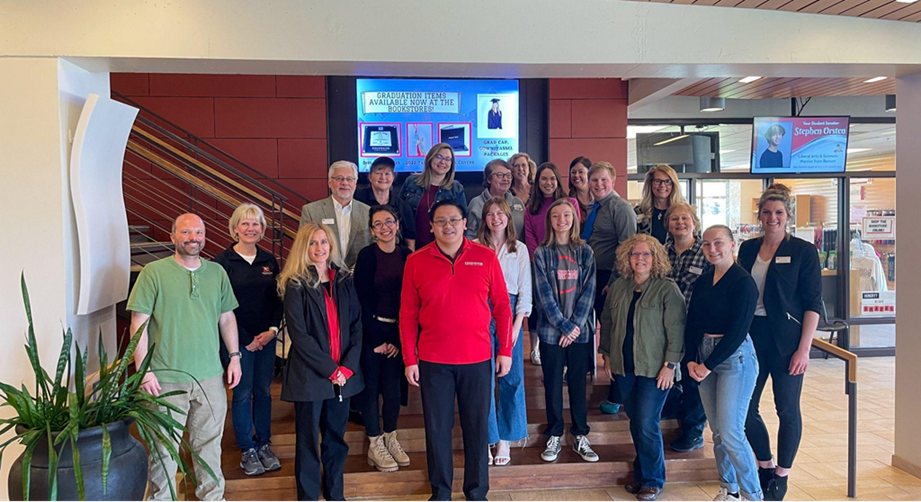
Figure 2: On May 4th, 2022, David (front and center) was surprised by his Ridgewater College friends and colleagues
with a presidential proclamation dedicating an office cubicle in his honor.
David S. Cairns was most recently matriculated at Trinity International University’s Trinity Evangelical Divinity School, where he was enrolled in the Master of Arts in Theological Studies program. He focused on ecclesiastical history, historical theology, and Christian tradition. He graduated alongside me at the University of Northwestern – St. Paul, where we took many of our classes together in the small history department. We also served on student government as senators together. David hopes to serve vocationally as a professor, as a librarian, or as an archivist.
David was adopted when he was eight months old from the island of Taiwan, where he was born into the Ami Tribe. The Ami Tribe is the largest aboriginal group in Taiwan. David told me that he was born in Hualien City, on the eastern coast of the island.
Mr. Cairns has not seen his birth family in living memory. The last time he visited Taiwan was when he was two and his parents adopted another Ami boy from the same orphanage. When he was in the second grade, his birth family sent him a large care package with a handmade Ami cultural costume, a tourist video which could be played in English, some children’s books, and more.
David has never felt a deep desire to contact his birth family aside from general curiosity. “It would be interesting to meet my birth family, but I don’t have a burning desire to do so. I don’t have a void that needs to be filled, nor do I feel like I was stolen.” When he was adopted, his birth mother, who was nineteen and unmarried, wrote a letter to his adoptive parents expressing her desire for ‘东东’ to have a better life than she could provide him with.
Although David isn’t Chinese, I included him in this study because he shared many experiences with the mainland adoptees interviewed. Despite the geopolitical conflicts between the People’s Republic of China and the Republic of China, his story will be focused on his experiences with identity and his upbringing as an Asian-Pacific Islander and adoptee.
“Tell me about your family,” I requested over our breakfast at Mi-Sant. David told me he is the oldest of three adopted children. His brother and sister are also of aboriginal Taiwanese ancestry and were both adopted from the same orphanage as him. According to David, his younger siblings share a birth mother with one another. Despite being raised Protestant Evangelical Christians, all three siblings were adopted through the Roman Catholic adoption agency, Cathwel Services (of the Catholic Welfare Society), and likely share tribal ancestors.
He, like all the other adoptees I interviewed, always knew he was adopted. Although he doesn’t remember how his parents first brought it up, David recalled that they emphasized the fact that they “chose” him and his siblings, and taught them to be proud of their Asian heritage.
In similarity with many I interviewed, the Cairns family were religious, and the parents wanted to instill their understanding of adoption through a Christian context. “They related the concept of being adopted on Earth to being adopted into the Family of God.” Looking back, David believes that was an advantage to him spiritually.
David grew up on a hobby farm in Willmar, which is located in Kandiyohi County, Minnesota. The family originally lived on Eagle Lake, north of the city of Willmar, before moving south of the city to the countryside when David was in middle school. “I never lived inside city limits,” he boasted. Willmar, he says, has the largest Somali-American population per capita in the country, and contains a large Latin-American and a distinct Karen (from Myanmar) presence. “The Willmar area has great diversity and a pioneer spirit.”
Historically, Kandiyohi County was largely made up of Swedish, Norwegian, German, Dutch, and English immigrants. There have even been some Irish and French individuals. More recently, Willmar has become home to South and Central Americans, Somalis, Chinese, Hmong, and Karen immigrants and refugees, among others.
Ever since David could remember, the Cairns household would celebrate their “Gotcha Days.”
In response to my blank stare, David added, “it was the day we were adopted.” They would often eat at a Chinese restaurant, at a restaurant of their choice, or they would make Asian food at home. On their “Gotcha Days,” the children would often don a traditional Chinese hat deemed “the gotcha hat.” They received small gifts, often related to Asian culture.
One time, he joked, his dad got him a Taiwanese history book and a t-shirt that said, “Made in Taiwan”.
David’s family is rather unique. His mom was born in Japan as a missionary kid. His grandparents served as missionaries in Japan for sixteen years. After they graduated from college, David’s parents served as missionaries to China where they taught English to university students. “They were the first white people many Chinese people had seen. Some of my dad’s students would tease him for being pale,” Cairns laughed, “they were paler than he was!”
Growing up with parents who spoke different languages, David admitted that there were occasions when his parents would yell at him in another language. “When I was a kid, I had no idea what my mom was saying, but I knew the phrase for ‘do the dishes’!”
As missionaries to China familiar with East Asian customs, the Cairnses wanted to adopt Asian children. Through Cathwel Services, the couple went to the Taiwanese Jonah House, the orphanage where they ultimately adopted David and his two siblings.
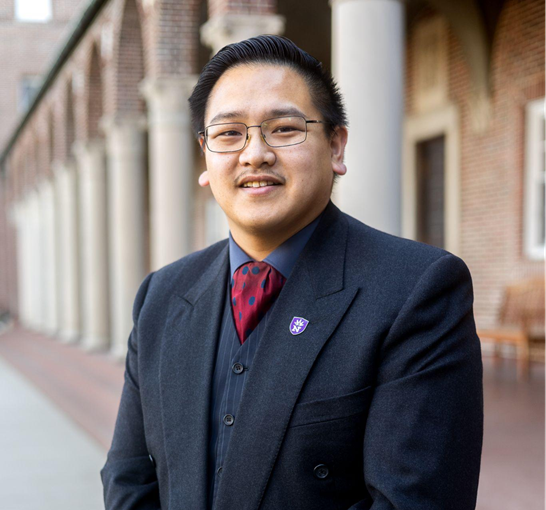
Figure 3: David’s Student Government Portrait. David Cairns served as a senator and as the Spiritual Formation Liaison.
(Photo Credits: Matthew Sherrard)
David grew up in a “Scandihoovian-Scottish-English-German rural Minnesotan family, raised by former missionaries who spoke multiple languages.” David’s mom has worked in the Willmar Public School System for over forty years as an ESL teacher and speaks Japanese, Mandarin, Cantonese, Spanish, Somali, and Karen with varying levels of fluency. David’s dad has worked for several decades at the Minnesota Department of Transportation and speaks several languages as well, also with varying fluencies.
Cairns has learned to sing several old hymns in Swedish and even leads the Swedish-English worship service at the annual homecoming of the Mission Covenant Church of Lake Florida during the summertime. He also took two years of Chinese in high school, although they didn’t learn tones. “Our teacher,” Cairns admitted, “discovered that it’s hard to get high school guys to focus on learning a much more different language to English.” Learning Spanish in middle school, according to David, was a bit more pertinent than learning Mandarin in Minnesota.
When I asked how he responded when spoken to in Chinese, Mr. Cairns had a funny example. During his employment at Herberger’s or Menard’s, Mandarin-speaking customers would approach him with questions. “I would start out by saying ‘对不起, 我的中文不好’, pull out Google Translate, read the pin-yin, and try my best.” I myself had heard David say 《对不起,我的中文不好》multiple times (translates into: I’m sorry, my Chinese isn’t good).
As someone who has worked in retail and customer service for the last ten years, David Cairns has a host of random work-related stories: “Once, when I was a cashier at Menard’s, I was standing at the end of my register lane and a young man walked up to me to checkout. However, unlike most guests, he bowed ninety degrees at the hips with folded hands. Suffice it to say, I rang him up as quickly as possible and temporarily misplaced the phrase, ‘Have a good day.’”
“Why didn’t your parents do Chinese immersion?” I asked. “I never feel like there is anything missing from my life,” he shrugged. “Although, at this point in life, I see how it’s good to teach children. It is harder to learn a new language when you’re older.”
David is also interested in improving his Mandarin in the future, but it isn’t the highest priority.
“How are you involved with your heritage?” I asked.
As a student, David was one of the founding members of the high school “Students Without Borders” club. During his time pursuing his Associate of Arts Degree at Ridgewater College, he served two terms as the president of the Ridgewater Multicultural Club. One tradition of the club was to host an annual “Taste of Culture,” which was a large all-you-can-eat multicultural buffet for all students and faculty at Ridgewater. Apart from homemade dishes by students and faculty, the club also had food catered from local ethnic restaurants. At Ridgewater, Mr. Cairns oversaw the creation of a campus-wide multicultural cookbook.
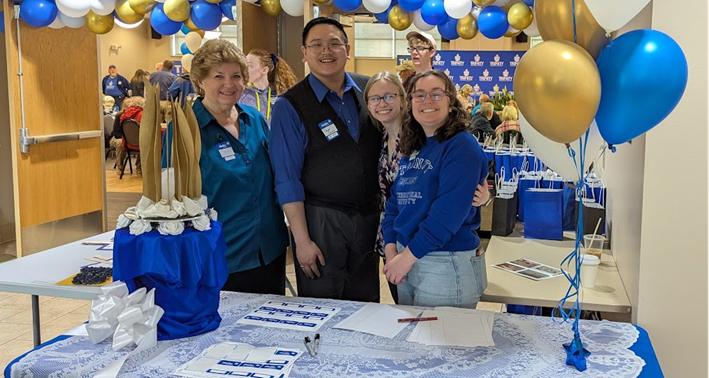
Figure 4: On March 27th, 2026, David hosted a final homecoming for Trinity College alumni.
David identifies as a “rural Minnesotan adopted by Scandinavian-German-English-Scottish parents from my birth country where I was born into an aboriginal tribe.” He keeps most in touch with the Scandinavian and Scottish parts of his identity: he proudly dons the family tartan in the form of a kilt, or a necktie; serves annually as the worship director at the Swedish Mission Covenant Church of Lake Florida; and has provided special music at The Old Log Church of Norway Lake. One source of Cairns family history is A History Of The Family Of Cairnes Or Cairns And Its Connections by Henry Cairnes Lawlor, a distant and now deceased Australian relative. And most of Mr. Cairn’s cooking is Asian, German, or Scandinavian.
Although many adoptees have a burning desire to find their biological parents, David believes it doesn’t make much sense, unless they had horrid experiences with their adopted family. He feels proud to be American and to be adopted, and dislikes when people ask him where he is “really from”. “Never use the phrase ‘real parents’ in front of me unless you want to hear an hour long lecture.” David struggles to recount crises of personal identity, although he could recall experiences with racism in school, Sunday School, and during his time as a member of the Executive Committee of the Republican Party of Kandiyohi County.
When we had our interview, it was shortly after the height of Operation Metro Surge. Even though he is an American citizen, David was encouraged to carry his passport with him as a proof of citizenship; however, he has kept it on his person since he turned eighteen, “just in case.”
Recently, I have witnessed how David’s recent osteoarthritis diagnosis has forced him to walk slower and often with a cane. David has had symptoms of arthritis since high school. He was also diagnosed with arthralgia (chronic joint pain). “It’s degenerative and there really isn’t a cure. So, eventually, my cartilage will continue to disintegrate and I may end up in a wheelchair with the ability to run down my friends.”
I have frequently seen David amble around campus with his cane, often waving it at his friends or sticking it out in a mock-attempt to trip them, and I have an ongoing admiration of his persistence and strength in taking each day head-on. “The difficulty for being adopted is that you don’t know much about your family medical history,” he teasingly gritted. A downside to being adopted that I never knew about.
There are so many things that our younger selves could never have imagined, I mused.
“What would you say to your younger self?” I queried.
“Slow down. In middle and early high school, I used to zip from class to class since the hallways were boring. Have more fun, meet more people. You enjoy life more when you’re not rushing around. Take the scenic route in life!”
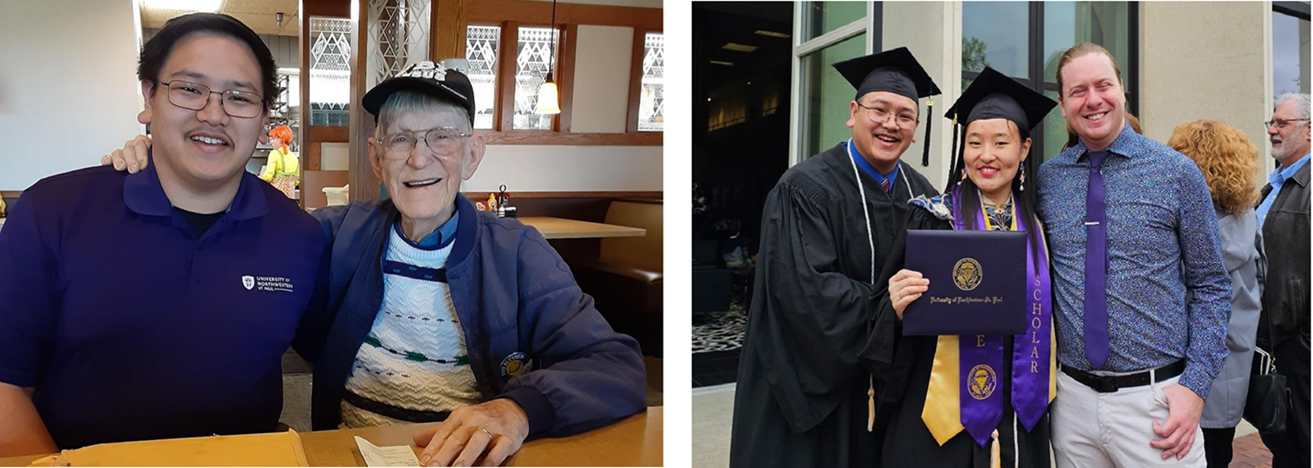
Figure 5: David Cairns (left) and his friend and mentor, a good Swede, Bill Oakleaf (right), at their favorite restaurant, McMillan’s Family Restaurant.
Figure 6: David Cairns (left) and author Jenny Liang (center) during their 2025 graduation with their StuGov advisor Ben Taylor (right) and David’s parents behind them (far right). David was one of the Commencement speakers. You can listen to his address here: https://youtu.be/W2M2fBuHhAI?si=Wtm1B9loSXvAnbbs.
Jae Nelson
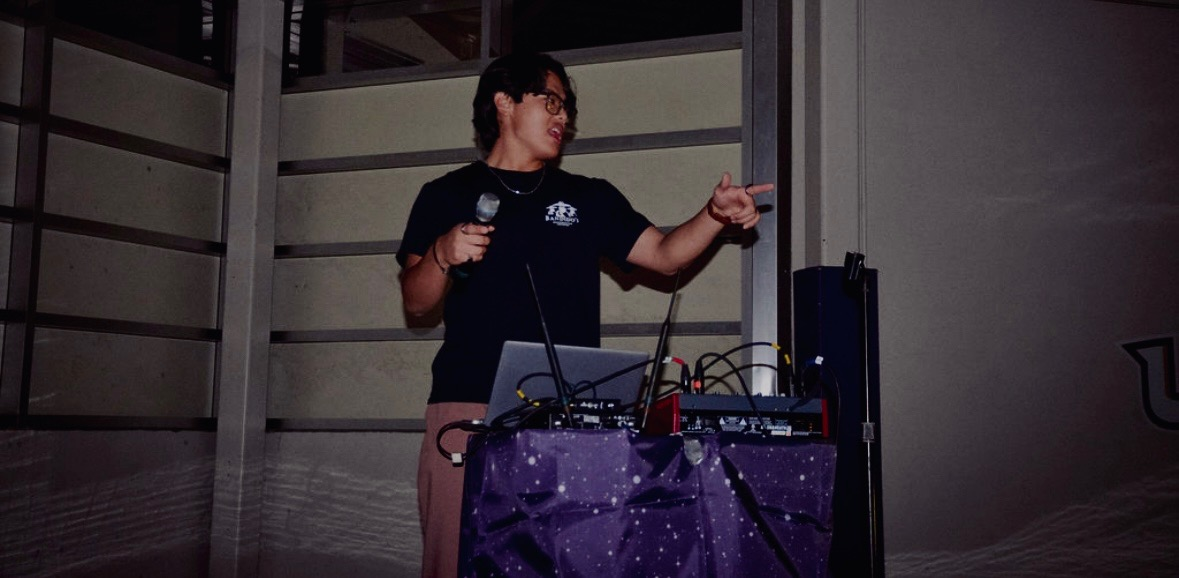
Figure 7: Jae Nelson partying and having fun at a school event.
Jae Nelson is a double Kinesiology and Health Sciences major at the University of Northwestern – St. Paul. He has four minors: Psychology, Bible, Economics, and Film. Nelson is the elected Vice President for the 2026-2027 Academic Year. He is also the Vice President of Asian Student Fellowship (alongside Joshua Hallgren) and served as a Student Senator, managing relations and facilitating conversations and updates between the student body and the IT department. Jae is the Chair of the University’s Kingdom Belonging Committee, which seeks to facilitate cultural belonging on campus.
On the side, Jae is on the campus worship team, sings with the Northwestern choir, and takes part in campus media and film projects.
Jae was adopted at the age of one or two from Seoul, South Korea during one of their last transnational adoptee batches. “Apparently, it slowed down and shut off after I got adopted.” He speculated that government restrictions on transnational adoptions was largely due to low birth rates. South Korea has a fertility rate of around 0.74 children per woman in 2024, among the lowest globally (South Korea’s birth rate collapse threatens growth).
His first memory, Jae told me, was apparently drinking root beer floats in Pre-School.
Like all the other adoptees I interviewed, Jae always knew that he was adopted. He began to understand it when he was seven or eight, but his parents had always been open about it.
Jae grew up with “technically two older sisters” and took some Korean language lessons, went to a Korean cultural camp, and played Korean drums with a traditional band. Interestingly enough, he took Chinese immersion and was involved in Chinese cultural activities, the chief reason why I interviewed him for this project. In fact, his Mandarin is much better than his Korean! Jae self-rated his Chinese language fluency as 7/10 and Korean as 1/10.
When Koreans start speaking Korean to him, Jae would hilariously respond in Chinese, bewildering them.
When I asked him why his parents chose Chinese immersion over Korean immersion, the adoptee shrugged. “It was what was available at the time.”
He identifies as Korean American, but feels “way more American.”
Interestingly enough, Jae never had an identity crisis or felt torn about his identity. His identity, Jae told me, hasn’t evolved too much, but he has become more confident in his heritage.
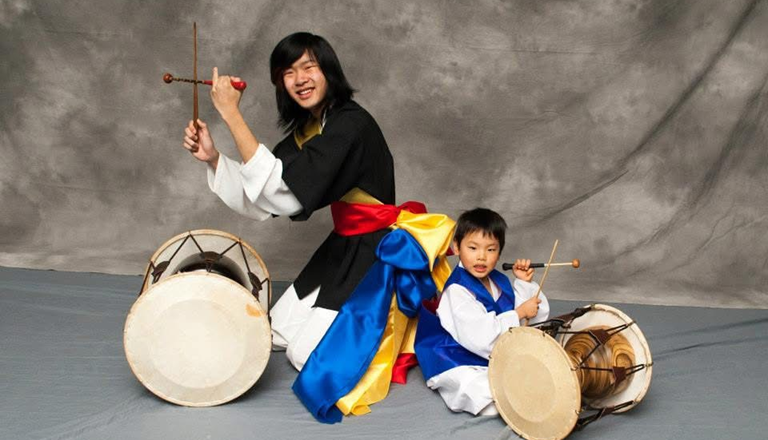
Figure 8: Jae Nelson (right) in Korean drumming
He was raised in a very diverse community, and Jae spent his developing years until high school at Hopkins Chinese immersion. “It was an equal amount of white and everything else.” Jae Nelson is fluent in Chinese, although he admits his “writing is rusty and reading is not too good.”
Although “Northwestern is pretty white,” Jae isn’t bothered by cultural issues and feels no pressure to assimilate into either American, Chinese, or Korean culture. He doesn’t get treated any differently for his ethnicity or cultural background, hasn’t experienced racism, and doesn’t feel loss or abandonment when reflecting on his origin. His friends, Jae states, all know about his adoption and origin.
“What emotions emerge when you think about your birth family?”
Jae thought for a moment. “Not much. I get it. I probably think about my [biological] siblings more than my [birth] parents.”
In addition to his busy academic life and active student body presence, Jae attempts to keep a connection with his heritage. He eats a lot of Korean food, participates in events, and plays the Korean drums. He wants to go back to Korea for a vacation.
While Jae admits he isn’t the most intentional in connection with his culture of origin, he enjoys the food, people and culture. “Korean food is the best!” he told me. “I love tteokbokki and japchae!”
“Hmm,” I mused. “What motivated your parents to adopt from Korea, instead of any other country?”
According to Jae, his parents weren’t able to have biological children and already had mutual connections to the nation. He laughed. “They wanted a doctor.” Apparently, their plan is coming into fruition, as Jae is stacking his education with two majors and four minors, in addition to serving as the student body Vice President.
“My parents expected a lot, but treated me like a normal kid.” His parents, he told me, didn’t face challenges with helping him embrace both identities.
“What would you tell your younger self?” I asked.
“Your school didn’t matter that much.”
Jae Nelson simply lives in the Western world while engaging with his cultures when available. He would consider adopting in the future, possibly from Korea. His career dreams, he tells me, would be to become a Physician’s Assistant, work in Film, become Strategic Officer, or work as a Chief Operating Officer.
“How would you describe yourself in a nutshell?”
“I’m a Christian. I grew up in immersion culture. Now, I’m doing a bunch of stuff.”
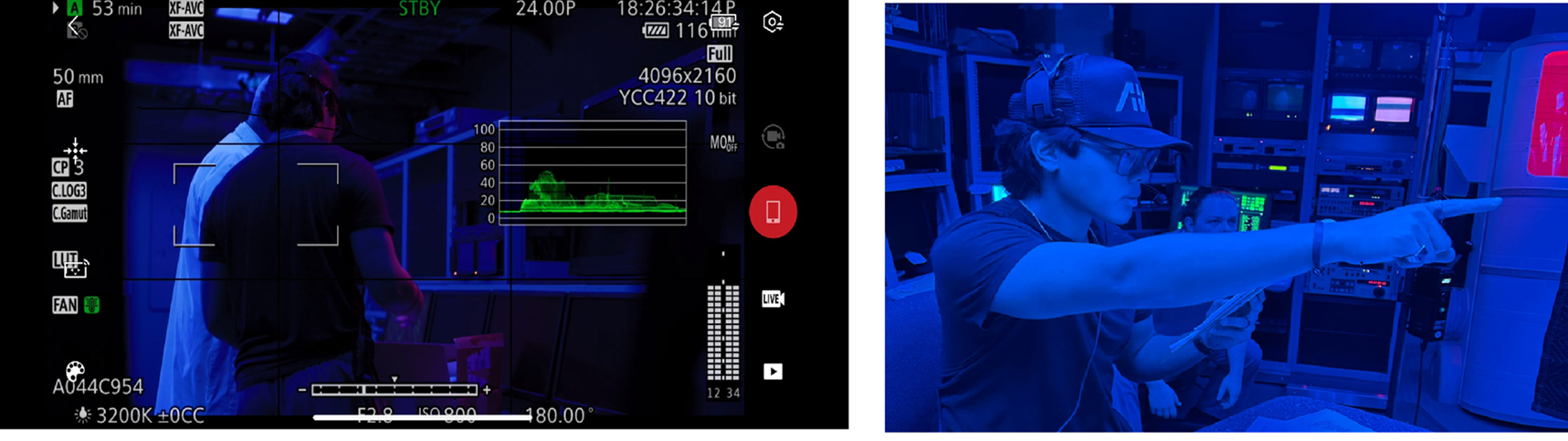
Figure 9 (left): Jae Nelson on a film set through the camera lens.
Figure 10 (right): Jae Nelson on audio directing a production.
Sarah*
Sarah* was found on the steps of an elementary school in Guangdong, China’s most populous province steeped in Cantonese culture and renowned for its opera and tea ceremonies. The baby girl was estimated to be between three and seven days old.
Sarah* would be adopted at eleven months old by a single Caucasian woman. Her mother was over 35 when she adopted her Chinese daughter, and was a licensed nurse practitioner by trade.
As Sarah* grew up, she was involved in Chinese dance, and the dance instructors spoke mostly Mandarin. “There was a good mix of adoptees and people with Chinese parents,” Sarah* noted. In addition to cultural dance, the child went to a church in Brooklyn Park with a friend group of adopted Chinese girls.
Dancing was an amazing outlet for the girl’s expressive personality. She was always singing or dancing and lived to perform. Sarah* would dance from six to fourteen. She would showcase at the Mall of America for Chinese New Year’s (where she received free Nickelodeon Universe tickets), at the Minnesota State Fair, Festival of Nations, and the studio’s annual production. Her experience with dancing and self-expression became a segue into musical theatre.
“Overall, dance was a really good and formative experience. I met three of my best friends there. I had some of the best memories of my life.” She picked up some Chinese language from her years of dance and felt very immersed in her heritage and culture.
Language-wise, my interviewee self-rated her fluency at 3/10 for speaking, 4-5/10 for comprehension, and 1/10 for reading. “I can’t write,” she smiled bashfully.
“Did you ever have an identity crisis over a sense of belonging?” I asked.
“Yes,” Sarah* told me. Although there were other adoptees in her dance group, she went to summer camp with a lot of Chinese children with Chinese parents. While she was Chinese and looked like her peers, her mom made her stand out. She felt a pressure to assimilate into Chinese culture. What other experiences was she missing? Did she truly belong?
“I felt different but connected,” she noted.
There were moments that Sarah* wished her mom was Chinese. She wanted to fit in with her friends, to find belonging.
For most of her elementary school years, she had gone to a largely white religious school. “I didn’t fit in either category,” the interviewee divulged. “Church and school was predominantly white, while dance was all Chinese with very few exceptions.”
She also thinks her physical appearance played a role in how she was treated. “I have so many different aspects that made my experience unique.” Sarah* started kindergarten earlier and skipped 5th grade, leading to her being years younger than her peers.
The girl also experienced ignorance. Those around her would make Asian eye jokes. Sometimes, kids would run up to her and say ni hao [你好 is Chinese for ‘hello’] in a mocking tone. Adults would confuse Sarah* for other random Asian people. “I don’t fault them,” she maintains, “but it’s something that’s unique.”
Sarah*, like Robin* in my previous article, was a theatre major. She participated in leading and supporting roles in various acclaimed productions. At the department, she was one of the few Asian actors.
Sarah* feels a sense of questioning when she plays a member of a family, as the other family members would all be Caucasian. It is uncomfortable, she says, anytime the plot is centered on family or appearances.
For example, Sarah* played a young Anastasia a few years prior. Anastasia is a Russian princess with eurocentric features. She felt privileged, noting that “Asians and Whites don’t look as different as Black and white people.”
Her experiences are part of a central conversation in theatre and film on actors – do they have to visually match the characters they represent? How can people of color succeed in scripts and stories dominated by Caucasian characters? Would it be an inaccurate mistelling of history when a character with a different race plays the role?
At this point in history, Sarah* is positioned at an intersection of identity: a Chinese adoptee involved in Chinese dance and majoring in theatre, a career path few Asian Americans select. She has a complicated relationship with China, the nation that birthed but abandoned her. “I have never gone back, but I would like to go.” Sarah* hopes to visit Guangdong, her place of birth, as well as Beijing. She would love to explore the country and see where she came from. “It’s beautiful nature- and history-wise.”
As for her birth family, Sarah* has given up most hope. She thought about it and took an ancestry test, but was only able to find extremely distant relatives, something of menial value. She feels a loss and wonders for what could have been. But, there are no feelings of happiness or sadness. Just a distant curiosity.
“As an only child, I hope that I have a sibling somewhere.”
Her mother has been Sarah*’s primary caregiver, and the mother-daughter relationship was very complicated. In addition, she told me, she was an only child.
For most of Sarah*’s life, “it was just the two of us.”
“Sometimes, I feel like my mom blamed adoption too much for issues we had and the amount of conflict we have.” When I asked what she wished her mother would have done different, Sarah* sighed. “I was an anxious child. There is a lot of trauma adoptees face in their first year of life. I would like a bit more acknowledgement for being a transracial adoptee.”
While her mom doesn’t look at her as an adoptee, saying, “you’re just my daughter,” Sarah* is painfully aware that the two look very different. “It feels weird going places and not looking like my mom.” That’s why Sarah* is very fascinated with people looking like each other, and how biological families share traits and characteristics.
Nonetheless, my colleague is grateful that her mother exposed her to Chinese culture. Sarah* was never lacking in TV shows, Chinese DVDs, and cultural dance. She is also glad that her mother was transparent about adoption.
Currently, she uses Duolingo for Chinese and Spanish lessons, and turns on old Chinese DVDs when she wants nostalgia. Sometimes, she will participate in Chinese New Year Celebrations. Sarah* hopes to return to China one day and visit.
As she slowly picks up parts of the language, she becomes excited hearing Mandarin spoken around her. Sarah* picks up phrases and strains to see how much she understands. When she visits her Chinese friend, she gets nervous, as her mom speaks Chinese to her.
“How about adoption?” I queried. “Would you adopt in the future?”
Sarah* had a lot of opinions: Whereas she hasn’t fully dismissed the idea, it’s not something she wants to do. She thinks that many transnational adoptive parents have good intentions, often having the mindset that they are “saving children from a worse situation.” But, she tells me, parents have to be aware that those adoptees need more attention in specific areas.
Generally, Sarah* maintains, “adoptees would make good adoptive parents. I’m not sure that I would like to though.” She wants biological children, though, and yearns to have someone in the world who looks like her.
“I don’t know anyone in the world who is related to me. I want a connection to someone.”
Sarah* has a message to her younger self:
“It gets better. Everything will be okay eventually. I am much happier as an adult now, and my mental health has improved. There are a lot of unique experiences who have shaped who I am today.”
“Some things I have overcome. Other things still hinder me. Yet, all of those experiences are important and have shaped who I am and my perspectives.”
Now, Sarah* is an Office Administrator at an accounting firm. She dreams of having a family with children. “I have career goals and a lot of potential, but I’m not sure where I want to put them into.”
“I would love to run a theatre company someday and have my skills overlap with legal and theatre. I would like to be in more of a pioneering role.”
I ended the interview by asking Sarah* if she had any advice for transracial Chinese adoptees. Sarah* was sympathetic.
“It’s okay to struggle with identity and feelings of belonging. I don’t know when my real birthday is. I don’t know where, when, what time, or what day I was born.”
“None of your life experiences make you more Chinese or American.”
Or, as Alan Watts would say, “the only way to make sense out of change is to plunge into it, move with it, and join the dance.”
Additional Resources
- Follow this ongoing Chinese adoptees series on China Insight!
- You can read more about me in my memoir: The Phoenix and the Eagle, Growing up in America – China Insight
- Author Linktree: Jenny Liang Official: Instagram | Linktree
- Author Google Scholar:
Sources
- China Travel Note
- South Korea’s birth rate collapse threatens growth
- Postsecondary Enrollment Options (PSEO)
Publisher’s Disclaimer: The opinions expressed in this article are solely the views of the author and do not necessarily reflect the opinions and beliefs of China Insight. The information presented is provided for general informational purposes only. While every effort has been made to ensure the accuracy and reliability of the content, the publisher claims no responsibility in the conclusions set forth by the author, who can be reached at [email protected].