
Ouyang Zimo,Postgraduate, Hunan University of Technology and Business
Huang Ruiqin,Postgraduate, New York University
Supervised by Zhang Ling, Professor, Hunan University of Technology and Business
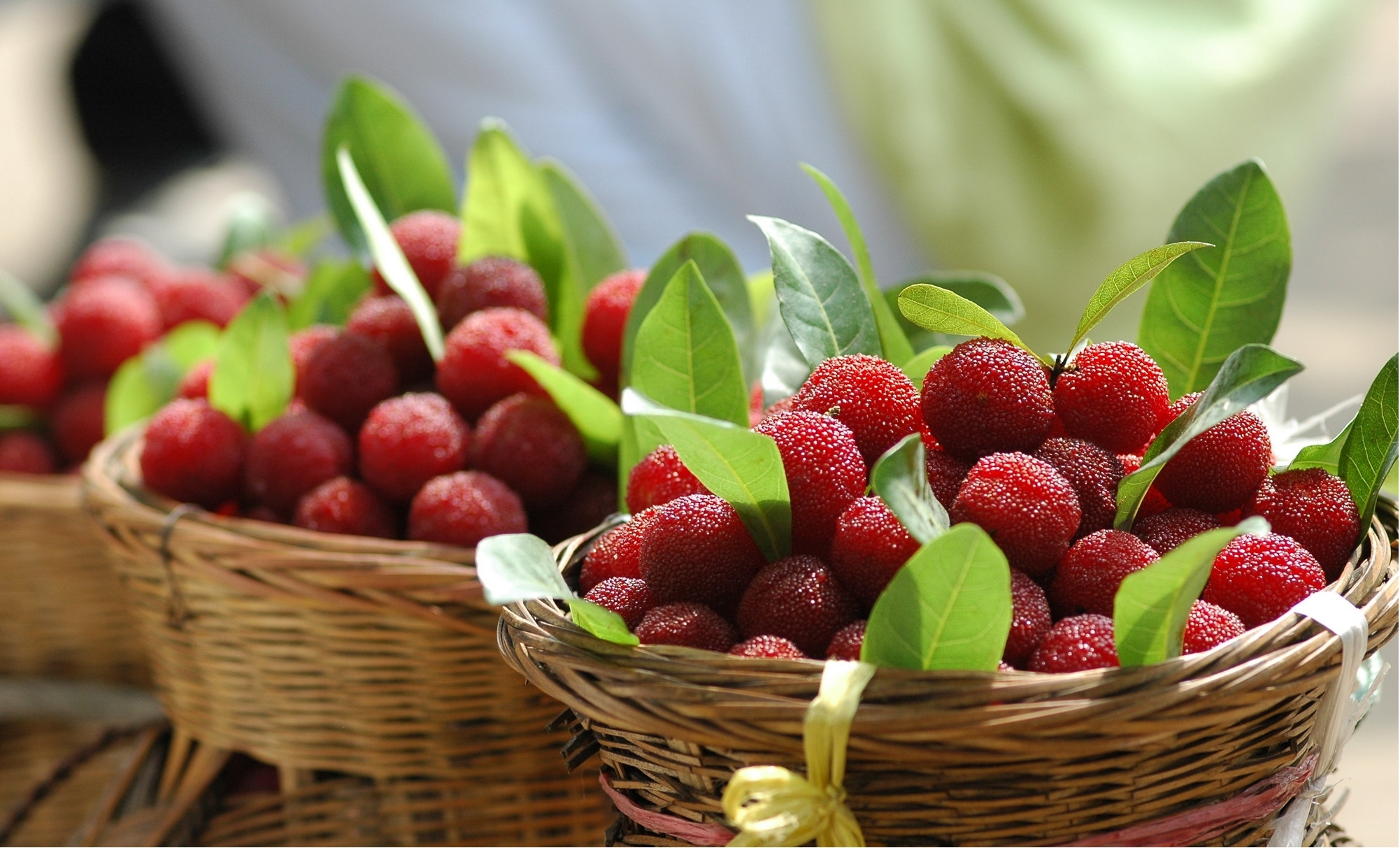
Jingzhou Bayberry (Photo by Tang Jun)
Jingzhou Hmong and Dong Autonomous County is located at a valley of Huaihua City, Hunan Province between 109°14’14’e – 109°56’36’e longitude and 26°15’25’n – 26°47’35’n latitude. This region, with hilly and mountainous terrains, features four distinct seasons. It has a mild and humid climate with abundant rainfall. Summers are cool, and rare severe cold in winter, making it an optimal environment for the growth of bayberries. Therefore, it is no strange that Jingzhou has emerged as an ideal place for bayberry cultivation. Jingzhou bayberries (Yangmei in Chinese) thrive in the sloping area of the Yunnan – Guizhou Plateau, the southern end of the Xuefeng Mountains.

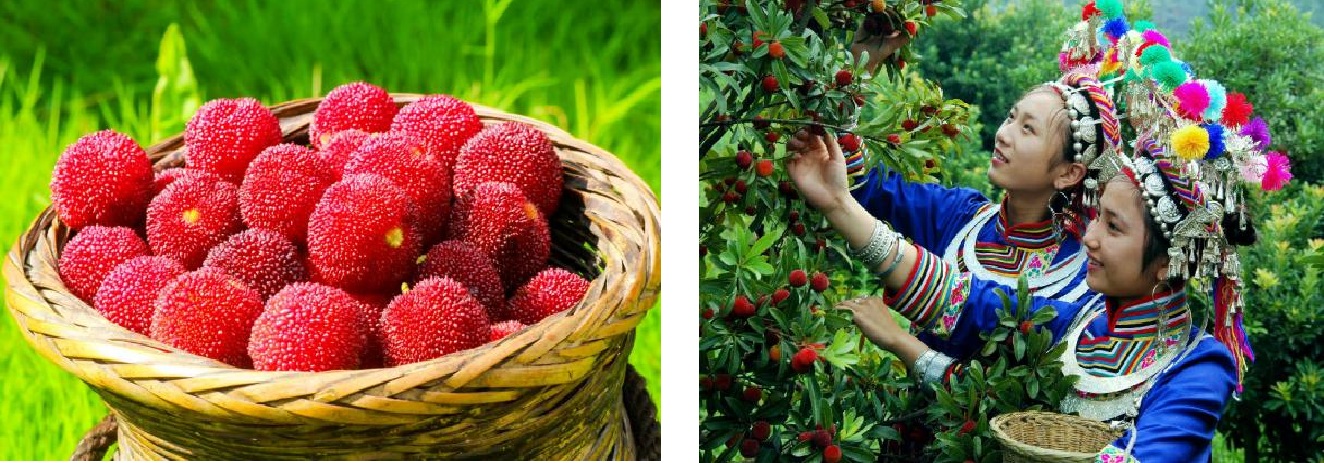
Hilly and Mountainous Jingzhou Hmong and Dong Autonomous County (Photo by Shi Mingdeng)
Jingzhou has a bayberry cultivation history of more than 2,000 years. As early as in the Qin and Han dynasties (221 BC – 220 AD), records show that bayberry trees were grown in Jingzhou area and the fruits were consumed by local people. Located at a key transportation hub between Hunan and Guizhou, Jingzhou was historically known as the “Gateway to the Hmong Frontier.” During the Ming and Qing dynasties (1368–1912), local chronicles such as the Jingzhou County Gazetteer documented the planting of bayberries. The local population has long kept traditional practices of making bayberry wine and dried bayberries. Thanks to its large size, small pit, and pleasant sweet-sour taste, Jingzhou bayberries have long been renowned in the Hunan-Guizhou region and is hailed as the “Number One bayberry south of the Yangtze River.” In 2011, Jingzhou bayberry was officially approved as a National Geographical Indication Protection Product by China Ministry of Agriculture with a protection registration number of AG100570, further solidifying its important status among China’s distinctive agricultural products. Its protection area includes 52 administrative villages of 16 towns and townships in Jingzhou County, and a total protection area of 2,800 hectares and an annual output of 8,000 tons. The famous agricultural scientist Yuan Longping once wrote an inscription for it: “Jingzhou bayberry– King of Bayberries,” praising its exceptional quality and cultural value.
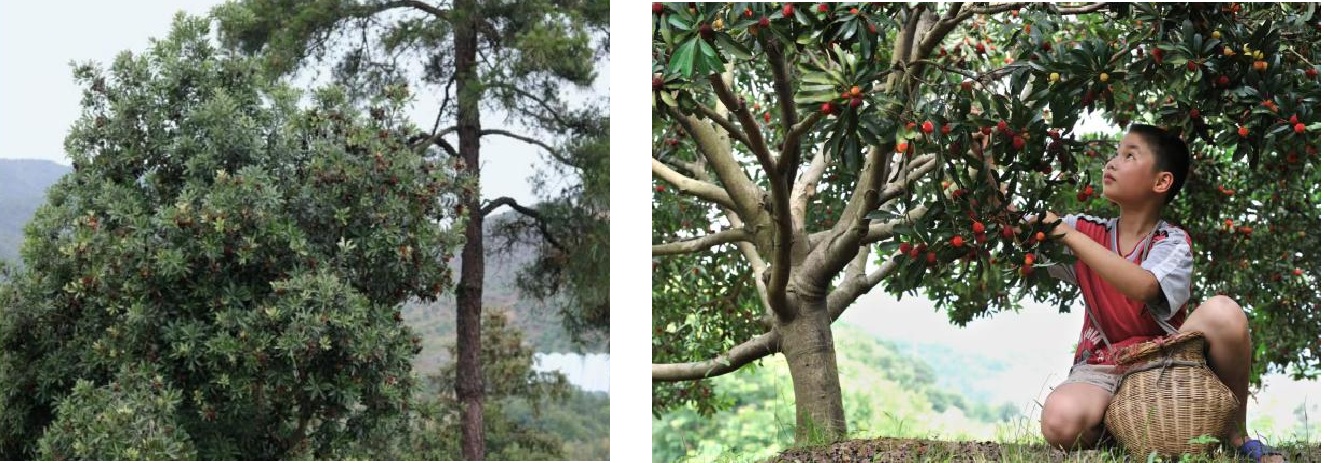
Bayberry Trees (Photo from Jingzhou Jinbi Eco Bayberry Orchard)
Jingzhou bayberries are renowned for their large size and unique flavor. The bayberries are approximately spherical, and have small cores, plump and round pulp, a moderately sweet-and-sour taste and rich flavor layers, with radial grooves on the surface. From the top to the middle of the fruit, the color gradually changes from red to jet-black, presenting a unique luster. The cultivation of Jingzhou bayberries follows a completely natural approach. No chemical fertilizers and pesticides are applied and strict ecological cultivation principle is adhered to, ensuring that each bayberry is green and ecological, meeting the demands of modern people for green food, and leaving people with an endless aftertaste. The average weight of a single fruit is around 11.6 grams, and the largest can reach 30 grams. Its soluble solids content is between 10% and 14%, and the total acidity ranges from 0.9% to 1.5%. The sucrose content is above 8.3%, and the vitamin C content is higher than 25 milligrams per kilogram. Rich in nutritional value, Jingzhou bayberries can stimulate appetite and promote digestion. They are also a natural and excellent product for relieving summer heat. The unique appearance and taste of bayberries, combined with the advantageous natural conditions in Jingzhou, make Jingzhou bayberries a delicacy sought after by domestic and foreign diners.
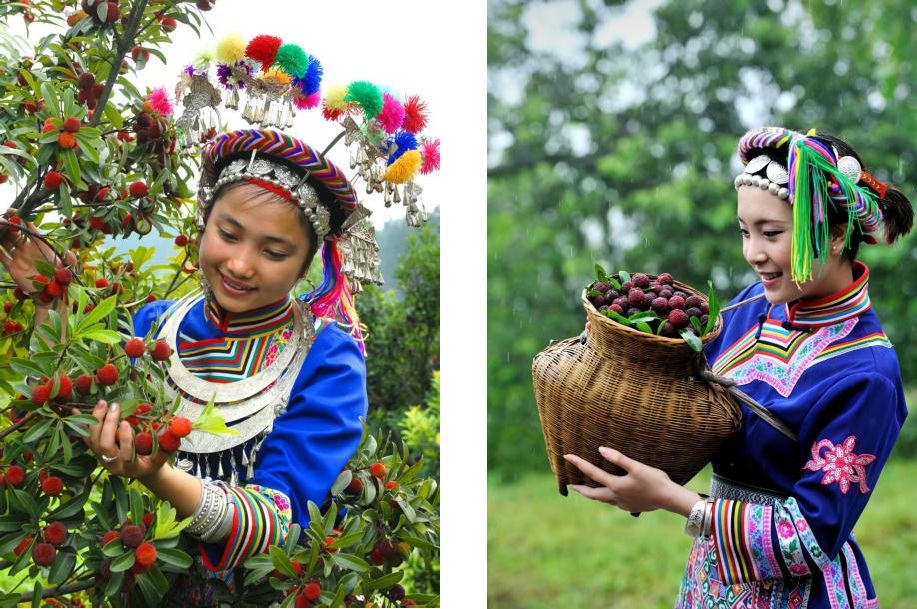
Green and Ecological Jingzhou Bayberry (Photo by Tang Jun)
In Jingzhou, bayberries are not only a type of fruit but also an important pillar industry for economic development, driving the growth of related industries such as packaging, processing, and tourism. With the rapid development of Jingzhou bayberry industry, Jingzhou County has gradually established a modern large-scale bayberry-planting and -processing system, which has greatly promoted local economic development. Through e-commerce platforms and logistics systems, Jingzhou bayberries have been sold in domestic markets across the country. In terms of sales in the international market, Jingzhou bayberries have already gained a foothold. Currently, Jingzhou bayberries are mainly exported to Southeast Asian countries like Singapore, and the market in countries such as Canada has just begun to be explored. Although currently there is no accurate and detailed official sales data based on, from past reports and relevant information, we can see that the export volume of Jingzhou bayberries is generally on an upward trend. For instance, in 2012, the bayberry and poria cocos industries in Jingzhou gradually “revealed their allure beyond local boundaries”. In the recent years, with the growth in popularity and the development of preservation technology as well as logistics and transportation, the export scale has expanded.
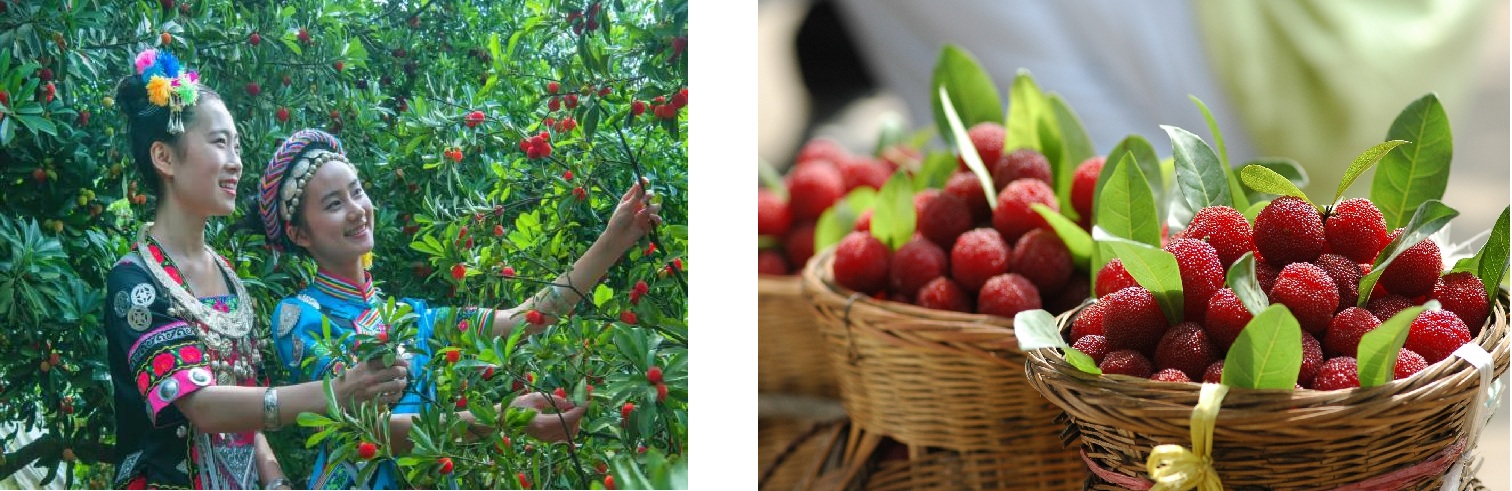
Jingzhou Bayberry, A Legendary Local Fruit (Photo by Zhang Lidan)
In southern China, every early summer in the gentle breeze, lychees and bayberries always vie for attention. Jingzhou bayberries, with their unique allure, have become the new darlings of the season, and they have vividly illustrated the ancient Chinese adage “Eat seasonally”. With Jingzhou bayberry trees all over the mountains and plains, the bright-red fruits are like gifts from nature, giving off a fragrant aroma and attracting numerous consumers. Jingzhou bayberries, the legendary fruit with a history spanning thousands of years, are eaten fresh, made into wine, or processed into dried bayberries or bayberry jam. The diverse processing methods of these bayberries reflect the people of Jingzhou’s love for life and their inheritance of tradition. The bayberries are not only the pride of Jingzhou, but a gem in Chinese bayberry culture.