
Zeng Weiwei Postgraduate, Hunan University of Technology and Business, China
Lyu Jinzhu, Postgraduate, Monroe College, USA
Supervised by Dr. Zhang Ling, Professor, Hunan University of Technology and Business
In late autumn, the fragrance of fruit permeates the mountains of Dongkou County, heralding the ripening of Xuefeng tangerines. Dongkou County lies in the southwest of Hunan Province. Leveraging the natural barrier of Xuefeng Mountain range, it enjoys a mild and humid climate, abundant precipitation, and sufficient sunlight. Especially during September and October, the significant temperature difference between day and night offers natural conditions for sugar accumulation and fruit coloring of tangerines. The sandy soil is rich in organic matters and has a proper pH value, ideally fulfilling the growth requirements of tangerines. It is on this land that Xuefeng tangerines have thrived and turned into a dazzling golden hue in autumn.
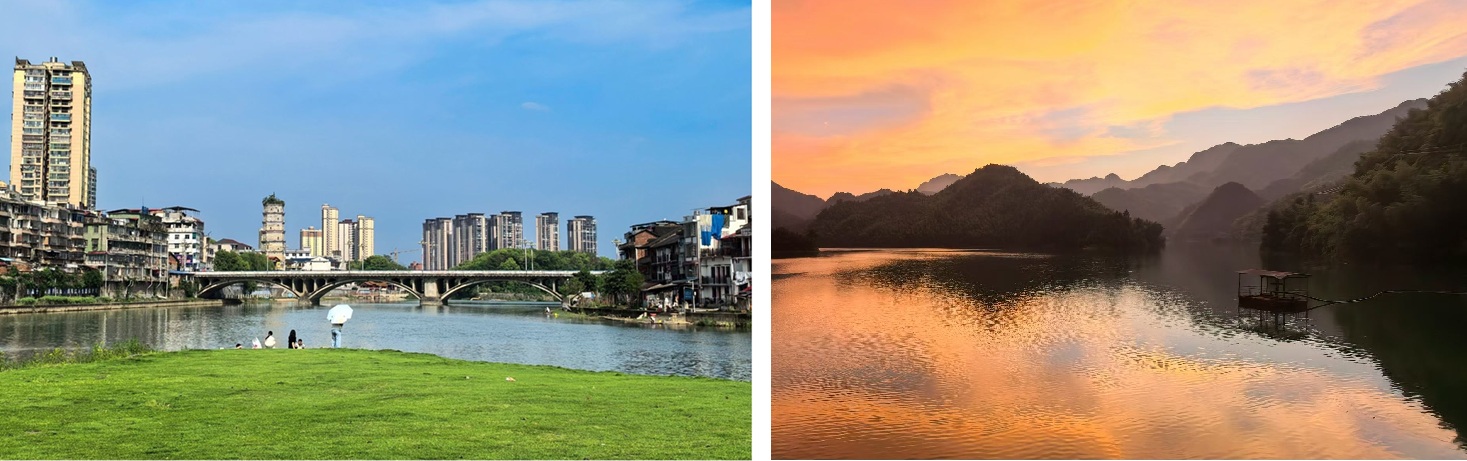
Dongkou County (Photo by Si Mai)
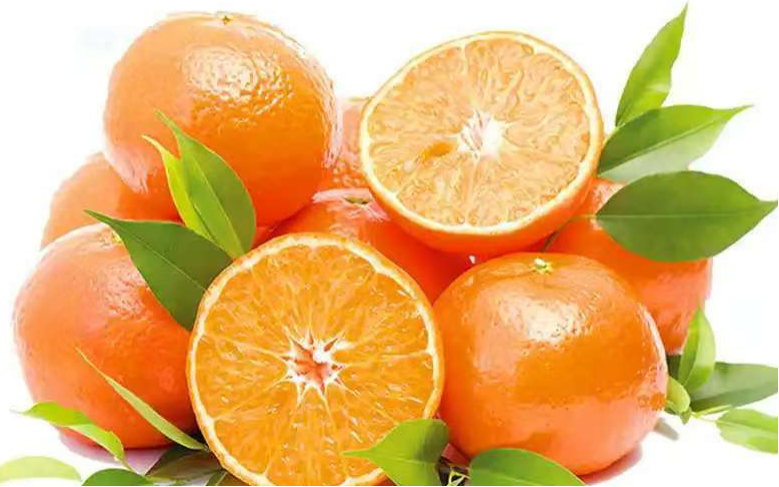
Dongkou Xuefeng tangerines are renowned for their unique flavor and bright appearance. The tangerines are oblate with an even size, weighing approximately 110 grams each. Their peel is thin and smooth, boasting a bright orange-red hue. The pulp is soft, juicy, and seedless, giving off a strong fragrance of oranges. Xuefeng tangerines contain various nutritional components. For instance, the content of soluble solids is no less than 11%, titratable acid is no more than 0.85 grams per 100 milliliters, and vitamin C is at least 28 milligrams per 100 milliliters. With a moderately sweet and sour ratio, their taste and nutritional value surpass those of other citrus varieties. Xuefeng tangerines are not only ideal for fresh consumption, but can also be processed into canned food, juice, preserves, and other types of leisure foods, during which the nutritional components are retained to the greatest extent possible. Besides being rich in vitamin C, Xuefeng tangerines also contain cellulose, carotene, and various mineral elements. Regular consumption is beneficial for intestinal cleansing, blood sugar and blood lipids reduction, and has antioxidant and skin-beautifying effects. With a perfect sugar-acid balance, Xuefeng tangerines are an indispensable healthy fruit in autumn. In 1973, Dongkou Xuefeng Tangerines were granted its name by the then Premier Zhou Enlai, making it renowned both at home and abroad. And in January 2007, the former Chinese State Quality Supervision Administration approved the implementation of geographical indication product protection for Dongkou Xuefeng Tangerines, under the protection registration certificate number: AGI03214. The protection area, with the coverage of 14,000 hectares, includes 262 administrative villages of 16 towns and townships in Dongkou County, Shaoyang City, Hunan Province, naming Laotian Town, Shuidong Town, and Shishu Town, etc. And the geographical coordinates range from east longitude 110°26′33′′ – 111°57′10′′ to north latitude 26°51′38′′ – 27°21′48′′.
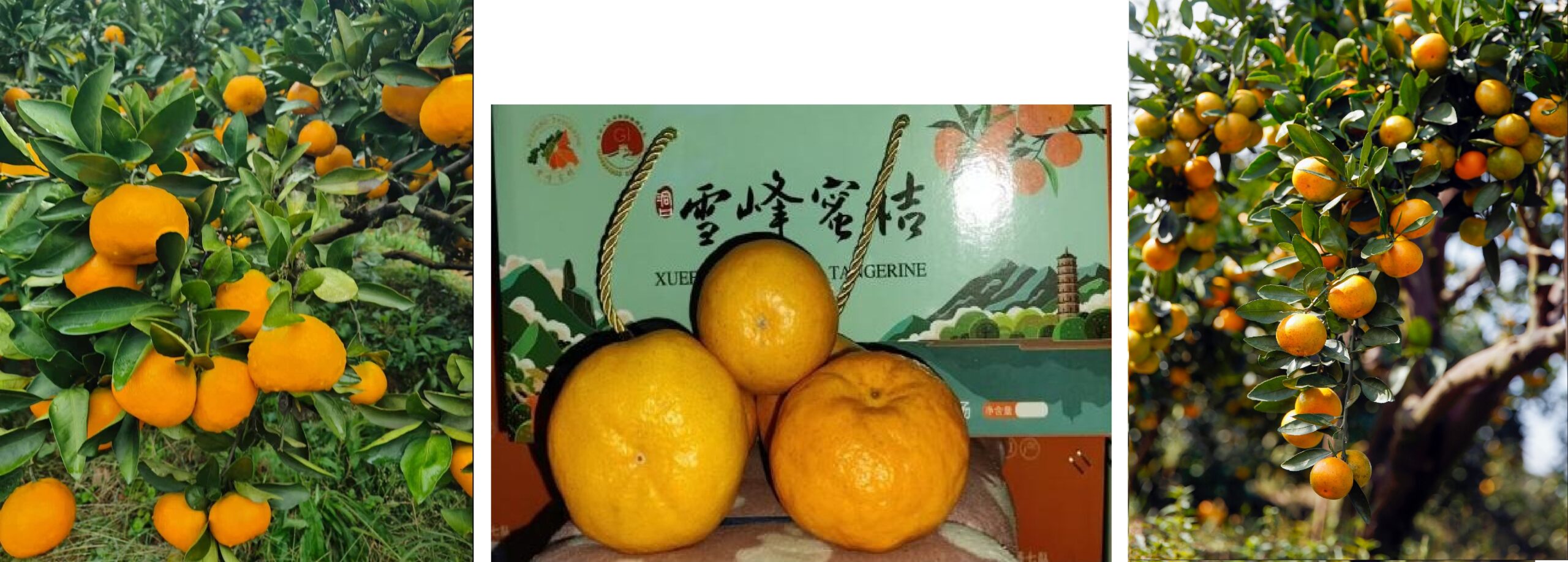
Xuefeng Tangerines (Photo by Xiao Changhui & Si Mai)
Long before Xuefeng tangerines became a celebrated local specialty, citrus cultivation had deep historical roots in Dongkou County. According to the Dongkou County Gazetteer (1992), small-scale citrus cultivation existed in the region as early as the Tang Dynasty (618–907). Evidence of the Song Dynasty also can be found in the imperial reigns of Emperor Jiaqing, Shaoyang County Gazetteer (1820), recording the presence of orange trees in the wider Shaoyang region. During late Qing Dynasty, the Xiang Army soldiers returning from campaigns in Jiangsu and Zhejiang reportedly introduced yellow and vermilion-red tangerine varieties to wider Shaoyang areas. These contributed to the gradual diversification and improvement of local citrus cultivation. A significant turning point came in 1939, a local farmer named Yang Qijian established the region’s first large, contiguous citrus orchard on Maliang Mountain, near Qutang Village in Liaoxi Township, by planting 400 red tangerine trees. The establishment of a county-run horticultural farm in 1956 encouraged more organized production. During the 1940s, growers successfully introduced and grafted seedless mandarin varieties, helping shape the fruit’s distinctive quality. By 1965, Dongkou tangerines were being showcased at a national agricultural exhibition in Beijing. These milestones laid the foundation for the industry’s subsequent growth.
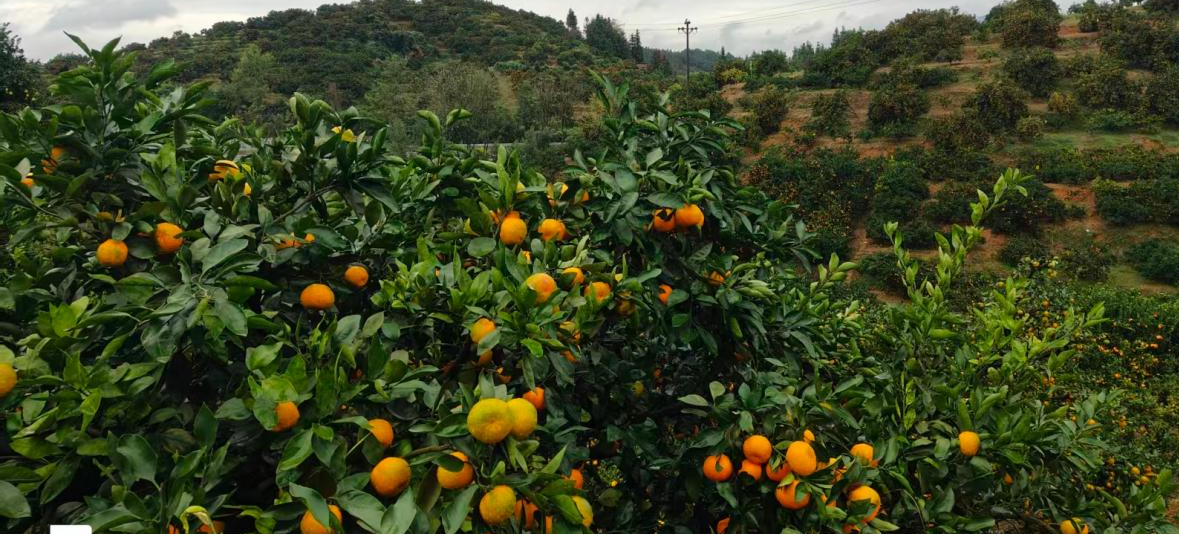
(Photo by Xiao Changhui)
With the development of Xuefeng tangerine industry, Dongkou County vigorously promotes modern and standardized planting methods, intensifies variety improvement and brand construction, and continuously boosts the market competitiveness. In December 2011, Dongkou County was officially designated as “the Hometown of Chinese Xuefeng Tangerines”, being the sole county in China to obtain this honor. In the recent years, the planting area and output of Xuefeng tangerines have witnessed a significant increase. With an annual output of over 180,000 tons, Xuefeng tangerines have become the principal project for farmers to raise their income. Dongkou County has also initiated an innovative model of “integrated development of agriculture and tourism”. By holding cultural tourism promotion activities related to Xuefeng tangerines, a large number of tourists are attracted to experience the pleasure of fruit picking, thus facilitating the coordinated development of the tourism industry and the tangerine industry.

(Photo from Baidu Network)
Xuefeng tangerines sell well in foreign markets and are mainly exported to countries and regions including South Korea, Vietnam, Maylasia, and Singapore in Asia, Russia in Europe, Canada in North America, African countries and so on. With the development of the industry, the export scale of Xuefeng tangerines continues to expand. Thanks to its outstanding quality and long-standing history, Xuefeng tangerines have emerged as a brilliant business card of Dongkou County. It not only represents a high-quality fruit but a crucial support for the characteristic agricultural economy of Dongkou County. And each plump and juicy Xuefeng tangerine is a testament to the harmonious coexistence of humans and nature of this land.