
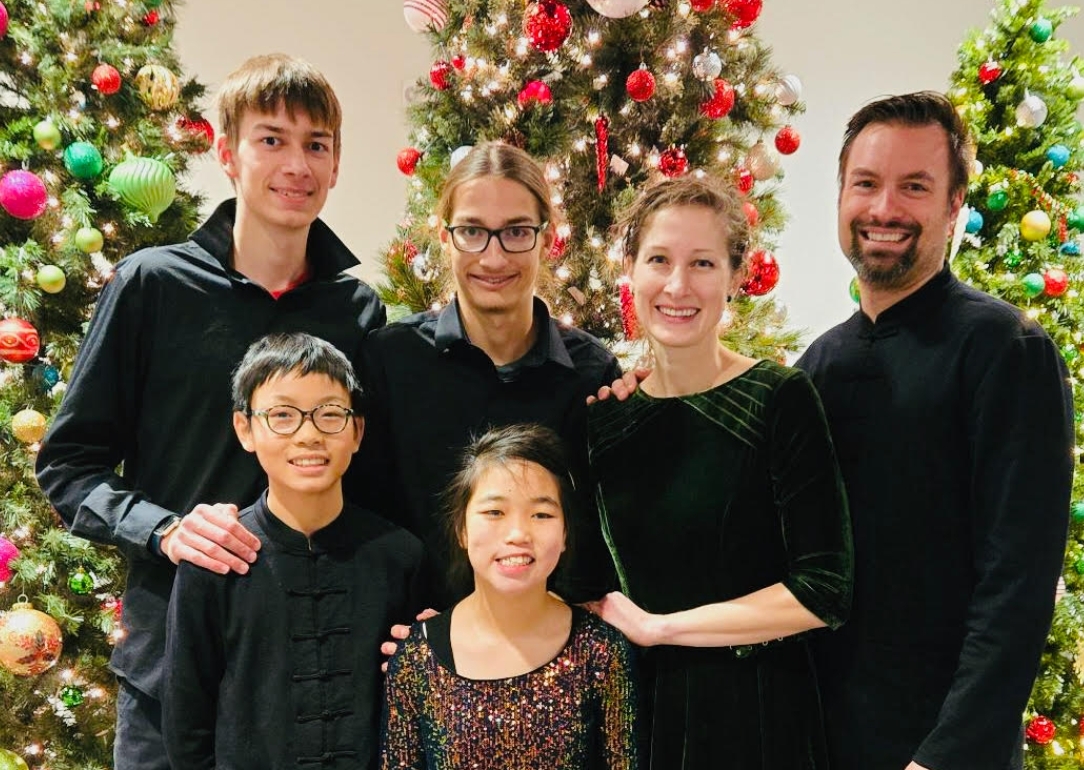
Figure 1: The Addington family. At front, Reuben and Carolyn. Back from left to right, Michael, Titus, Rachel, Drew.
By Jenny Liang, Associate Reporter at China Insight
An (asterisk) * depicts that the interviewee’s name has been changed for their privacy.
All pictures provided property of the interviewee.
welcome home, you’ve got a family / please keep all your identity / we’re mirroring holy trinity / holy, holy / covenant, this is like a marriage / hold on to your heritage / richer for the difference / share in this inheritance/ this beautiful inheritance … (beautiful inheritance, Rachel Addington, 2025).
Link to recording: beautiful inheritance
Rachel Addington dedicates this song to her son Reuben, who is adopted from China. The family of six consists of Drew and Rachel; their two biological sons, Michael and Titus; and Reuben and Carolyn, who were adopted whilst the parents were working cross-culturally in China. Carolyn is deaf and diagnosed with mild cerebral palsy. Due to their 12 years living in China, Rachel and Drew are fluent in Chinese and are accustomed to the culture.
Rachel explains her motivations behind the heartfelt lyrics:
The incarnation, along with a post supersessionist and supralapsarian missional hermeneutic of the Bible, is a theological resource for more life-giving ways of interracial adoption. Too often transracial adoption has been marred by white saviorism, white normativity, and erasure of the adoptee’s ethnic particularity, and cultural, national, and first family ancestral heritage. The impact on transracial adoptees is a painful and disorienting loss of identity, added upon the already difficult losses inherent in every adoption … I begin the first verse by acknowledging the painful losses of adoption. In the second verse I refer to divinely ordained, unlosable things which are ever with Reuben, including his ancestors’ genes, in his body, which also bear the image of God.
At the time of this interview, Rachel was completing a master’s degree in Intercultural Studies from Fuller Theological Seminary. In addition to raising her large family, Mrs. Addington volunteers at Yinghua Academy, a Chinese immersion primary school in the Twin Cities. Drew Addington works as a Senior Ecommerce Director for Earth Rated, an organization dedicated to environmentally friendly pet products, as well as the CEO and Co-Founder of Brand Villages, which focuses on creating consumer product brands.
The Addington family are very atypical in that they intended to raise their children in China long term but were forced to repatriate to the U.S. under increased tension in US-China relations. Now, the family of six lives in Minneapolis and attends Twin Cities Chinese Christian Church (T4C), where I became acquainted with them.
In September 2024, China permanently closed its transnational adoption program after over thirty years, in which over 160,000 children were adopted to different countries across the globe; over half were adopted by American nationals (China ends transnational adoptions). The stories of Chinese American adoptees have resulted in a permanent legacy for our nation; many adoptees were placed in stable two-parent households with parents experiencing infertility. Some parents felt called to adopt for religious or personal reasons. Thousands of adoptees were placed in cultural and language immersion, while others were raised solely in white American culture. In the past three articles, I covered the stories of Minnesotan adoptees with varying levels of immersion, curious to see if the immersion level correlated with confidence of identity and cultural belonging. This final article covers adoptees in atypical situations.
I was intentional in placing the Addingtons’ story, one which is very different from the typical adoptee narrative, in my final segment. In this final piece of my series on Chinese adoptees, I am showcasing more anomalous experiences, including adoptive parents who became temporary residents in China before adopting their children, individuals who were adopted as teenagers, adoptees adopted by Asian immigrants, and adoptees with physical and neurological disabilities. I also include the stories of two Chinese dancers, Charlotte and Lan Youngdale, who are blossoming in their identities and making headway in the local community.
For these adoptees who either grew up in China or had significant Chinese immersion, it often becomes a purposeful act to balance both cultures in their lives and identities. As dancer Elena Youngdale aptly describes it, their story is “made in China and brought to the USA.”
After telling their stories, I end this article with insights from all the adoptees I interviewed thus far. Although the readers ought to be aware of the limited sample size of around 20 adoptees, I attempt to make inferences on the effectiveness of Chinese immersion and language learning, what affects feelings of cultural and personal belonging, if identity crises are correlated with one’s environment, and other interesting findings from this article series.
Reuben, Carolyn, and the Addington Family
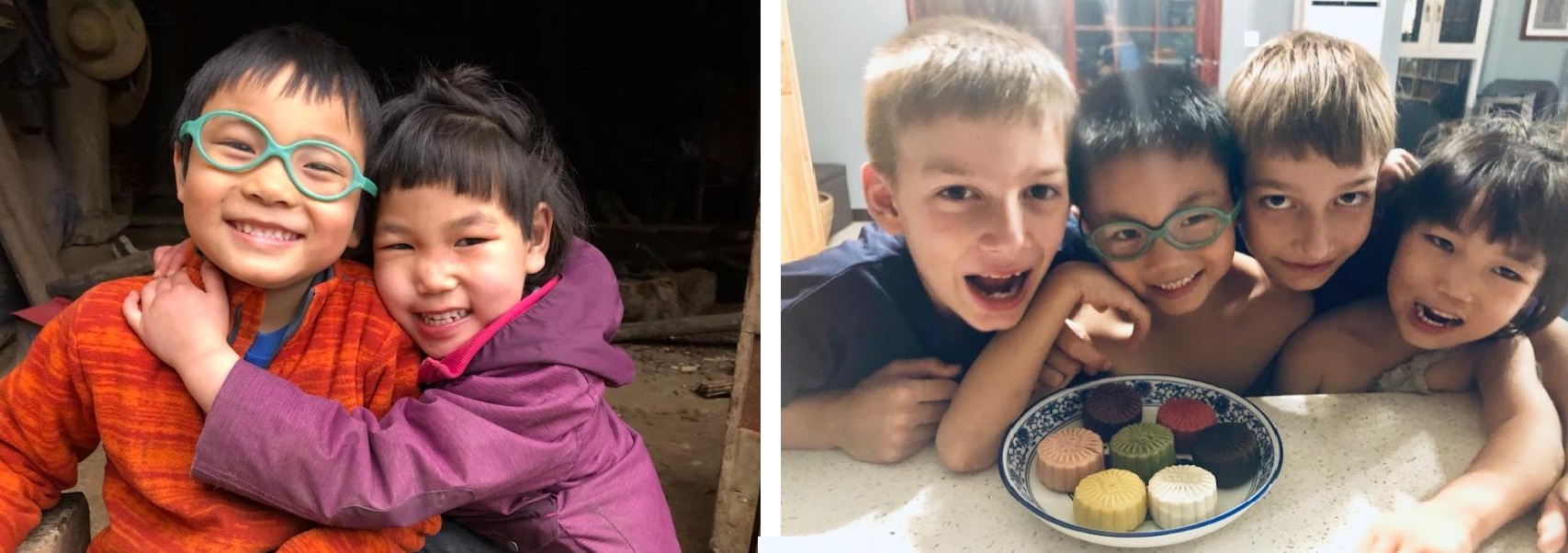
Figure 2: Reuben and Carolyn.
Figure 3: The Addington children enjoying mooncakes together.
We were clustered in the Addington’s’ living room, sipping cups of looseleaf tea. Their goldendoodle, Miles, ambled around contentedly. Their spacious house is spotted with leafy plants and contains tall bookshelves filled with Chinese and English-language literature. Seated across from me was Drew and Rachel, high-school sweethearts who were dating by the time they were seniors. “The summer before college,” Rachel told me fondly, “we went to college open-minded, since our colleges were in different states.”
However, they both knew they wanted to be married, and Rachel ultimately transferred to a smaller private college in Georgia to join her boyfriend Drew, who was at Emory University in Atlanta. They married after Drew graduated, when he was 22 and she was 21. The couple even had a Chinese-themed wedding!
“I feel that I was always oriented cross-culturally,” Rachel Addington reflected. “I’ve lived a miracle of unlikely people becoming family and belonging to each other. In fact, I feel that I have been adopted into many Chinese communities – a welcome that keeps transforming me. I am so grateful.”
Interculturalism felt natural to the couple. Rachel studied anthropology, majoring in Cross-cultural Studies. Drew’s grandparents were medical missionaries, and his father grew up in Hong Kong. During college, Drew studied Mandarin as a foreign language, and both he and Rachel enrolled in study abroad internships in China.
As a Christian, Rachel remarked how the whole process, which culminated in settling down and adopting from China, felt natural. “How am I going to follow Jesus in the world?” Rachel asked. She concludes that Christians are called to connect interculturally: “One of the things God is doing in the world is reconciling people across cultural, ethnic, and racial differences.” Nevertheless, the mother warns against “neocolonialism” through a “Western saviour mentality” or “colonial” mindset.
She warns: “Part of the pilgrimage is unlearning the heathen mindset, that is, Christians are sent to heathen places to rescue the locals. We received decolonial training that denounces and pushes against cultural supremacy.” She paused. “We are still growing.”
Rachel shares with me how she had always wanted to adopt: “From the time that we were dating and realized that we wanted to be married, we were already talking about our future family, including adoption. Adoption is an expression of God’s hospitality to humanity.”
Before they made the decision to adopt, the Addingtons made their home in Changsha, Hunan province. Changsha, a historic grain production and industrial base, has become an “intellectual and research hub,” birthing super hybrid rice and China’s first 3D laser printer (Changsha, www.travelchinaguide.com). They would stay in Changsha for nearly 12 years, from 2009 to 2020. Changsha became their home as “Christ followers who happen to be raising family and working in China.” They began as English teachers for the first two years. Drew received his MBA and worked for a Chinese company. Rachel volunteered at the social welfare institute/orphanage, “did a lot of random teaching,” and raised their children.
“We were surprised at how much we received,” Rachel smiled nostalgically. “I was enriched and grew so much because of the love, hospitality, and inclusion that we experienced from our Chinese neighbors, believers or not. It was transformative.”
Drew and Rachel recall that adapting to language and culture in China was a wild adventure – in turn difficult, exciting, joyful, and unpredictable. “Any funny or notable stories?” I asked.
“I drank too much bai jiu once,” Drew sheepishly mentioned. Bai jiu is a clear spirit, and it’s estimated that China consumes 10 billion liters of bai jiu annually (Baijiu, The Punchy Chinese Spirit, Isn’t Meant To Be Mixed). “Toasting with a business partner is culturally significant to show honor, trust, and seal the deal. At this time we were in the countryside having dinner and drinking homebrew bai jiu together. A friend brought me back home, where Rachel was with the kids. At the doorway my friend prefaced: ‘Rachel, Drew didn’t do anything bad.’”
“Drew was inebriated,” Rachel added, “and I’d never experienced helping a drunk person before. I asked if he was ok, and he said he just needed to rest in bed. I gave him a bucket. Our house was a granary and there were gaps in the floorboards.” While Rachel was downstairs googling ‘signs of alcohol poisoning’, vomit began to drip through the ceiling onto her arm. “Not our best moment,” she remarked with humor.
Rachel shared her memorable story: “I wasn’t used to pickpockets. When Titus [her oldest son] was a baby, I took the bus to the supermarket. After all my groceries were rung up at the checkout, I discovered my wallet and phone were missing from my purse. I had to abandon all the groceries at the register. With no bus card, phone, or money, I had no way to get home with my baby. I started crying inside the store. A stranger offered to give us a ride. We were the recipients of so much love.”
By their second year in China, Rachel and Drew Addington had two biological sons, Titus and Michael. I was curious – why did they decide to adopt? At the time, due to Rachel’s volunteer experience with the local social welfare institute, the family had formed friendships with several Chinese young adults who had been orphaned or abandoned as young children and grew up in the institution. They also fostered a child from the orphanage hospice for three years. To them, adoption felt natural.
“Now,” Rachel commented, “foreigners can’t foster anymore as the government wants to diminish foreign involvement, but before, there was no such limitation.” The foster child, a hospice survivor with profound developmental delays, was part of the Addington family for three years. “Legally, we couldn’t adopt him since we were under the age requirement of thirty. Even though we expected that he’d be adopted, and his family is wonderful, saying goodbye was the most painful thing I’d ever done.” The child was adopted by a family in North Carolina and is currently thriving.
Before the Addingtons were paired with Reuben, they underwent an adoption training course. In recent years they also attended live seminars and did a family course by local transracial adoptee therapist Cam Lee Small. Rachel also cites Melissa Guida Richards’ book, What White Parents Should Know about Transracial Adoption, as a formative resource. “Transracial adoptee kids must have racial mirrors and be connected to their heritage,” she specified.
After being paired with their son through Children’s House International, Rachel and Drew nostalgically described their first meeting at the adoption office. “Reuben was very cute and so lovely. He was wearing a maroon sweatsuit, waiting in a government office with people he didn’t know,” Rachel told me lovingly. Drew added: “It was great … even though he seemed a little nervous, he was pretty happy.”
Rachel writes, “Reuben was likely born somewhere near Xi’An, China in July of 2013 … it is certain that Reuben was born to a Chinese mother, father, extended family, and into a wealth of Chinese cultural heritage that is still his. Reuben’s particular Chinese body ever bears witness to his first mother, father, and ancestors; their genes are manifest in him, and are his lifelong possession.”
Reuben was found on August 4, 2013 at Lian Lake Park [莲湖公园], “nestled in a basket set below a statue of a young boy gazing dreamily into the summer sky.” The one-month-old baby boy would be taken in by the state welfare institute until about age one. After that he lived the next two years of his life in China Heart, an Australian and Chinese-organized foster home that employed local Christian Chinese aunties as caregivers. Luckily, the foster home was deliberately structured to function like a family, not an institution. Unlike many of the other adoptees, Reuben was raised by his caregivers to understand bonding and attachment.
The Addingtons were paired with Reuben when he was three-and-a-half. On their first day together, he was happy until bedtime, when Rachel physically felt his heart racing in fear as he cried, “我要回家” [I want to go home]. Drew and Rachel held him as he fell asleep in their bed, and he had peaceful nights after that. The boy was named An Lianlei [安连雷], with a surname derived from the province name. Rachel and Drew kept his given name and changed his surname to Ai [艾], matching the Addington family’s Chinese surname. His given name, chosen by the social welfare institute, contains a homonym of the park where he was discovered (Name: Lianlei 连雷; Park: Lian 莲 of Lianhu gongyuan 莲湖公园).
The boy’s English name was meticulously chosen as well – “Reuben means ‘look, a son’ in Hebrew,” Rachel clarified. “‘Reu’ also phonetically and sonically combined our names (Rachel and Drew), while ‘ben’ is ‘son’ in Hebrew. So his name means son of Rachel and Drew.”
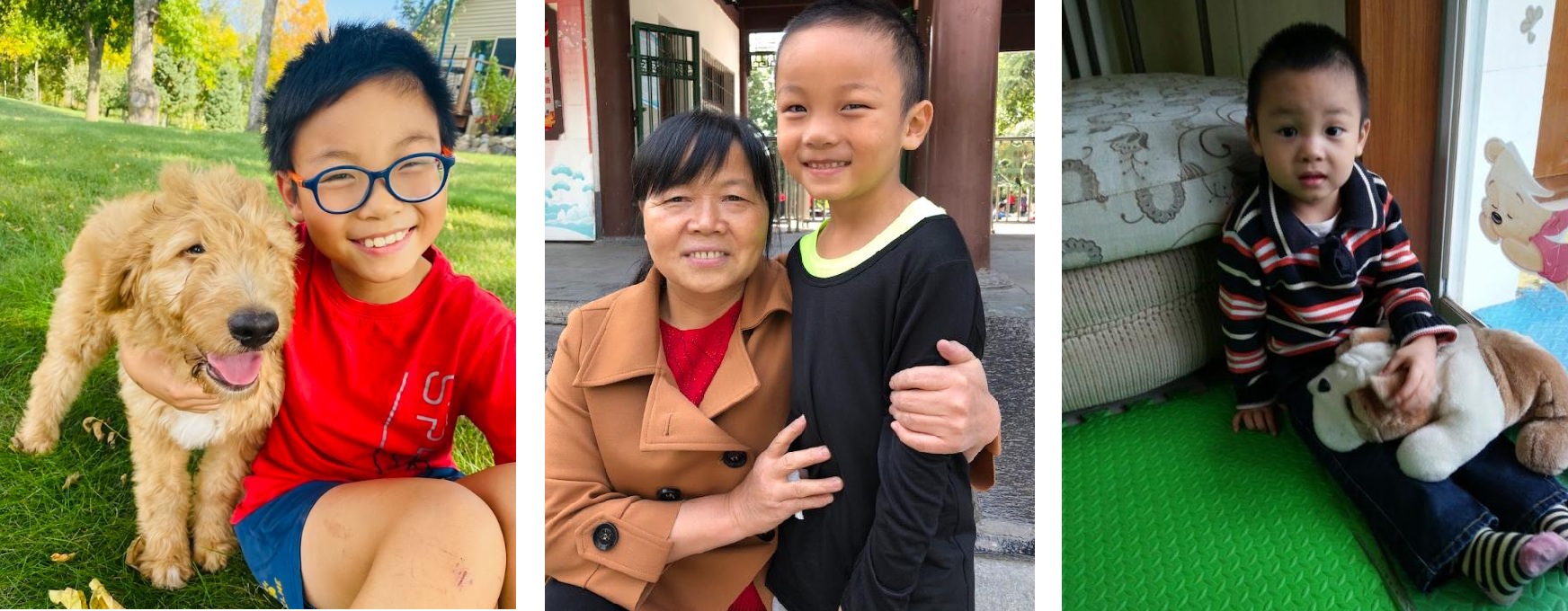
Figure 4: Reuben and the family dog, Miles.
Figure 5: Reuben and his beloved Auntie Chun Chun.
Figure 6: Toddler Reuben in China.
When I asked Reuben what he remembered, he admitted he knew nothing about his first parents. “My mom told me I was with them for about a month,” the 13-year-old told me. “I was relinquished because my foot had some problems.” Reuben had amniotic band syndrome, which develops in utero. Caused when fibrous bands from the amniotic sac wrap around fetal body parts, the restriction of blood flow leads to “underdevelopment, congenital deformities, or even amputation of affected body parts” (Amniotic Band Syndrome). Bands wrapped around Reuben’s foot, which led to a lack of nutrition. “His foot is smaller and required surgery so he could walk,” his mom explained to me.
The teenager recalled memories of playing with a special auntie in their China Heart apartment before his adoption. “春春阿姨 [Auntie Chun Chun],” he smiled. “She was a Christian and would play with me every day. In the apartment, I remember a barrier. I was on one side with the kids, and the aunties were on the other side. There was a kids fence, and a floor mat printed with animals. I remember sitting on the couch watching the Lion King.”
Remarkably, Auntie Chun Chun [春春阿姨] is still in touch with Reuben and the Addington Family through WeChat, China’s primary messaging app. “We visited her again in Xi’An in 2018,” Rachel wrote. “She and Reuben have a strong bond.”
Reuben’s memory of the adoption is positive as well. “Right after I was adopted,” Reuben Addington recalled, “we went back to the park, and when the park manager heard my story, he let us go on rides for free, including riding boats on the lake.”
Unlike the adoptees I featured in prior sections, Reuben spent a portion of his childhood in China. “I was adopted when I was three and a half, and we stayed until I turned seven, since my parents were already living in China.” Unlike most of the adoptees I have interviewed, who felt like they stood out in the United States, Rachel, Drew and their biological kids were the foreigners in China.
“My parents continuously talked to me about being adopted,” Reuben responded after I asked him. Growing up in China, there was no shortage of local food and immersion. “It was pretty fun,” he said. “My parents were planning on staying until I went to high school.” But life had other plans.
”Did you ever have an identity crisis over a sense of belonging?” I queried. “It must have been surreal being a Chinese adoptee of Western parents in China.” Reuben paused. “I don’t usually think about it,” he finally replied. He also believes that his physical appearance doesn’t play a role in how others treat him, which makes sense considering that he grew up in China and now attends a Chinese immersion school in the US. Reuben reports never really feeling different from his peers growing up and doesn’t recall any instances of racism or micro-aggressions. His mom added: “I think Reuben is in the first stage [of developing racial-ethnic consciousness] from my observation. He’s not quite thinking about that, since he has a continuous connection with Asian American classmates and friends in the community.”
Reuben holds a neutral view of China, but his feelings towards his biological parents are more complicated. “I feel confused,” he acknowledged. “Why didn’t they want me?” After I asked Reuben if he would ever track his birth family, the teenager told me that he already discussed a plan with his mom.
“If we could go back to where they set me in Lianhu Park, we could put up posters [with his pictures and information to search for his biological parents].”
“If you found your first parents, would you want to talk to them? If so, what would you say?”
Reuben nodded. “I would ask them how they felt during the time they gave me up.”
There were some other interesting insights I discovered about Reuben Addington: he may adopt in the future, and, if so, China would be a possibility (Note for the readers: China permanently closed its international adoption program in September 2024). He holds his identity and culture to be a mix of Chinese and American culture. He self-rates his Mandarin fluency at five out of ten and concedes that his writing is “a little sloppy.” Reuben quickly added: “I understand more than what I can write!”
Nevertheless, Reuben is very appreciative of his parents’ actions to immerse him in his heritage. “I’m happy they were intentional,” he told me. While he doesn’t believe that his parents’ faith influenced their decision to adopt, Christianity plays a significant part in his daily routine. “During breakfast time, we read the scripture. After breakfast, I read the Bible and write in my journal. We sing before supper. Sometimes on a weekend night, after Carolyn goes to bed, we pray and worship as a family.”
Like Hannah Ferber and Sara*, Reuben has a sister who is also a transracial adoptee. Rachel remarked, “After we adopted Reuben, his adoption went so well that we tried to discern the Holy Spirit’s leading. We felt like we could adopt again. We wanted to adopt a female child since we already had three boys.”
Interestingly, when the Addingtons initially began the adoption process, they believed that they would end up with a girl, as the stereotype of China’s patriarchal culture was that the overwhelming majority of abandoned children would be girls. But in the 2010s, the Addingtons observed that social welfare institutes were filled with mostly boys with disabilities, whose physical or neurological conditions likely didn’t show up on the ultrasound. These boys were abandoned after birth, when the “defect” became visible. “The files were mostly all children with disabilities, and mostly boys. Reuben fits that demographic.” She theorized that even though girls were initially the ones being abandoned, “there was a shift after the 1990s where Chinese parents became more open to having healthy girls. People were finding more ways to access backdoor ultrasounds. If there was an unwanted girl, they could abort it.”
In their search for a daughter, Rachel and Drew were presented with Carolyn’s file. “We knew she had mild cerebral palsy,” the parents commented, “but on the day we met her, we were completely surprised to discover that she was deaf.” Carolyn was four and a half when she was adopted and required a host of medical care, including several surgeries.
Carolyn was discovered outside someone’s residence in Hohhot (formerly Kweisui) city in the Inner Mongolia province. The baby was estimated to be 10 days old and was diagnosed with cerebral palsy. In the US, audio neural testing confirmed the child’s congenital and degenerative hearing loss, and doctors guessed that her biological mother may have contracted cytomegalovirus (CMW) while pregnant.
Before meeting Carolyn, the Addingtons believed that they would be able to cope with her mild cerebral palsy, but found that “her degree of cognitive developmental delays was more severe than our expectation,” as Drew acknowledged.
The couple did their best to prepare. Rachel’s mom is a special education teacher, so she already had some grounding. “We had many people in our lives with special needs. I had been volunteering in the social welfare institute, I’ve had blind friends, friends with wheelchairs and achondroplasia, I’ve fostered children and was volunteering and tutoring at the orphanage.” Rachel and Drew believed that they were prepared to handle the needs of their daughter, but found it was harder than anticipated.
“Both Reuben and Carolyn have special needs. When we were adopting them, we asked, ‘What special needs would we be able to cope with if we were to stay in China?’ Reuben’s medical issue was already resolved. Before Carolyn, we got a file of another girl that we had said yes to. We later learned that she had Down Syndrome, which sometimes involves heart issues that would require us to go back to the US. After adopting Carolyn, ironically, we found out that Carolyn’s needs were probably greater than the girl we had passed on.”
Carolyn’s first meeting with her family was at the hotel lobby. “She was furious,” her mom described. After Carolyn’s caregiver left, she became very angry and distressed. “She was hurting. It took longer for her to feel safe,” Rachel said.
Just like for Reuben, the Addingtons sent a book with family pictures to the orphanage so that their daughter could get acclimated to her new family. “Reuben could understand,” Rachel told me, “but Carolyn couldn’t apprehend it – she could only learn to feel safe. Feelings take a lot longer.”
“The biggest challenge is that Carolyn has medical needs and needs a lot of care. She requires constant supervision and a lot more educational support. She has physical, occupational, and speech therapy. She has had surgeries, like her cochlear implant and hip surgery.” Rachel notes that her daughter has two identities, being deaf and Chinese American.
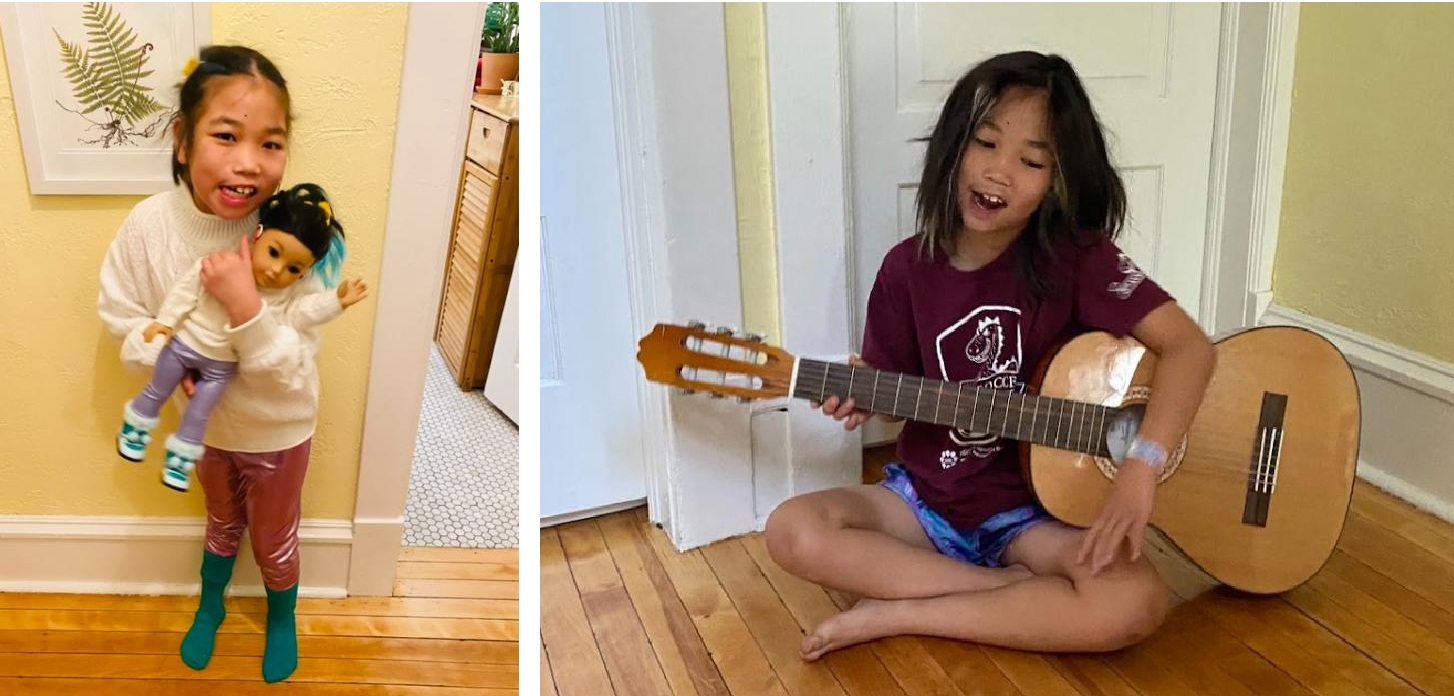
Figure 7: Carolyn at home with her favorite doll.
Figure 8: Playing the guitar.
Turning back to the parents, I asked them why they ultimately returned to the United States. “Politically,” Rachel said, “between the US and China, there was tightening on both sides. There are ebbs and flows in how China interacts with foreign and Christian nationals. Our family was affected in a time of tightening.” In 2020 the family repatriated to Minnesota, where Rachel worked as an Educational Assistant at Yinghua, a Chinese immersion school, so that all four kids could be admitted as new students.
Leaving China was an extraordinary grief and loss from which Rachel and Drew say they are still recovering. Rachel said that she grieved heavily, especially for Reuben. “I remember telling him, through tears, ‘Reuben, mama is so sorry that you only got to live in your country for seven years.’ I knew it would change his identity formation. There were so many losses, but there were also new gifts in our new place in Minnesota.”
Today, the family has restructured around their daughter with special needs. They are learning ASL. In China, Carolyn had an online speech therapist. Now that the family resides in the United States, she receives abundant social services through the county and education system and attends Metro Deaf School.
As we watched Carolyn scamper around, Rachel told me that her future might entail living in an assisted living facility for vulnerable adults with special needs.
“If you could redo how you raised Carolyn, what would you do differently?”
Rachel smiled tiredly. “I would be more patient.”
I then turned to Titus and Michael, older brothers to their adopted siblings. Titus is entering his senior year of high school and is considering a vocation in Christian ministry leadership, with a side interest in drum tech or drum building. Michael, who is a rising high school junior, is thinking about business or medical school. Both of them remember the adoption process for their younger siblings.
Titus tells me, “My first memory of Reuben was in the van after we picked him up. He was in his red maroon sweatsuit. I remember him in distress and crying the first night.” Michael tells me that he remembers the office visit, the car ride, and returning to the hotel.
Both of them have a positive relationship with their little brother. “He’s a normal little bro,” Michael told me. “He was punching holes in boxes yesterday!”
“We talk,” Titus added.
Their relationship with their sister with special needs is more complicated. Both Titus and Michael admit that their relationship with Carolyn is “not as good as with Reuben.” They shared challenges of being a sibling to someone who is developmentally disabled. “We have to help take care of her and be more patient,” says Michael. Titus tells me that it’s “not as bad for us,” since “mom and dad do a lot of it.”
“We’re used to it.”
I was curious to see how Titus and Michael, who are white US-Americans, feel about their family’s active involvement in Chinese culture. They even grew up in China and attended a Chinese public school, where they would be considered the outsiders. “It felt normal,” Michael considered after pausing. “It didn’t feel like we were that different.”
Titus said, “It was kind of hard to say how it felt. It felt like a normal childhood. There were some differences. In first grade, Chinese school was so hard. I wasn’t doing super good in school. I was struggling to focus and my teacher helped me a lot. We all went to Chinese public school, which was challenging and stressful. The friendships were great, and they didn’t treat me any different. When I returned to the US, it took a lot of time to adjust, since we came back during COVID. But it was awesome, since everything in the community was disrupted, so it was easier to find our place since everyone felt disconnected.”
“How do you feel,” I queried, “about your parents’ deliberate choice to raise you two in China?” The brothers looked at each other. “I’m happy with that,” Titus replied. “It’s a good choice since they were following God. It wasn’t better or worse. Just different.”
“I’m glad,” Michael echoed. “It gave us different perspectives.”
I asked the brothers if they believed their unique experience led to any downsides. Michael shared that growing up in China led to more difficulties acting and befriending people in Minnesota. But both brothers appreciated the opportunity to bridge two different worlds, or to “step into the shoes of both.”
They shared that they are closer with each other, not because they are biologically related, but because of their age gap. “Biology doesn’t make a difference,” they both stressed. “If Reuben was older, it would be different.”
I then inquired about their involvement in Chinese culture. Titus tells me he is less involved than his mom and Reuben. Titus and Michael are no longer enrolled in Chinese language courses, but they are very active at Twin Cities Chinese Christian Church youth group and with Asian American friends.
“Any advice for siblings of transracial adoptees?” I ask them. “Don’t treat them any differently,” Michael responded. “Yeah,” Titus echoed. “Treat them as brothers.”
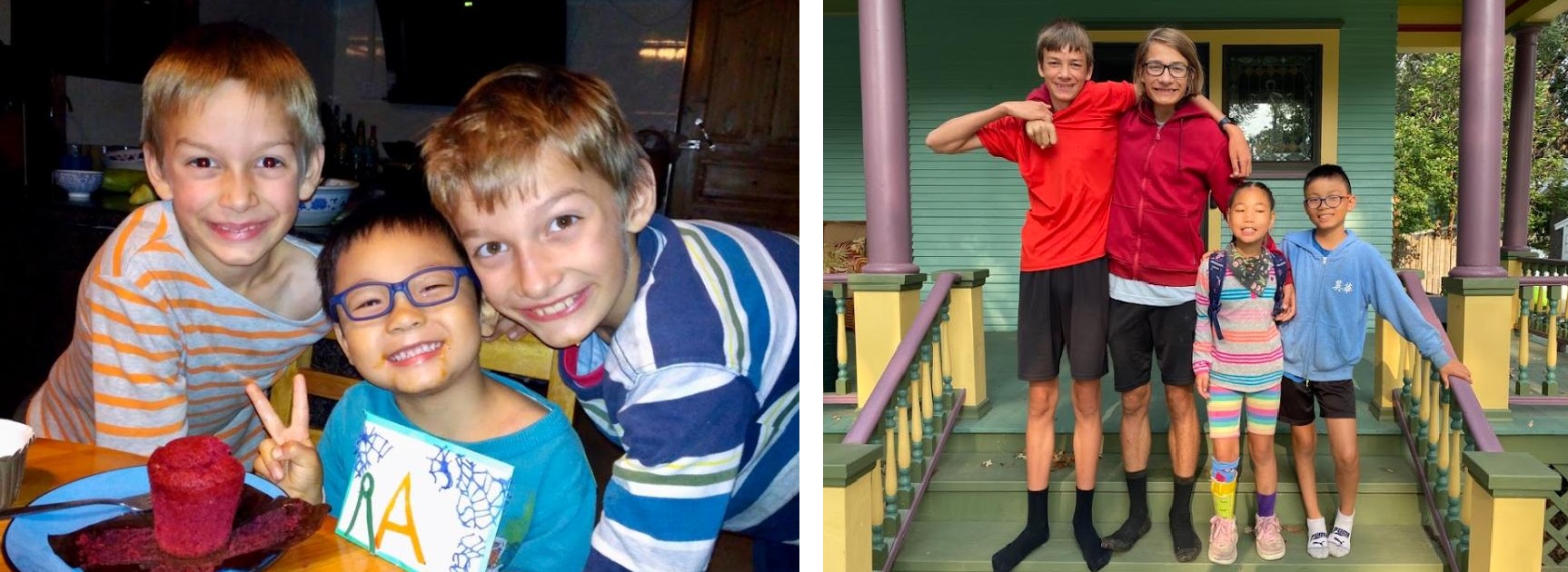
Figure 9: The three brothers (From left to right: Michael, Reuben, and Titus).
Figure 10: A more recent picture of the siblings. (From left to right: Michael, Titus, Carolyn, and Reuben).
As the interview concluded, I asked Rachel and Drew what advice they had for other families considering adoption. “People need to think carefully about their motivations,” Rachel cautioned. “They need to consider the amount of energy of adoption – would they be willing to also put some of that energy into family preservation? I’m asking that question of myself as well.”
She brought up a case where Carolyn was fetishized as a “Chinese doll,” and cautioned North Americans who want to adopt overseas Asian children. “Beware of the American exceptionalism mindset, which sustains a myth that the United States doesn’t have orphans or poverty or children in need, so we have to look internationally. That just isn’t true. There are many kids domestically that need help. Why is it that white families feel like they need to adopt internationally when there are children in need domestically?” She added her explanation for their international adoption: “We adopted from China because we were living in China.”
Rachel wonders if some parents prefer international adoption because domestic adoptions can feel more messy, with biological parents in closer proximity. But nevertheless, the mother encouraged American parents considering adoption to think about domestic adoptions first.
And what does Reuben have to say?
I first asked the teenager if he would say anything to his younger self.
“I would tell him what is happening in the future. School is fun. I have a great teacher and great friends.”
He dreams of becoming a chef and spends his free time cooking eggs, noodles, and soup.
“Reuben, any final advice to other transracial adoptees?”
“Being adopted can be hard. It can be challenging. But otherwise, it’s great!”
Sam*
Sam* is a master’s student in Higher Education at the University of Minnesota. He previously completed a bachelor’s degree at Dordt University in Iowa, and worked as an International Student Coordinator in Indiana after graduating.
Sam* was discovered on a bridge and adopted from Shanghai, China’s most populous city, when he was weeks away from the age of fourteen. At his time, adoptees over the age of fourteen could not be adopted transnationally. My interest was immediately piqued, as teenage adoptions are rare: as of 2017, 67% of adoptees from China are between the ages of one and four (China Adoption Fast Facts).
“I grew up in an orphanage in the Minghang District of Shanghai. I don’t know about my biological family,” he explained.
I asked Sam* to describe a day in his life at the orphanage. “I lived with guys in group homes. In elementary school, I would wake up around 5AM. There was an orphanage bus that drove me to the public elementary school. I spent most of the day there taking classes. I had lunch, then afternoon classes. I would return home around 4PM, have supper, and then study late after supper.”
Surprisingly, Sam* enjoyed his time at the orphanage. “It was pretty cool,” he remarked. “I was spoiled. The orphanage took us on vacations every summer.”
He explained: “I was adopted at the age of fourteen. I knew I was going to be adopted, since in my classroom, there are pictures of each orphan on the classroom wall. Underneath each picture, there are different stickers. The stickers indicated if you were in a ‘status of waiting,’ if someone is being considered for adoption, or if you are adopted and leaving soon.”
“In early September 2014, I knew that I was going to be adopted, since my stickers changed. The orphanage adoption coordinator shared with me information about my adoptive family. I didn’t see any photos, but I read through their information and the letters they sent.”
Sam* took a sip of tea. It was his last month as a thirteen-year-old when he and his family had their first meeting, he told me. “At that time, we went to a small court with my parents. The judge asked my parents if they wanted to adopt me. Then, the judge asked me if I was willing to be adopted by them. We both said yes.”
“If I said no,” Sam* continued, “the process would stop. I saw the United States through TV and thought I wanted to go.”
The teenager would be adopted by Dutch American parents through Bethany Christian Services. They had four biological children and one adopted daughter from Hong Kong. His father worked as a high-level executive at Nile Petroleum Industrial Company (NPICO), and his mother stayed at home. Sam* was adopted because his older sister, who was adopted at the age of sixteen, wanted a younger brother.“My parents went through a year of classes, filed and completed paperwork, and flew to Shanghai and Guangzhou to complete more paperwork. They had to get me all the immunizations I needed, and went to the U.S. embassy to get my passport.” The adoption went smoothly, and Sam* was off to the United States!
“In the beginning,” he told me humbly, “we didn’t communicate. My parents and I used body gestures.”
“Before I was adopted, I knew there was Christianity and Buddhism. My orphanage had a strong connection to a Shanghai Buddhist temple. I didn’t dive into Christianity when I was in China. After I arrived in the United States, I attended a Christian middle school, high school, and college. I became Christian due to adoption; without adoption, I would never be Christian. I got baptized when I was 15, even though I didn’t know what it meant. I just got baptized because everyone at school was getting baptized. I only truly believed as a high school junior after thinking about religion since middle school.”
Today, Sam* is very devout and an active member of Minnesota’s Chinese Christian community, where I met him. I was curious why Sam’s* parents, who already had four biological children, wanted to adopt internationally. “I don’t know the complete story,” Sam* responded. “I know that my mom wanted to adopt, but my dad was hesitant. The LORD touched him, but I don’t know how.”
“As the youngest child,” I asked, “what is your relationship like with your older siblings? What was it like suddenly having a bunch of older siblings?”
“I have a love-hate relationship with my sister. I see my other biological siblings as my parents. My oldest brother is 22 years older than me. It’s great to see them once in a while. I never felt overwhelmed, since they were so much older and they have their own families. I have a lot of relatives.”
The most difficult transition for Sam* was improving his English. “It was super rough,” he recognized. “My speaking, writing, and reading was really bad. I learned English in China, but we focused on vocabulary and grammar. The first month in America, I barely spoke anything. My parents, friends, and teachers thought I was depressed and traumatized. I wasn’t traumatized, but rather getting used to a completely different way of talking and living.”
“I had to get used to a completely English-speaking environment in a small rural town in Iowa. My parents don’t speak Chinese, and I found it hard to communicate. My dad was sixty when I came to America, and my mom was 56. I treat them like grandparents. My relationship with them is atypical: it’s more grandparent-grandchild dynamics than a parent-child relationship.” Despite the atypical dynamics, Sam* is happy with his family, and he doesn’t wish his parents did anything different raising him. While his family members don’t celebrate Chinese holidays, Sam* celebrates them by himself and hopes to have his future family celebrate them in some shape or form. “At the least,” he tells me, “they will be connected to Chinese culture because of me.”
“What was the diversity like?” I inquired.
“I was the diversity,” Sam* laughed. I joined in. It must have been such an absurd experience, moving across the world as a teenager and learning an entirely new language by yourself as a seventh-grader in a rural environment where nobody looked like you.
“In middle school, I was the only non-white kid in the entire school.” Despite being the only minority, Sam* never experienced racism or hostility. “Middle school was pretty good,” he quipped. “The first day, everyone was clapping as I entered the gym. The school poured a lot of resources for me to learn English. I had a paraprofessional dedicated to helping me and a good friend group. My English really improved after I went to my parents’ friends’ house for English tutoring after school, from Monday to Friday for two years.”
In addition to the new language, Sam* admits that he was initially taken aback by how touchy some Americans are. “My family is super touchy, and hugging was a new concept for me. Before I was adopted, I don’t think I hugged anyone. In my family, we hug each family member before they depart. The touchiness made me very uncomfortable. Even now, it’s a little bit uncomfortable for me.”
Sam* returned to China in 2018, after his sophomore year in high school: “Twelve members of my family went back because my sister graduated from college – my parents wanted to give her a graduation gift. We visited four cities, including where my sister and I were from. I visited my Shanghai orphanage. When I first stepped foot there, I felt that it was the same but also different. The building felt small, but I still recognized everything and talked to a few teachers.”
Curious, I asked if he searched for his birth parents or family, especially while he was in China. “I did a 23andMe DNA Ancestry Test before, but I had no luck. I don’t know how to even get started, since there is no information about my birth family or myself. I don’t even know my birthday or my real name. The orphanage guessed my birthday. They didn’t tell me how I was found, so I had to look through the files my parents collected.”
“My parents gave me my files in high school. One night, I wanted to learn more about myself. I found a newspaper that said I was born in 2000 and found October 24, 2004. They estimated that my birthday was that day. Six years after I entered the orphanage, they posted me in the newspaper with other orphans in an attempt to look for our families. I didn’t have any luck.”
He shares a peculiar finding from his files: “When I was in China, I would take seizure medication daily. I didn’t know what the pill was at first, and I would flush the pill down the toilet each time, since I felt fine. When I told my teacher, they confirmed it with doctors, where they discovered I was fine and stopped giving them to me. After I began to look into my files, I realized that the pills were for seizures.”
“What emotions emerge,” I asked, “when you think about your birth family?”
“I feel nothing now. Maybe some curiosity on who they are and why they wanted to leave me on the bridge. I feel no emotion, but I have a few questions. I used to feel more emotional.” Sam* described one time when he asked God why he had to experience being an orphan. He felt comforted by Romans 9:20, which reads:
But who are you, a human being, to talk back to God? “Shall what is formed say to the one who formed it, ‘Why did you make me like this?’” (NIV).
Sam* would complete his bachelor’s degree in Human Resource Management at Dordt University. After graduating, the young man moved to Indiana and worked at the Vincennes University International Student Affairs office. He ultimately decided to pursue a Master’s in Comparative International Development Education at the University of Minnesota. He enjoyed the international aspect when he was comparing different programs, and chose the U because of its robust program. Recently, Sam* changed his Master’s focus to Higher Education. Now, he hopes to work in international student affairs, most likely in the United States.
Over the years, Sam* has done a lot of reflecting and soul-searching. “Before my sophomore year in high school, I thought I would be okay dating anyone. After I formed my own thoughts, I realized I would prefer for my future partner to be Asian.” Sam* is also interested in adopting in the future, most likely from Asia. “Anywhere is okay, but I would probably choose to adopt from Asia, so they can match me.”
“I still have a crisis over my identity, especially cultural identity, since I was adopted when I was fourteen. I was raised in Chinese culture, but I have spent 11 years in the United States now. I enjoy both identities, and attend both a Chinese and a white church. I want to find my own middle ground, but there is no middle ground. I don’t know how I would characterize myself. I feel a little bit more Chinese than American, at least compared to my sister, maybe 60/40. I don’t ever wish I was different, but sometimes I wish I belonged to one group. If I was adopted earlier, I would be more American. I would be a different ‘me.’ It would make things more simple, especially language wise. I could master one language. I feel like I don’t belong in any cultural group.”
He paused. “Maybe I am my own cultural group.”
As the interview closed, Sam* told me he wants the world to know him as a Christian, an adoptee, and someone with experiences similar to a third culture kid.
“What would you say to your younger self?”
“Keep being who you are and trust your decisions. It’s okay to wonder why you are an orphan, but don’t blame yourself for it. It’s okay to have those emotions, but don’t take it on yourself. I had taken my emotions on myself, which changed my personality from being an extrovert to an introvert. It wasn’t my fault. Now, I see it as a blessing.”
“I was very extroverted in China, and I thought it was normal living with a group of children that are the same. When I came to America, I realized that I was an orphan and adopted. Those labels were added to me after I arrived. Until recently, it was still hard. That obstacle came between me and God and I never trusted Him – I wasn’t sure why He wanted me to have that experience. Reading Scripture and spending time with God really helped me answer questions. I know He has a plan for me.”
“I’m at peace now.”
Michael Munn
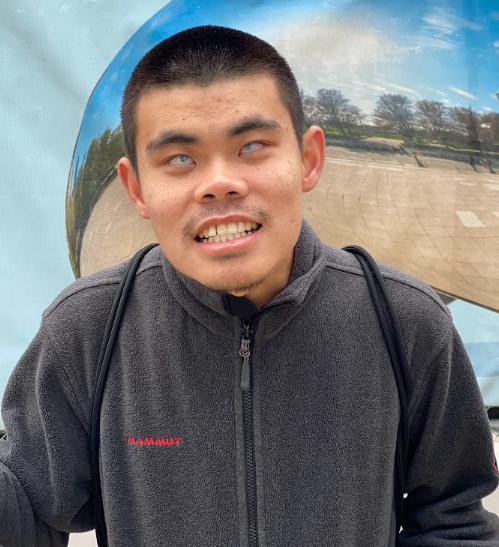
Figure 11: A recent picture of Michael.
Michael Munn aspires to become a Civil Rights lawyer, plays the drums, and has his own podcast, titled “Michaels weekly perspective.” He was born legally blind and was adopted as a teenager from Hebei province. Born in 2000, Michael has a remarkable story and an even brighter future. I met Michael through our church, of which he is an active member.
“I was abandoned as a newborn at a very fancy lounge at a train station. Before being adopted by my current parents, I was adopted previously by someone without paperwork, where I was under his care until he passed away.”
Michael grew up in a Hebei orphanage with twelve other children. “I lived there for three years between 2005 and 2008. After that, I went to Bethel, a Chinese foster home where I learned how to speak English and write in Braille. That foster home was very grand and was run by a French missionary couple. They saw how blind orphans were treated in China and started their own foster home. I lived in that home until 2011. In 2011, I was able to attend a school for the blind in Beijing with nine other kids, where we had an opportunity to live in the city and go to school during the week.”
“Before attending the Beijing School for the Blind, my previous teachers only had an elementary school education, so my own skills and knowledge were limited. In my Hebei orphanage, I along with a dozen other kids were shut in closed rooms with someone watching us. We weren’t allowed to leave the room unless there was a person leading us.”
I, surprised, asked Michael if he believed his earlier experiences traumatized him.
“I didn’t think it was traumatic. I thought it was the norm. We were sheltering in place.”
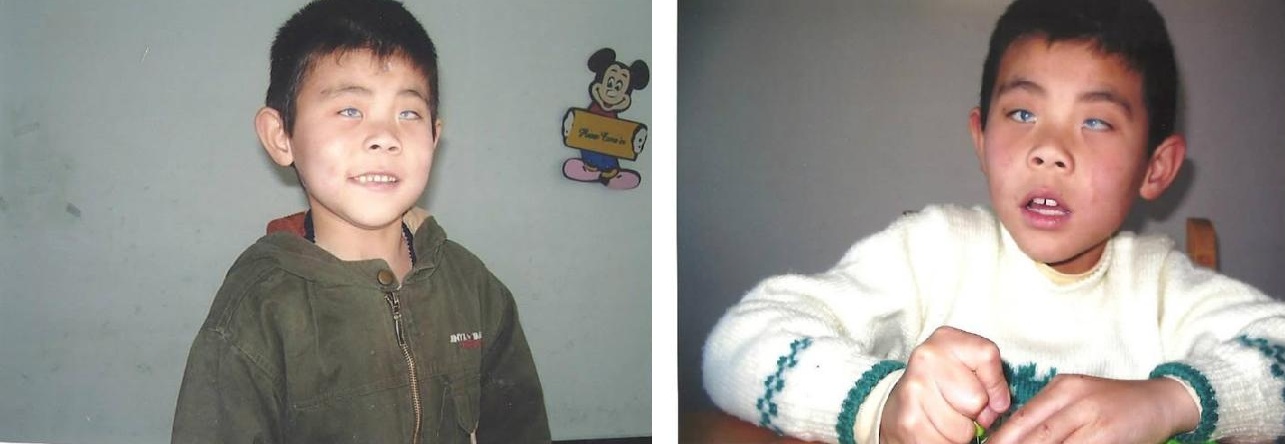
Figure 12 (left): Michael as a child in China.
Figure 13 (right): Learning Braille.
Michael Munn enjoyed the School for the Blind much more, even though it wasn’t great. “The teachers have professional backgrounds for teaching blind students,” he described. “When they entered the school, they received further training.”
Because the child lacked the education his peers received because of his blindness, he was placed in 2nd grade at the age of eleven. The administrators considered placing him in first grade, but decided against that because of his age. He studied there between 2011 and 2013.
“I was adopted in April 2014 before I turned 14. Before that, I wasn’t sure I would ever be adopted. The staff hinted about my adoption, asking me who I would miss if I ever left. I was dismissive and thought that I was too old.”
“The adoption process typically takes four months to a year, but with my case, it only took six weeks because it was expedited. We needed to race to the deadline before May 1st.” Chinese adoptees cannot get adopted transnationally after they turn fourteen, and Michael’s 14th birthday was on May 1, 2014.
Mr. Munn described to me how his parents chose him. “My mom was scrolling Facebook on February 4, 2014, since she couldn’t sleep. She came across a picture and video of me playing the flute and jumping rope. She immediately wanted to adopt, and my file wasn’t closed at the time. My dad was completely on board and helped sign the paperwork. My parents were able to get the paperwork completed in time.”
He also believes there was divine intervention involved. Prior to his files being closed, many others wanted to adopt Michael but backed out because of how long the paper trail was. “It would be impossible if it wasn’t for divine intervention. I think God specifically chose my family to make a miracle happen.” Michael would be officially adopted April 28, 2014, a few days before he turned fourteen.
His father was a federal agent, while his mother was a stay-at-home mom. “She had several failed marriages,” Michael told me over the phone. “She graduated from college and lived in Georgia for twenty years. She had one biological child with my dad. Prior to marrying my dad, she had three additional kids from a previous marriage. She was Irish and part indigenous Seminole.”
The young adult described the first meeting to me, which occurred online: “I was excited I was able to Skype with my parents. I could speak with them fluently in English. I had a huge interest in Boeing Airplanes, which I told them about. My family told me about their situation, and how I can have access to their computers. My mom gave me her drum set.”
Michael entered North Virginia to a family with three living siblings. “I have a brother in heaven who passed away when he was eleven. He would have been 31 today. I have three sisters, two older and one younger. I am the only one who is adopted.”
He has mixed feelings about his siblings. He used to be closer with his two older sisters and had a more rocky relationship with his younger sister. After his mom passed away in 2020, Michael and his younger sister reconciled and are on good terms. Today, he is distant with his older sisters.
I asked Michael if he faced any challenges as a legally blind adoptee who entered American life as a teenager.
“It was very easy to adapt. The foster home I lived in for five years semi-immersed us to the Western lifestyle. Every summer, there were volunteers from English- or French-speaking countries that would do farm work at the foster home and teach us English.”
Unlike Sam*, Michael had already come to the Christian faith in China. “I heard about God in 2008 after I moved to the foster home. Every Friday that summer, an American volunteer named Sarah would hold Bible classes, where we would sing a few hymns and pray. People told us stories from the Bible, which led me to finally believe.” In 2009, the child would begin attending a village church in a huge farm rented by the foster home. Despite wanting to, Michael couldn’t get baptized, as his foster home didn’t have guardianship over the minor and the action would require permission by his orphanage. After he moved to Minnesota, I watched Michael get baptized to great applause in November 2023.
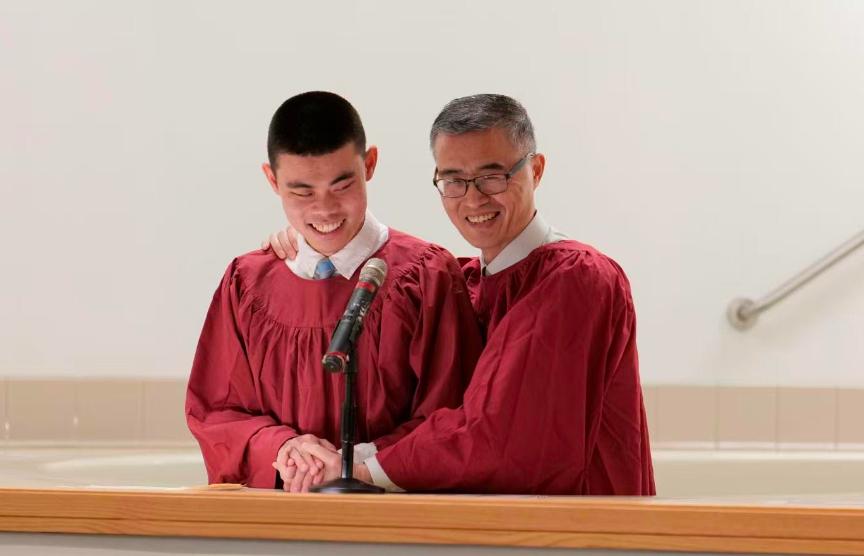
Figure 14: Michael gets baptized by Pastor Fred Li at the Twin Cities Chinese Christian Church
– Michael’s Testimony Speech. (Credits to Edward Wang).
Even though Michael learned English in China, the transition was still difficult, and neither of his adopted parents understood or spoke Chinese. “Sitting in a 90-minute science lecture in 6th grade was a complete shock,” he laughed. “I knew what the science teacher said, but I couldn’t make anything out of it. I was proficient enough to speak in daily conversations, but I couldn’t understand precipitation, water cycles, and watersheds. That first semester of 6th grade, I got an unappealing report card with Cs and Ds.” I snorted. I have the same trouble learning anything in science class, but that’s because my brain can’t comprehend anything related to science.
“In North Virginia, there were no Chinese speakers that spoke my dialect. There was one ELL (English Language Learner) specialist that was only fluent in Spanish. I didn’t get any service at all in the public school,” he shared. “The last blind student that entered this school graduated in 2001. I joined in 2014.”
“My mom fought tooth-and-nail to put me in the class. I was in self-contained classes, where I would be the only student. I was only allowed to participate with others during band and history. I wasn’t bullied, and the other students were curious. People were nice to me. They would step aside to let me pass like the red sea.”
He tells me an amusing story during his time at his first public school: “One day during lunch, I wanted to sit closer to the window. When I sat down, I didn’t anticipate that the table I sat down in was occupied by other girls.”
Michael remembers one negative memory from his first middle school, when the principal called him an “oriental” straight to his mom. “There weren’t any actions taken,” he told me sadly. The administration at his first school gave him and his parents a difficult time, especially the principal and vice principal. “In the end, we withdrew and moved to a different county.”
His second middle school was marginally better. “Everyone was great,” Michael said. But there was one traumatizing incident that changed everything: in 2015, when Michael was in 7th grade, his teachers placed him in a radiator closet. “There was no room for me, the teacher, and the braille printer in the room,” Michael explained. His mom became furious when she found out. Michael’s older brother who passed away had died of brain cancer, and his mom didn’t want her adopted son to share the same fate. “Generators radiate hot air, and with the absence of windows, it can cause cancer. When my mom spoke up, we were bullied by the new assistant principal.” His family would withdraw him in 2016.
After middle school, Michael stayed at home for two years, between April 2016 and November 2018, where he taught himself basic English. After the boy submitted a writing sample to his instructor, she couldn’t understand what he wrote. “There were sentence fragments and run-ons. She wasn’t pleased and placed me back in a basic English class.”
Michael’s mom, worried that her son would fall further behind, re-enrolled him in a public school, anxious to have her son learn the basics of English and Math. “I had to relearn math again. Even now, my math isn’t so great,” he recognized.
In 2019, the nineteen-year-old Michael hit a turning point in his life. That year, both of his parents were diagnosed with cancer. “My dad was a lifetime smoker and started treatment in Emory. My mom felt a cyst in her stomach that November and was diagnosed with ovarian cancer. Everything started to fall apart in our family.”
During that time, Michael and his sister were still in school. His mom suggested Michael move to Georgia with the family, but at the time, she was constantly losing her temper at his sisters and feared the fraught environment would make Michael’s life worse. One of Michael’s older sisters was completing her Ph.D. in Georgia, and he was sent to live with her. Five months later, his mom and other sisters moved to a different part of Georgia while his dad stayed in Emory for treatment.
His mother also encouraged Michael to enroll into the Georgia Academy for the Blind after he received his GED, so that he can receive more training.
After his mother passed away in June 2020, his eldest sister became his legal guardian and primary caretaker, as Michael was in high school and couldn’t live on his own. A few months later in September, his father also passed away from cancer. His sister would take care of him until he graduated from the Georgia Academy for the Blind in 2022.
While Michael was in the academy, a mentor from the National Federation for the Blind in Georgia suggested Michael move to Minnesota two days before the start of the 2020 to 2021 academic year. “After training for a year,” he told his mentee, “you can attend the UMN for free!”
Eager to eventually receive a bachelor’s degree, Michael agreed. He described the process as “a challenge,” with 7 counselors working on his case during his senior year. After paying out-of-pocket for the program, the adoptee moved to Minnesota to join the BLIND Center (Blindness Learning in New Dimension Center) in Minneapolis, which was founded by a National Federation for the Blind member. He attended for nine months and greatly enjoyed the experience.
“At the Georgia Academy for the blind,” he shared, “going out of campus was highly restricted. When I started training in Minnesota, I had no experience of traveling alone.”
“In Minnesota, I was able to go outside the campus. One day, I wanted to get a Sprite at CVS, but I forgot how to cross the street, and a guardian angel helped me.”
At the BLIND Center, blind students were able to travel outside with travel assistants. Michael’s dedication and training led him to become cleared to travel by himself in January 2023. This has opened up a wave of possibilities for the blind student, who had once memorized the entire Beijing subway map but had never traveled alone due to fears of getting lost. “Before, when I traveled with a Travel Assistant, we would take the bus and light rail. Now, I can take anything – Uber, Lyft, or the bus. I can go anywhere now, since before, it was unfair to the other students, since the travel assistant would have to be with me when I ran errands.” I can attest to this, as I often run into Michael and his white cane throughout the Twin Cities. His training has really allowed him to become fully independent.
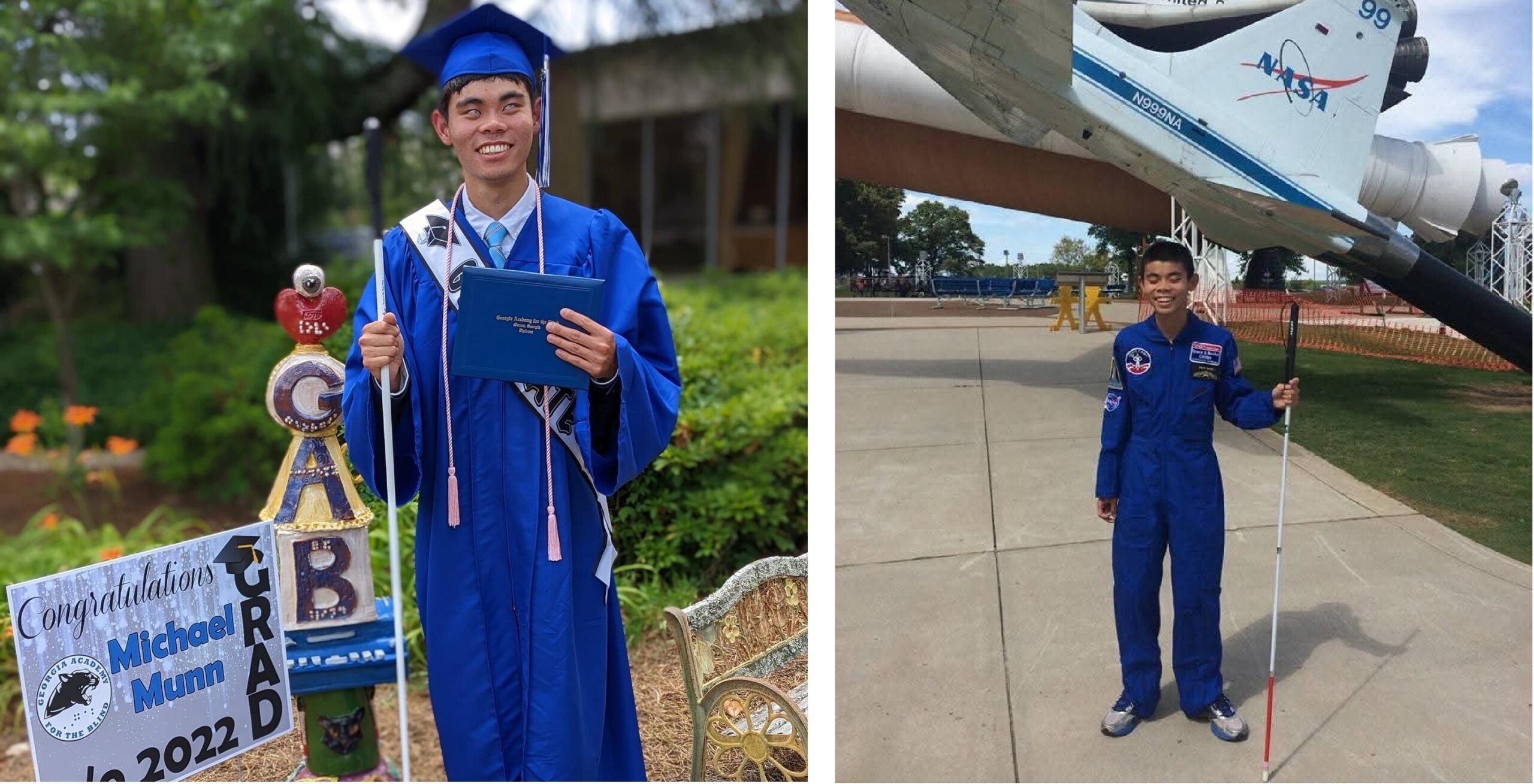
Figure 15 (left): Michael’s graduation picture from the Georgia Academy for the Blind, 2022.
Figure 16 (right): Michael Munn at the NASA headquarters.
Ever since Michael was adopted, he had a yearning to join a Chinese Christian church and find a community that shared his heritage and faith tradition. The night he graduated from the Georgia Academy for the Blind, Michael pulled out his phone and searched for Chinese churches in Minnesota. “The first result that came up was T4C,” he told me. “I put the idea on the backburner until I moved to Minnesota and got settled.
“In January 2023, I had nothing to do, and I was cleared to travel alone. I looked up the T4C address and hopped on the light rail. After I rode 20 stops on Bus 87, I arrived on Fairview Ave, with a 30-minute walk left. I walked until my phone was almost out of battery. When my phone was almost dead, I stopped at a Wells Fargo and called an Uber home. That was my first attempt at visiting, and my goal was to come back. Two weeks later, I tried again. I took the light rail to St. Paul’s Fairview Ave. I walked continuously, but it was hard to navigate because everywhere was covered with snow. I came across the Wells Fargo Bank and I took an Uber to church. The first sermon was Pastor Mma (the Mandarin pastor at the time) preaching on the birth of Jesus. It was February 1st, 2023.”
The new Mandarin pastor, Fred Li, encouraged Michael to join the Life Spring Student Fellowship (which I attended), which comprised college and graduate students, as well as young working adults. Michael was also connected to church busing on Sundays, so he no longer had to walk in the cold. On Fridays, when the church had fellowship, Michael received rides from fellowship leaders. This was a godsend, since he previously stayed home every Friday since he was afraid to ask for transportation.
Today, Michael Munn is an active member of the Minnesota Association of Blind Students, a division of the National Federation of the Blind of Minnesota (The Monster Route | National Federation of the Blind of Minnesota). He is currently taking the Minnesota Transfer Curriculum (MNTC) for a General Education degree at the Minneapolis College (formerly known as the Minneapolis Community and Technical College). His credits will eventually transfer to a four year school. Michael anticipates transferring from the Minneapolis College to the University of Minnesota in the fall of 2027 to complete his bachelor’s degree, which was the original reason he moved to Minnesota.
After getting his bachelor’s degree, the 26-year-old tells me, his dream is to become a Civil Rights attorney. His dream law school is either Georgetown or the Loyola College of Law. “I want to go to law school because of the unfair treatment I endured in both middle schools I attended in Virginia. I was discriminated against, which led me to look up the Individualized Education Act Law in 1975 and Section 504. It stuck with me.”
As our interview ended, Michael reflected that he never had an identity crisis over belonging. He doesn’t believe his appearance changed how he saw himself or how others viewed him. He also holds no resentment against his birth parents. “They were probably poor and couldn’t afford to keep a blind child,” he remarked.
While Michael never wished he wasn’t blind, sometimes he wishes he was born in the United States as an American Born Chinese. Michael is also open to adopting in the future.
“What would you tell your younger self?”
“Whatever I did in the past was very normal. The punishment I received was abnormal, but I have to reconcile, move on, and forgive them.”
Michael also reflects on everything he learned and his spiritual growth:
Before I embraced Christ, I had a deep fear of death. When my adoptive mother, who was ill, had an interpreter talk to me about the possibility of her passing away, I initially resisted the idea and asked her to stop talking about it. But as her health deteriorated, I began to accept the inevitable. When she did pass away, I was saddened but started to believe that she was entering a place free from pain and suffering.
There have been moments when I was upset at God and questioned His plan, especially when things didn’t go as I wished, such as the passing of both of my parents. However, in 2022, after a period of self-reflection and facing difficulties entering a training center in Minnesota, I came to realize that God’s plan may not always align with my desires, but He is always there to answer my prayers and guide me. Just as Psalm 23:1 states, “The Lord is my Shepherd; I shall not want.” This verse reassured me that God is watching over me, providing for my needs, and guiding me on my spiritual journey.
It is He who watched over me as I went through training at Blind Inc., and it is He who also watched over me as I successfully completed my training. My faith in Christ has become a source of strength, comfort, and guidance in my life. It has allowed me to face challenges, including the loss of loved ones, with a sense of hope and trust in God’s plan. This is the story of how I started believing in Christ, a journey that has brought me peace, purpose, and a deeper understanding of the love and grace of the Lord.
He ends the interview by urging the readers to become more aware of blindness:
“Blindness is a spectrum. Not everyone is completely blind. I’m legally blind, which means I’m in the middle of needing assistance and being self-sustainable. I can see things clearly when it’s one inch away from my face.”
Michael Munn has experienced more in his twenty-six years of life than many of us will ever experience. I have no doubt that he will make an impact and trailblaze Civil Rights activism here in America.
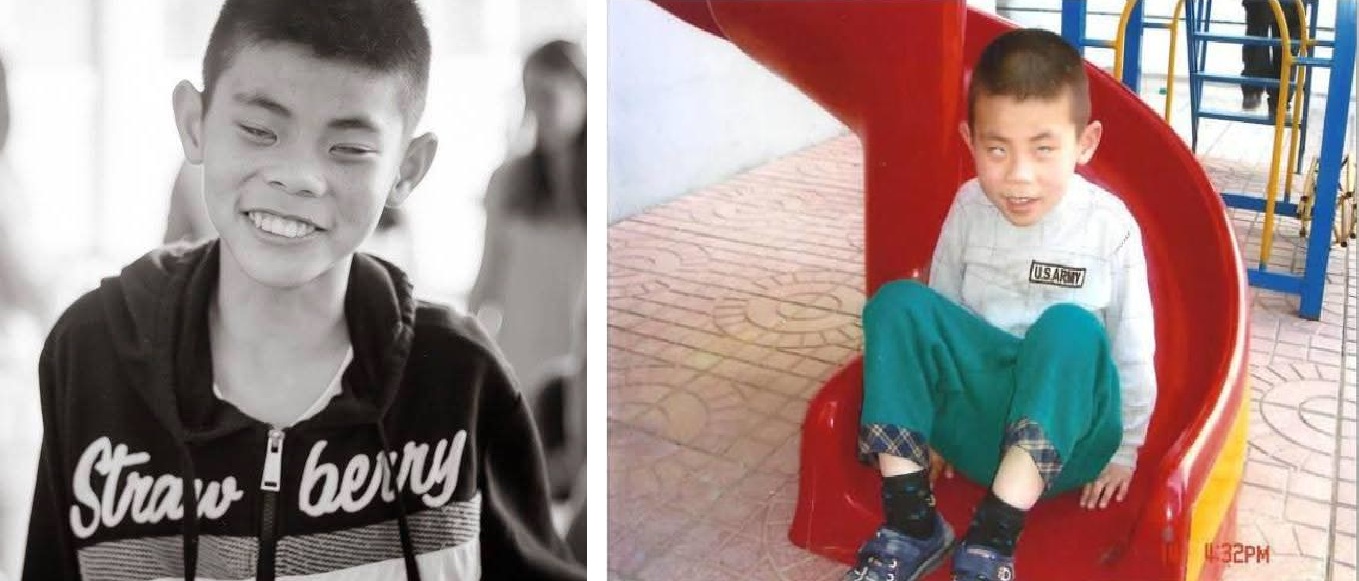
Figure 17: A portrait of Michael Munn.
Figure 18: Michael at the playground.
Adelyn Qi-Han Yeow
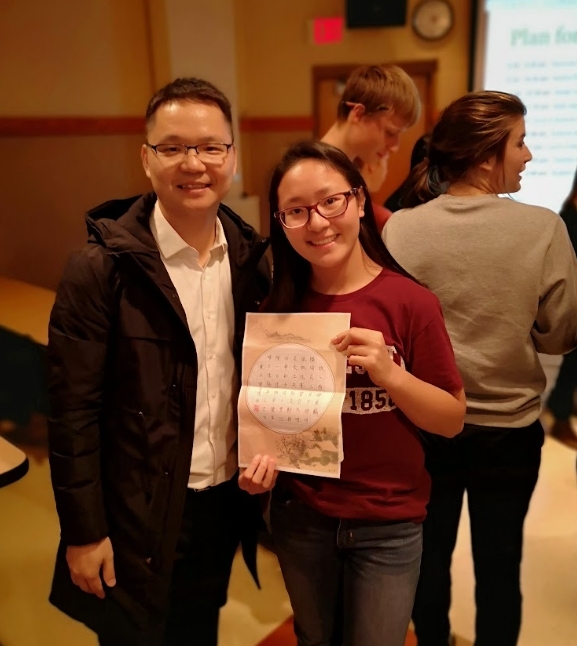
Figure 19: Adelyn Yeow (right) during a Chinese cultural exchange event with an educator. The students had Chinese pen pals who wrote letters and poems in Mandarin. At the event, the Americans were able to give the foreign teachers a tour of the school!
Adelyn Qi-Han Yeow is passionate about food and caring for others. Currently, she works as a package handler at FedEx and enjoys hanging out with friends and partying. She grew up in Minnesota and now works in another state.
Adelyn was adopted when she was ten years old by Asian immigrants, a Singaporean father and Taiwanese mother, from New Taipei, Taiwan. She would be the only child. Ms. Yeow knows almost nothing about her birth parents or the circumstances involving her adoption. She had a closed adoption, which means there is no contact between her birth and adoptive parents. “I heard rumors,” she writes, “that my father was a doctor. I also heard I have many siblings and I was the youngest one.”
Qi-Han used to feel resentful towards her birth parents, wondering why they kept her older siblings but not her. Today, she holds “mixed emotions,” describing it as a mix of disappointment and anger. Her unresolved feelings led to a lot of medical conditions that developed later in her life. While she considered searching for her biological family, she gave up each time. “I don’t know where to start,” Adelyn writes. “I have no idea which city I was born in and no hospital records.”
After Adelyn was found, she cycled through the foster care system and moved between foster families every school year. Her memories of Taiwan, she writes, were “blurry” because of her age. She remembers being very shy and introverted because of the frequent environmental changes.
Adelyn has faint recollections of her time in Taiwan, including facetiming her parents before getting adopted, being pulled into a large facility to video call with her adoptive parents, seeing pictures of her parents from her caseworker, and sitting in a room nervously and not understanding why she was there. Ms. Yeow also tells me the moment she first learned that she was getting adopted:
I remember when my case worker told me that I am officially having a family. I was really happy but kind of sad, knowing that I would be leaving my current foster care family. I have a strong bond with that family and I miss them a lot, even to this day.
When she met her parents for the first time, she remembers what they told her:
“We are here to take you home. We are your mom and dad now.”
After arriving in Minnesota, she attended the Twin Cities Chinese Christian church as a child and teenager but no longer stays actively involved with her heritage. She entered the American public school system immediately, which was difficult: “I remember I would fail in classes. I would get scolded at and punished for not understanding. As young as I was back then, I was rebellious. I would stick to my own way and try to fit into American life more than Chinese life.”
Adelyn’s parents didn’t discuss the adoption process with their daughter. While she doesn’t know why her parents choose adoption, she vaguely remembers that her parents knew someone who adopted and felt like it was their calling. Adelyn writes to me about what she knows:
I was told it was a year-long process, because at the time that I was adopted, the Taiwanese organization changed their policy so that only Taiwanese citizens can adopt children from Taiwan. Apparently, I appeared in court, where they asked if I wanted them to be my parents. I do not remember; I was still a young child then.
Growing up in the Twin Cities, Qi-Han never lacked diversity in her life. In high school, she became outgoing and extroverted, with a diverse friend group; today, she still keeps in contact with Chinese adoptees. Even so, Adelyn recalls a few racist incidents: “During middle school, I would be told to go back to my home country and that I wasn’t welcome here. During COVID, people started blaming the Chinese for spreading the disease and starting the virus.” Many times, Adelyn would wish she looked Caucasian and that her family background was easier to explain. When people asked probing questions, she would brush it off and tried to avoid talking about it. “It was complicated and honestly a little traumatizing to talk about.”
“Since I have tried to fit into a wholly different culture, it feels to me that I can never fully depart from where I came from.”
Recalling her childhood over a decade ago, Adelyn remembers only being allowed to speak Chinese at home, reading Chinese novels, learning from textbooks purchased in Taiwan, eating and cooking traditional food, wearing traditional Chinese garbs during the holidays, as well as celebrating Chinese holidays “with no exceptions.” She spent over half of her childhood in Taiwan, where she was taught to only speak Chinese. After her adoption, Adelyn’s parents would bring her to visit the island yearly. Adelyn reflects on her level of immersion:
Almost every summer we would go back to visit my adoptive mother’s family, they would have trips planned to explore Taiwan. It was fun, but as I was young, I did not really appreciate the time that was spent overseas … To the younger me, I felt like it was not necessary. But as I grew older, I understood the importance of celebrating and keeping the culture going so that I would still remember where I am from and who I was before, even when I am not residing in an Asian country, aka, Taiwan.
While she was close with her adoptive parents growing up, Qi-Han began to exhibit trauma responses as a teenager. She became closed off, and the unresolved trauma resulted in severe depression and anxiety, which led to hospitalizations. The friction between them continued, which led Adelyn to distance herself and leave them while she was a college sophomore. “To this day,” she tells me, “I have not talked or been in contact with them.” After issuing no-contact with her parents, Adelyn also distanced herself from her Taiwanese heritage and Chinese culture. “I have not used Chinese for years since I split with my adoptive family,” she concedes. While her fluency is still there because of the depth of immersion during her childhood, her once natural fluent tone is now replaced with an accent.
As a young adult, Adelyn has embraced her American culture. “I have been in America for almost 14 years. I have mostly spoken English, mainly consumed American food, and watched American shows. I would say I’m more American.” Even though she considers herself more American, she wishes there was a way to be both Chinese and American. “I’m still learning to find that balance,” she confessed.
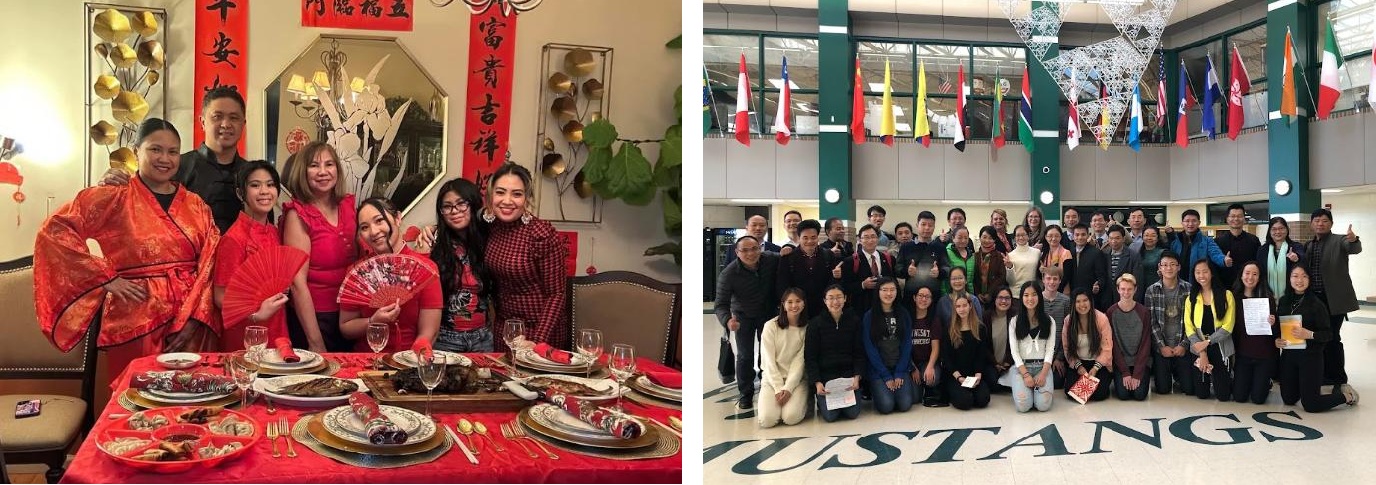
Figure 20 (left): Adelyn (third from the right) celebrating Chinese New Year with her friends.
Figure 21 (right): Adelyn Yeow (bottom row, fourth from the left) alongside her other Chinese language classmates at Mounds View High School. They are featured with Chinese teachers for a cultural exchange program.
Even though Adelyn is currently estranged with her parents, she appreciates how they immersed her in Chinese culture as a child, even though she didn’t appreciate it at the time:
Looking back, I am glad they were able to keep the Chinese part of me alive. They constantly reminded me to never forget where I was from. Now, I have it engraved in my head. Even after separating from them, I still remember Chinese recipes that they would often make at home. When I am upset, I can calm down by speaking to myself in Chinese. That part of me brings me comfort … Now that I am older, I understand why they wanted me to keep that culture within me and emphasize to never forget where I was from because that part of me will never change. The story can be complicated and can be confusing, but the fact that I was born in Taiwan, raised in a foster care family, and finally being adopted and moved to the USA will never change. I can either embrace that as part of my growth, or I can let it keep getting to me and try to hide it, which I do not see the benefit of. Being an Asian American is not something to be ashamed of. It should be something to be proud of. Knowing the language, culture and being able to find balance in both helps one find their true self.
She doesn’t completely hold her parents at fault, describing them as “raised very traditionally.” Their expectations were overwhelming for Adelyn, which led to numerous fights and arguments. She writes a heartfelt paragraph, full of yearning and regrets:
I always wished my parents would have been more concerned about how I felt rather than what is in front of them. When I completely fell apart after my mental health was hit hard, I remember how they blamed and scolded me. This led me to stop talking about my feelings to them, and I pretended I was fine all the time, since that was the only thing they cared about.
It’s been years since Adelyn distanced herself from her adoptive family and she left to work in another state. Although she is largely grateful to them for everything they have given her, the young woman acknowledges that she still holds some anger. “I learned to not talk about it and let it go,” she sighs. The young adult now embraces making her own choices and plans, since she wasn’t able to have that as a teenager. She shares a touching quote with me:
To the parents we had to walk away from, it wasn’t a decision made lightly. It was not rebellion, or bitterness or blame. It was the quiet realization that being near you hurt more than without you. Not because we are cold or that we hate you or that we have forgotten the moments you tried. But because every interaction became a wound. Every conversation, a minefield. Every attempt at connection, a trigger. And healing demanded distance. Not out of cruelty but out of necessity. We did not stop loving you, we just started loving ourselves more.
While she grew up with me in the church, Adelyn doesn’t consider herself religious anymore. “I used to be, but not anymore … I haven’t been to church since I left my adoptive family.”
She is currently trying her best to survive on her own and embracing her new friends. Adelyn tries her best to celebrate Chinese holidays by cooking small meals and calling her friends. While she doesn’t use Chinese much anymore, Adelyn feels proud that she knows a language and has experiences that many others don’t. She also mentioned wanting to return to Taiwan to revisit places with childhood memories.
She calls for prospective transnational adoptive parents to be more understanding, as their children are more likely to experience emotional distress and trauma. Adelyn stresses the importance of enforcing the concept of love and family with patience, as well as being transparent about their past. “Encourage them to talk about their feelings and thoughts,” she concludes.
Adelyn Yeow has overcome years of struggles and distress. As she reflects on her long journey from foster care to adoption to relocation to falling out, Adelyn shares her regrets with me. “There are a lot of things that I have said and done to people that I wished I never would have. I wish I could take it back, and I wish I kept some people in my life instead of completely losing them.” If she had a chance to speak to her younger self, Adelyn would want her to know that it’s okay to make mistakes and to never give up:
You will feel lost for months, you will feel ashamed for what you have done in the past and what you could have done differently, but please never give up because you are stronger. You will find yourself and your belonging in this world. Learn to appreciate where you are coming from and never forget who and what is part of you because it will be a motivation and be the backbone for your life.
Life has not been easy to Adelyn Yeow, but she resolutely soldiers on, persisting solely on a will to survive and a hope that her years of toil will eventually pay off.

Figure 22: A recent picture of Adelyn Qi-Han Yeow.
Charlotte, Tracy, and Adam
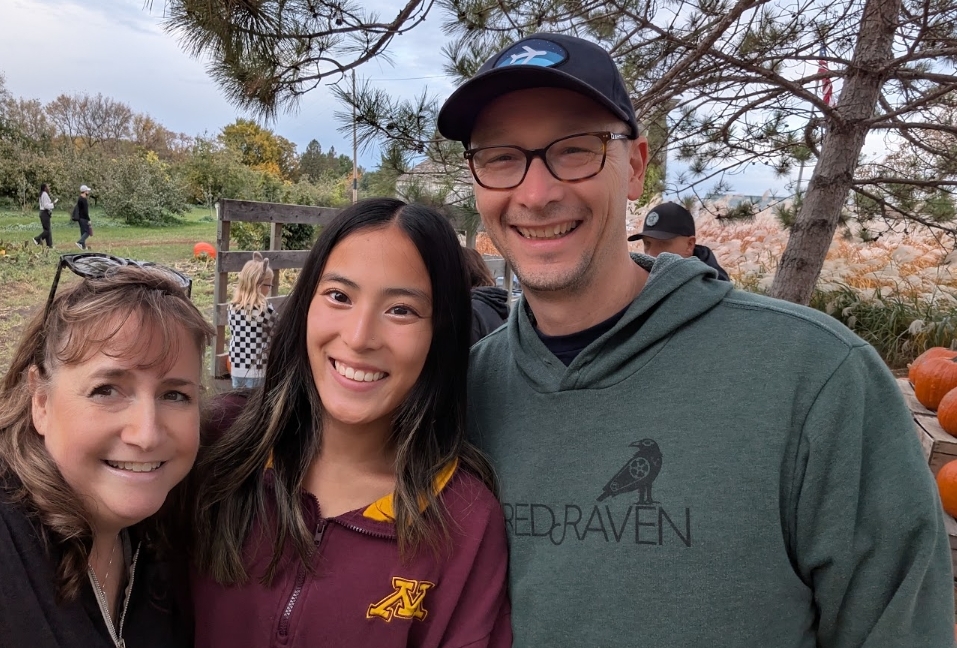
Figure 23: Charlotte’s Family! (From left to right: Tracy, Charlotte, and Adam)
It was a frigid December day. I hustled into Minnetonka’s yum! Kitchen and Bakery, a local restaurant featuring a seasonal made-from-scratch menu. Today, I was interviewing Charlotte and her family.
Charlotte is a vibrant business student at the University of Nebraska Lincoln, where she is a part of the Delta Phi Lambda Sorority, the badminton club, and the Asian Student Union. She effortlessly trailblazed her way through high school, graduating summa cum laude with an astonishing 4.2 GPA in addition to participating in the Asian Student Union, DECA, crochet club, and playing badminton. Charlotte, like many of the other female adoptees I interviewed, is a Chinese dancer.
Over dinner, the young adult tells me that she was adopted from the southeastern province of Hunan, known for its Xiang cuisine bursting with smoked flavors and chili peppers (Hunan Tourist Attractions). She doesn’t know anything about her birth parents but recalls how she was found.
“I was found in a furniture store, where I was wrapped in a basket. A policeman found me.”
The baby was a newborn, estimated to be anywhere from one to a few days old due to the umbilical cord still attached to her stomach. Charlotte would be placed in an orphanage and adopted when she was 13 months old by Tracy and Adam, an American couple. Tracy works in higher education, where she helps schedule and staff classes. Adam is a senior designer for an engine cooling company.
I asked Tracy what led her and Adam to choose to adopt a child from China.
Growing up, Tracy tells me, her mother always talked about wanting to adopt from Korea. This led Tracy to have a life-long fascination with East Asia. She added: “We dealt with infertility issues, and we didn’t want to pursue that avenue. Adam and I started talking about adoption, and China was predictable and reliable.” In addition, their families were acquainted with Asian culture: Adam shared that Tracy’s brother married a Japanese woman and lives in Japan. “One of Charlotte’s cousins was born in Hong Kong,” he added.
The parents used Great Wall China Adoption. They were so happy to find out that Charlotte’s orphanage was sponsored by Half the Sky Orphanage Program (now OneSky) and Great Wall China Adoption (now Children of All Nations) (Home – OneSky, Welcome to Great Wall China Adoption). Half the Sky was started by an American woman adopting from China. Because of its emphasis on love, the program focused on helping babies develop attachment: caretakers interacted with babies, not just changing their diapers and feeding them. I also found it interesting that Half the Sky was named after a Chinese adage coined by China’s first Chairman, which states, “women hold up half the sky.” Their calling to safeguard the lives of many Chinese girls would result in Charlotte’s journey from a basket at a furniture store to a thriving life in the United States.
While the adoption process was supposed to take six months, it took two years. “It was a lot of paperwork,” the parents complained. “The process stopped to a halt.” The standstill was emotionally taxing for Adam and Tracy, who desperately wanted a child to love and nurture.
“We just wanted our baby,” Tracy sighed.
But just like every cloud has a silver lining, the couple found comfort through befriending other American families waiting for adoption. “We met a lot of people through it,” Tracy smiled. “A lot of people are still very good friends now.” Adam added: “Those families were excited for us.”
While they were waiting, Tracy and Adam prepared to raise a Chinese child. “We understood that she wasn’t going to look like us,” Tracy emphasized. “We talked about potential scenarios, and asked ourselves if we would be prepared. We also started working on a life book designed for someone who was adopted, which contained what we knew about China and her own story. We would read that story to her a lot. I think reading that book to Charlotte helped her quite a bit.”
When asked if they preferred a son or daughter at the time, Tracy and Adam told me they were open to either. “But deep down,” Adam teased, “mom preferred a girl.” The likelihood of adopting a son from China was unlikely, he added.
As the paperwork process trekked on, Tracy had a feeling when they were going to receive the files. “We knew that when the next month of referrals came out, we would be on it.” The parents would receive their wish on Labor Day weekend. “We made labor jokes,” Adam laughed.
The day they received the files, Adam was at work while Tracy was at home. “We looked at the picture at the same time. We knew she was a girl, because all referrals that month from Great Wall were all girls. We saw her, and sent the file to our doctor to look it over. The doctor told us that he would let us know in twenty-four hours.”
“Charlotte was the only file we got. Her and her dad look alike,” Tracy gushed. “She was very cute,” Adam described. “When we looked at her picture for the first time, we had a gut feeling she was ‘the one.’ We had the ‘first in love feeling,’ like we were walking on air.”
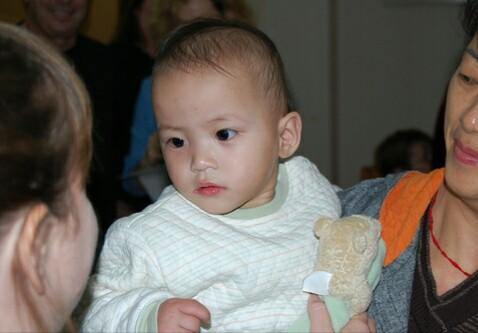
Figure 24: The adorable Charlotte during the family’s first meeting (and the cutest baby picture I’ve ever seen).
The parents named Charlotte after a character in the American romcom Sex and the City. “I also thought it was a pretty name,” Tracy smiled.
Adam couldn’t wait for his daughter to arrive and described the euphoric moment when it finally clicked. “Holy crap,” he told me. “I’m a parent now.” “The time couldn’t come fast enough,” he laughed.
While Adam was more positive and upbeat, Tracy was on edge. When they received Charlotte’s picture, there were only seven weeks left until the first meeting. “I was worried if we were prepared,” the mom confessed. “We bought a lot of clothes and hair bows.”
After weeks of sleepless nights and shopping trips, the first meeting arrived. Prior to them arriving, the caregivers had prepared Charlotte by showing her a photo album of her parents. “It was awesome,” Adam described. “It was a big room and very chaotic. The bus was delayed but we got there first. There were other families unrelated to our group going through the adoption process, and older kids that were crying. At that time, Charlotte could walk. The kids were against the wall, and the caretakers were making order to chaos. We had to wait our turn, and we would be the second or third family they called.”
Charlotte was embraced by Tracy. “She called her mamma on the first day,” Adam said. “She trusted mom very quickly.” On the other hand, the baby was initially terrified of Adam. Charlotte wouldn’t allow her father to hold her for the first three days. “She wasn’t around a lot of men before,” her mom theorized. But soon, the bright-eyed baby began to warm up to her father.
“She was very composed and always very observant. She had good eye contact,” Tracy praised.
Charlotte was raised Episcopal for the first few years of her life and grew up in the suburb of Minnetonka, Minnesota. Due to being adopted as a young child, Charlotte doesn’t have any memories of China. Charlotte tells me that she’s always known she was adopted. As she was growing up, Charlotte remembers wondering why she looked different than her parents. “I started asking after that,” she laughs. Her mom theorized that the life book the parents created helped Charlotte reconcile with her adoption. “We were always upfront and honest with her. We would tell her the age-appropriate story.” What was remarkable was that their adoption agency didn’t tell them to do this; rather, the parents decided on their own through Tracy’s research on the experience of Korean American adoptees.
Tracy enrolled her daughter in Chinese dance when she was two years old. “I always wanted her to dance. It builds confidence. A lot of adopted parents took their kids after someone in our group found out about it.” That decision would have a lasting impact on her daughter – Charlotte has been dancing for sixteen years. She remembers her time fondly, where she starred and performed in leading roles. Charlotte is grateful for the community Chinese dance provided. “I met my best friend through dance,” she added. “I started when I was two at CAAM [Chinese American Association of Minnesota]. Later, my teacher separated to make her own studio [Phoenix Chinese Dance Academy studio]. I danced at Phoenix until I was eighteen, and stopped because of college.”
Both Tracy and Adam noticed that Chinese dance shaped their daughter’s sense of belonging and self-confidence: “Through Chinese dance, Charlotte has become a leader and younger Chinese adoptees like Eleanor Bielke [who I featured in the third part of this article series] look up to her. Charlotte does such a great job of encouraging!”
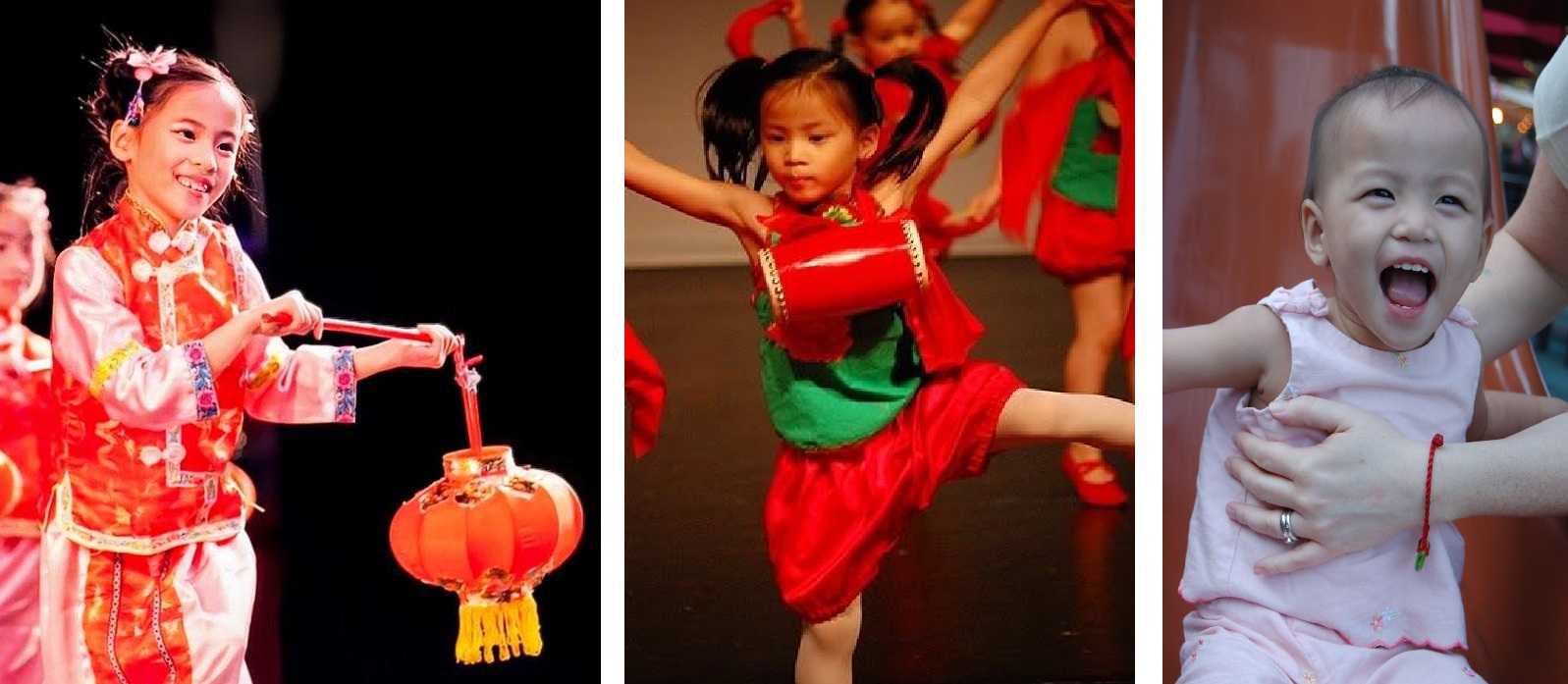
Figure 25 (left): Charlotte dancing with a Chinese lantern.
Figure 26 (middle): An upbeat dance with a Chinese drum.
Figure 27 (right): Baby Charlotte feeling overjoyed at a playground.
Tracy and Adam also enrolled their daughter in language classes early on. Immersion became popular when Charlotte began kindergarten. “I knew,” Adam confessed, “that I couldn’t teach her Chinese. It’s important to have her connected, and a great opportunity later in life.” Tracy was on board after she saw American kids speaking Chinese and realized the importance of Charlotte learning her heritage language.
Charlotte tells me that she enjoys her experience in immersion: “I have been involved with Chinese immersion for thirteen years in Minnetonka. It was great. I am fluent in speaking, writing, and reading. I met a lot of Chinese adoptees with similar backgrounds.” Charlotte rated her listening at 8.5/10, speaking at 7/10, and reading and writing both at 6/10.
Her parents were intentional in staying connected to other Chinese families, where Charlotte was able to meet adoptees like her. The family also stayed connected to their original travel group, which consisted of the American families that adopted their children together. “We meet with them every year, and they live in various states!” This way, Charlotte has a lifeline to her heritage through cultural activities and language immersion, as well as an anchor to her own personal identity through an active emphasis on her adoption. I was pleasantly surprised to discover that, even as an adoptee, Charlotte was more involved with her heritage than many second-generation Chinese Americans with immigrant parents, and even some first-generation Chinese that immigrated earlier in their lives!
In addition to being adopted, Charlotte is an only child, an increasingly common trend in the United States (according to the U.S. Census Bureau, 19% of American women aged 40–50 have exactly one child). “It’s great,” she boasted to me. I pondered and realized in amusement that I haven’t yet met an only child that wished for siblings.
Tracy and Adam told me they were happy that their daughter learned Mandarin. Both Adam and Tracy agreed that they don’t regret the level of cultural immersion they exposed their daughter to. Charlotte has a lot of opportunities available to her that adoptees without her skill set would lack. “A lot of people assume you speak it. For adoptees who don’t speak Chinese, it’s awkward [when they can’t understand]. It’s nice for her to be able to listen to native speakers and immigrant families.”
Additionally, Tracy told me that the family of three makes an effort to eat traditional foods as a family and celebrate Chinese holidays. The family shared some of the Chinese traditions that they infused into their day-to-day lives: “Some of it is just habit. We don’t wear shoes in the house and we have Asian decorations.”
Charlotte returned to China with her family when she was ten, where the family of three explored the big cities and visited her birth place. “It was nice to see,” the adoptee smiled. “I had dinner with the policeman who found me.” She remembers thinking, “This is so cool!” throughout the trip. While her parents didn’t speak Chinese, Charlotte was able to converse with the locals, adding another layer of depth to the experience.
Charlotte added: “It was an experience going back, since I didn’t have real memories. The other girls were really emotional.” The family plans on going back to China during the summer of 2026.
When reflecting on her immersion and identity, Charlotte sees herself as Asian and describes her relationship with China as “decent.” She descriptively states: “We’re friends, but not besties or acquaintances. It’s in the middle.”
My interviewee has also largely found peace with her origin. She doesn’t think much about her birth parents and tells me she has found acceptance in her situation.
“Would you ever search for your biological family?” I asked.
“I tried once with an online group putting things out in China. I wanted to know when I was younger. Now, I’m okay with not knowing. They would technically be strangers.”
“My family went through the process together. My mom talked to me about it [the searching process] when I was four. I wanted her to and it cost around $500. We found that policeman [who found me] and got a video. I saw the video and it helped me reconcile.”
It seemed to me that the family’s genuine attempt to locate Charlotte’s biological family, including finding the original policeman and producing a video with him to broadcast, greatly helped Charlotte reconcile with her adoption. They even got a local man to ask villagers and received good leads, as “people talk to men more than women.”
I asked Charlotte if she ever experienced a crisis over her identity.
“Yes, when I was younger, because I was involved in both cultures. I went to a predominantly white school, where I was also heavily influenced by American culture. There were a decent amount of kids who looked like me at my school. I had a nice friend group and I reconciled with that. I’m between two cultures and both worlds. I’m not stressed about it now.”
Charlotte also shared experiences where she faced racism: “When I was younger, I didn’t realize it. During COVID, I was in middle school and kids made comments that stuck out to me. There wasn’t as much of that in high school.”
When asked, the adoptee admits that she used to wish her background was different as a child. “I can’t explain my family background briefly. I also have scars on my arms from the [immunization] shots. But now, I’m proud of the scars. I am no longer insecure or ashamed of my background.”
Today, Charlotte has largely developed her identity and sees herself as Asian. She maintains a lifeline to her heritage through speaking Chinese and dancing while keeping a close relationship with her parents and staying active in her extracurricular activities. She is interested in adopting, but like many other adoptees, she longs for a family biologically related to her.
Her ultimate dream is to work in international business and travel a lot. Not surprisingly, Charlotte finds herself a very organized and logical person. “I love puzzles,” she confessed. The college student is confident she can apply her drive, intelligence, and logistical ability to her future career, where she can separate her personal emotions from work.
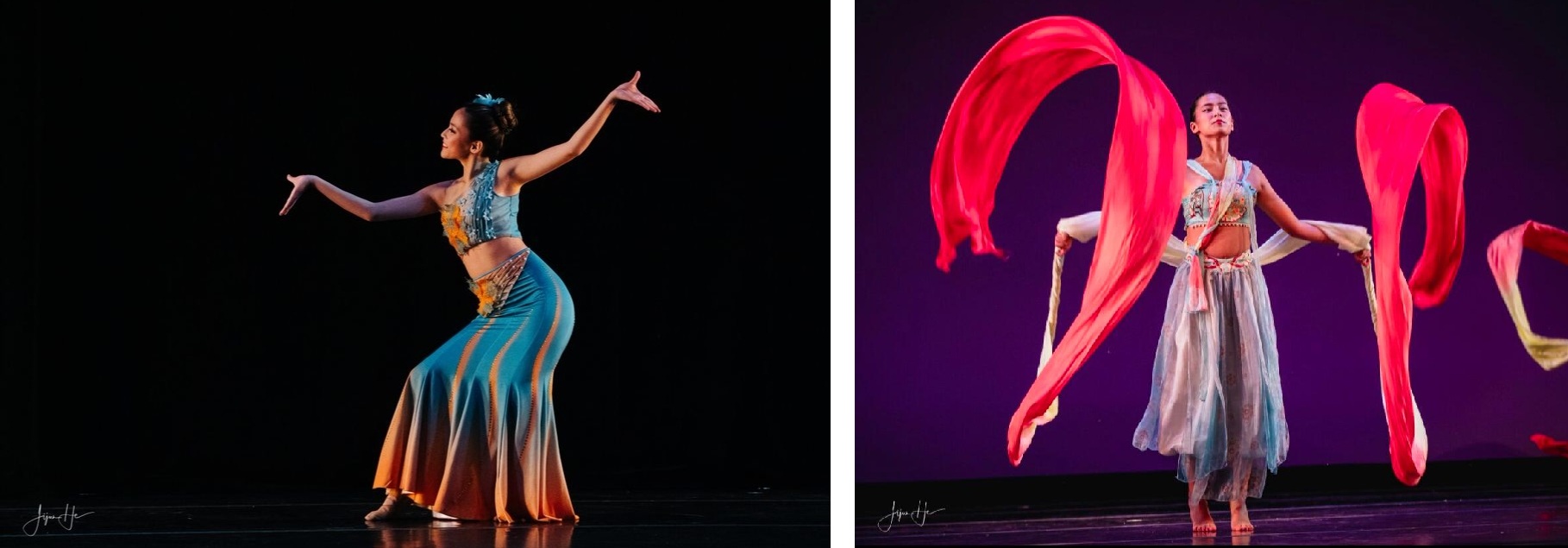
Figure 28 (left): Charlotte stuns in a production (Credits to Jijun He).
Figure 29 (right): Another gorgeous shot of Charlotte dancing (Credits to Jijun He).
Looking at the bright-eyed and confident young adult across the table from me, I asked Tracy and Adam what challenges they faced raising her. As an interracial family, Tracy shared, kids would make comments about their family not looking the same. And raising a Chinese daughter in America was difficult as well. “We had to present a lifestyle with both cultures without being too pushy.” It was a constant balancing tight-rope act.
Even with the challenges, Tracy and Adam don’t regret a single thing. Curious, I asked them what they appreciated about having Charlotte in their lives. “Having Charlotte,” her mom gushed, “gave us the opportunity to be a part of and learn more about another culture. We have a lot more friends and were involved in so much from Tae Kwon Do to Chinese parties. Charlotte loves being busy!”
Adam added: “I love having the chance to see things from Charlotte’s perspective.” Like the Addingtons, Adam and Tracy would often be the minority in Chinese cultural events and celebrations. They felt at home in the Chinese community. Tracy describes: “Everyone has been nice and welcoming for the most part, and Phoenix [Charlotte’s dance studio] has been great!”
They also provided practical advice for families interested in adopting children from another culture. “Encourage them to be a part of their tradition, but be a part of it with them,” Tracy urged. “Give them choices in life but don’t ever force it! We gave Charlotte choices for immersion, and she chose them.”
“Expect challenges,” Adam warned, “and don’t shy away from things.” He pressed: “Don’t keep things from your children, since comments may come up.”
As the interview wrapped up, I asked the parents if they would change anything in how they raised Charlotte:
“I would try to be more present mentally,” her mom commented. “It all flashed by so fast!”
And in a typical dad fashion, Adam wondered if he taught his daughter enough practical things (Charlotte, if you’re reading this, I can’t change a car tire, so there’s no way you’re worse off than me!).
I asked Charlotte what she would say to her younger self:
“Don’t worry about anyone’s opinion of your background. All the issues you go through when you’re younger, it all gets better.”
Charlotte advises adoptees to find their own path in between both worlds and urges parents to place their children in something related to their culture. “But don’t force it,” she concludes.
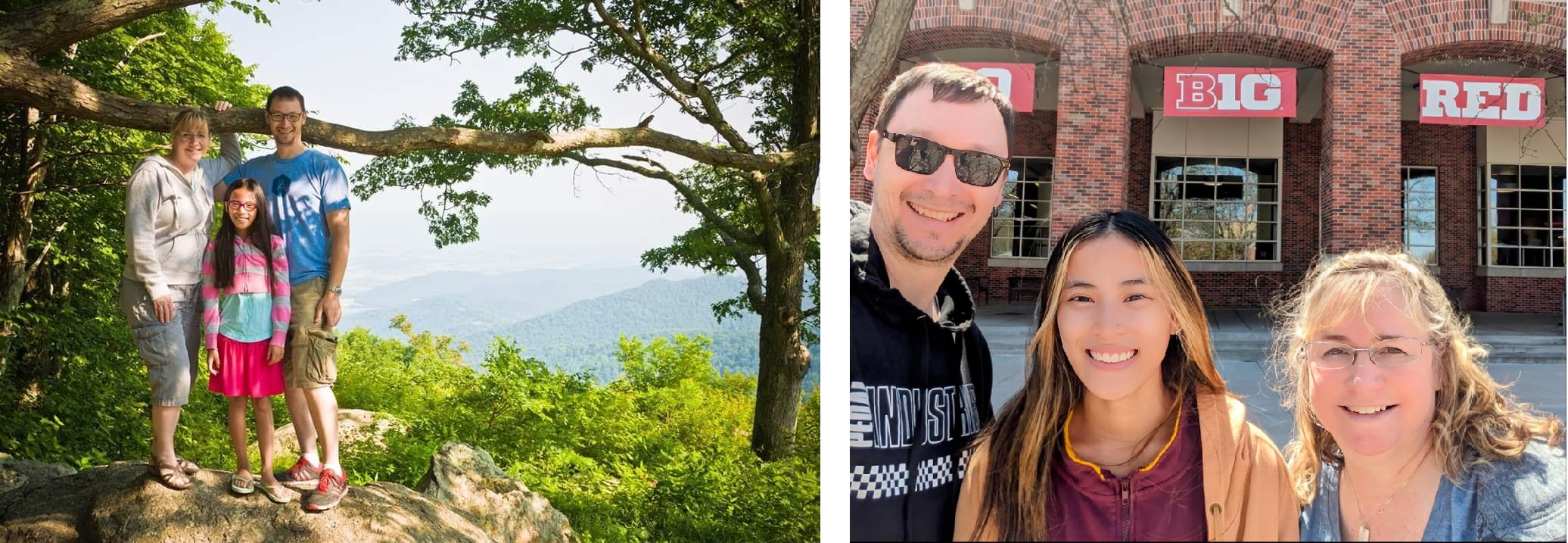
Figure 30 (left): A sweet family photo from when Charlotte was younger.
Figure 31 (right): A more recent photo of the family of three!
Elena (Lan) Youngdale
Linkedin: Elena Youngdale | LinkedIn
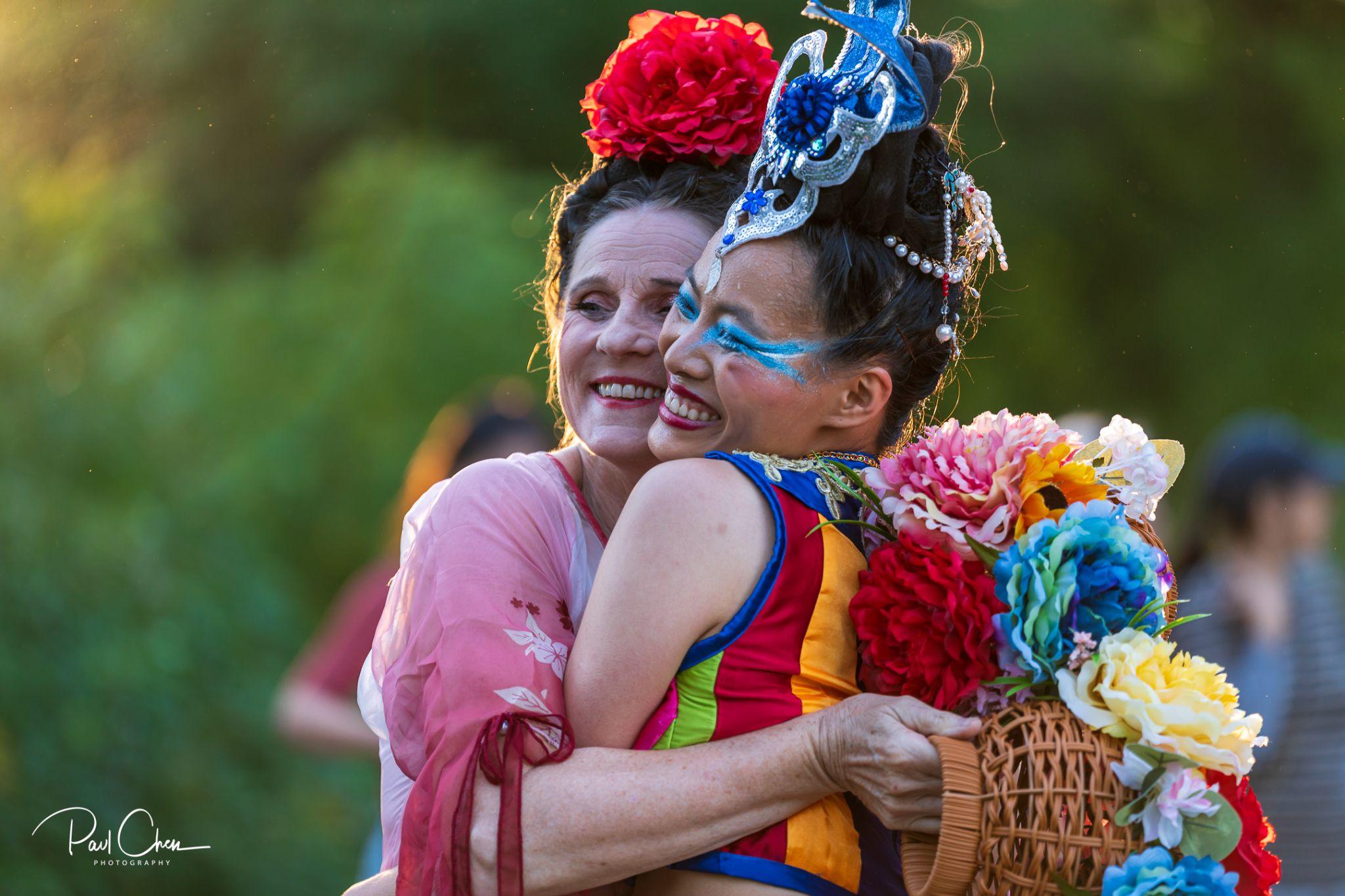
Figure 32: Lan Youngdale (right) embraces her mom (Credits to Paul Chen).
Lan Youngdale is a Materials Scientist at TCC Materials, a leading manufacturer of packaged concrete products. Her Chinese name is 金兰 [jīn lán]. Professionally, Elena tests and develops mixes with cement, such as concrete, mortar, and grout. Ms. Youngdale graduated from Macalester College, where she majored in Physics and Chinese and minored in Mathematics. As a student, she played softball and won an All-American Scholar-Athlete Award. She enjoys cooking, climbing, caring for her community, playing Dungeons and Dragons, and “finding the little and big joys in life.” As an adoptee, Lan wryly summarizes her situation as “made in China and brought to the USA.” Most significantly, Lan is a professional Chinese dancer, performing for the Chinese American Association of Minnesota (CAAM) and recently for the Shen Pei Arts Alliance. She fittingly describes herself as a “material scientist by day and dancer by night.”
The adoptee explains to me that she goes by both “Elena” and “Lan” and tells me the origin behind her names: “When I was adopted,” she writes, “my English name was supposed to be Elien [ee-Lean]. I’m not sure on the exact spelling. My father remembered/spelled it wrong on the birth certificate, and thus, Elena was born.”
Historically, the adoptee tells me, her family would call her both “Elena” and “Lan” endearingly. While “Elena” was used for school and by most extended family members, she was called “Lan” in the Chinese community. “Each name had its own place with some overlap at home,” she laughed.
During college, she missed “Lan” and began to integrate that name more. Today, she goes by “Elena” in the workplace and “Lan” as a “home base name” for other areas of her life. She adds: “Lan like Mulan without the Mu, or like a lawn full of grass is much easier to remember.” She builds on her identity through practicing writing the traditional Chinese character for ‘Lan,’ and describes its appearance as “a face! Or a building with a little guy in it.” Lan has done much soul-searching and tells me: “I feel very fortunate for both of my names and love them both.”
Elena’s soulful approach to art can be seen through her heartfelt dancing that has earned widespread acclaim. Recently, Lan stars as Rose in the 2026 “Shanghailanders” production by the Shen Pei Arts Alliance, a leading Chinese performing arts center which seeks to promote the beauty of Chinese culture through dance. Directed by national first-class choreographer Shen Pei, who survived the Nanjing Massacre as a child, the historical-fiction production depicts a native Chinese girl, Rose, who falls in love with a tortured Jewish refugee during the Second World War.
Rose is a fictional character inspired by brave Shanghainese women “who risked everything under Japanese occupation to provide shelter and secure life-saving transit permits for their Jewish neighbors,” which led to the cultural coining of “Shanghailander” (Shen Pei Arts Alliance). As I watched Lan twirl around the stage and wrap her body in anguish around Malcom Peterson, I was impressed by her dedication to her craft. 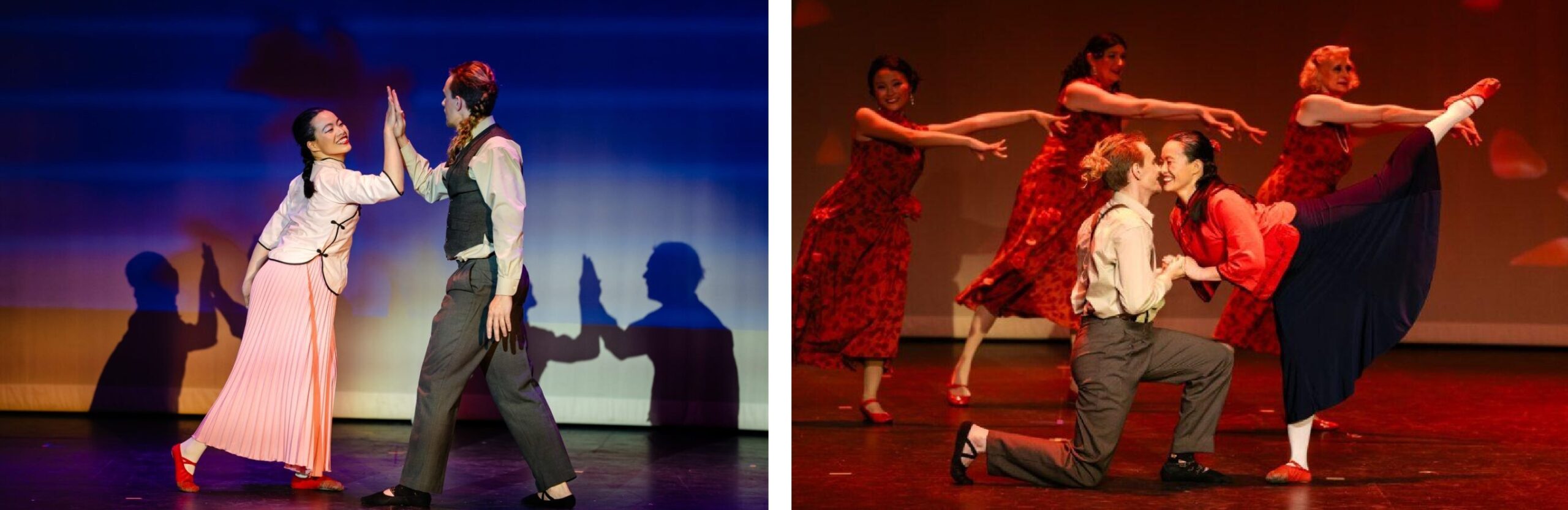
Figure 33 (left): Lan (Rose) and Malcolm (Caleb) star in “Shanghailanders” (Credits to Jijun He).
Figure 34 (right): The reunited Rose and Caleb dance together (Credits to Jijun He).
During our interview, Elena Youngdale informs me that she has been dancing for over two decades. “I started Chinese dance with CAAM CDT [Chinese American Association of Minnesota Chinese Dance Theatre] when I was four years old.” Besides a short interlude during COVID and college, Lan has been dancing and starring in productions for most of her life. As a Chinese American adoptee, dancing plays a large role in telling Lan’s story from a basket left near a concrete archway to the limelight:
Years ago, a baby girl was found by a concrete archway on the side of a fairly trafficked street in Zhejiang province, placed in a basket and wrapped with a blanket. A warm bottle was beside her when she was found.
In 2008, when Lan returned to the location surrounded by family, she described the déjà vu memories: “I remember a dog laying just outside a building. It wasn’t a huge, built-up part of the city. Buildings were generally one or two, maybe three stories high … I met the woman who brought me to the orphanage.”
The girl was estimated to be around a month old and was placed in an orphanage in Jinhua, a city in the Eastern coastal Zhejiang province. Zhejiang is known as “a land of fish and rice” for its abundance of seafood and industries (Zhejiang Travel Guide). Elena would be adopted a week after she turned one through the Children’s Home Society of Minneapolis. Lan jokes: “My family was sad they were a week late for my birthday, but it made remembering my gotcha day easy!”
While Elena doesn’t have any concrete memories, she has the faintest recollection of a woman embracing her and saying words she can’t make out. “I look towards my right shoulder but she’s just outside my peripherals. Perhaps it’s just a dream or a misplaced memory,” Lan reflects, “but it’s something I have found and will hold onto.”
The child would be adopted by Caucasian American parents, with a third generation Swedish-Norwegian father and third or fourth generation German mother. They were unable to have children but desperately longed to be parents. Like all the other adoptees I featured, Lan’s parents received and were assigned her picture by the government.
Lan doesn’t remember the first meeting with her parents, although she knows it happened at a hotel in Hangzhou. During their visit, there were protestors outside the hotel following the American bombing of Yemen’s Chinese Consulate. Lan’s mother also remembers seeing her daughter dressed in “a cute little jacket,” which was taken back by the staff to the orphanage.
Elena Lan Youngdale would be raised in Minnesota with two siblings, just across the Mississippi River from Downtown Minneapolis. Lan was the middle child, and both of her siblings were also adopted from China (albeit during different times from separate provinces). One of her earliest memories, she tells me, was meeting her younger sibling. As a child, Elena was involved in language immersion, and her efforts have allowed her to speak conversational Chinese today.
Young Lan knew nothing about her birth parents and would make up elaborate stories about them. “When I was little, I’d make up stories,” Elena tells me nostalgically. “My mother was probably some super smart scientist or high-ranking politician…because I must have gotten my brains from somewhere. My father was an Olympic athlete or idol because I’ve also got his athleticism and looks. Maybe they had a forbidden romance, which was why they had to leave me. I dared – I asked others to prove me wrong.”
The adoptee recalls feeling a “mixing pot of emotions” whenever she thinks about her birth family. Lan admits that she used to feel anger and hurt, and remnants of that painful reality still remain. “There’s still hurt, and it’s a tangled ball each time I face it … I will never truly understand as I don’t know the circumstances.” She describes an incessant sorrow – were her parents forced to give her up?
In the sea of never-ending uncertainty, Elena attempted to locate her biological parents through the 23andMe DNA testing service. She uploaded her results on WeGene, a Chinese-based DNA testing and analysis company focusing on family matching for ethnically Chinese individuals (WeGene). Unfortunately, she hasn’t had any luck yet. Lan has found peace in this search, reflecting: “I am happy in my life as it is. I have mostly decided—somewhat due to the effort and resources it would take to find my birth family—that I won’t find them unless they find me.”
It was never a revelation to Elena that she was adopted. Her parents gradually explained the concept to their three children through storybooks, poems, and discussions. She was also surrounded by numerous Chinese adoptee friends from dance and school. Growing up with siblings who were adopted, Lan and her siblings would have the opportunity to process their adoption stories together. Lan’s parents were also intentional in immersing their children in their culture. Lan tells me that she was involved in dance, took language classes, attended annual camps for families with children adopted from China, and ate traditional food. Elena fondly remembers eating dumplings, stir-fries, and lots of rice (a classic staple). The adoptee shares a core memory: “On my fourth birthday, my dad’s friend, JiangMing Deng (a language exchange friend of my father’s and a Chinese Auntie who babysat me often) made dumplings from scratch with me.”
The Youngdale family celebrated American holidays as a family and would take part in Chinese celebrations with the Chinese dance theatre. Lan fondly recalls, “For a few years, everyone in my immediate family was performing in CAAM New Years productions and community outreach performances.” Even today, Lan continues to celebrate Lunar New Year and the Moon Festival, often with her Chinese dance community. Elena describes the sibling dynamic in the family as “fairly typical,” with normal fights and squabbles. She had a close relationship with her father before he passed away in 2019, and is tight-knit with her mother, whom she currently lives with. “My mother has been doing Chinese dance with me since I was little, and our shared love for dance keeps our lives fairly intertwined.”
Elena has had the privilege to return to China multiple times throughout her years. She remembers returning to adopt her younger sibling, as well as visiting her orphanage when she returned for a dance performance as a 10-year-old. While she blended in visually with the locals, Elena still felt like she didn’t belong. “I wasn’t from here,” she writes. “I was lost, [and now] I’ve returned.” Elena recalls the monumental visit where she discovered a girl she used to room with who still wasn’t adopted. “Her skin,” she remembers, “was slightly more tan than mine.” Elena became filled with curiosity about how the fates of two Chinese adoptees who lived together in the same orphanage became so different:
I couldn’t communicate with her – I didn’t communicate with her besides maybe a wave … maybe. It was difficult to wrap my head around [it] and I felt a tangle of emotions in the realm of sorrow, longing, loss, and confusion. There I was – with my family. She had an older child with her and one or two younger children. … We just … saw each other. I wonder if she knew or eventually found out who I was. I think often about how easily our positions could have been flipped. How did she grow up? What was her life like? What makes her laugh? What is it like to grow up speaking another tongue in another country? How does she see me?
During that same visit, Elena witnessed her sibling embrace a child with a heart condition, who was estimated to have a month or two left to live. “It puked on my older sibling’s shirt,” Elena remembered. At the time, she felt scared, not knowing how to process death and illness. She shared this story with me so that the baby’s existence wouldn’t be forgotten.
When she would return to China, Elena described feeling a pang when she saw families together. “I felt like I was in a home I couldn’t remember,” she confessed. When Chinese locals found out she was adopted, Elena would be met with pity. “I hated their pity,” she wrote. Even though she agrees that her adoptive parents were generous and loving, they made the choice to adopt her. She prefers “acknowledgement without judgement or assumption … a simple welcome back.”
As Elena matured, she began to experience comments from others when she was pictured with her parents. Even so, she never wished she was different and enjoyed the complexity. Lan also experienced a brief identity crisis when she was applying for her college study abroad visa. Her visa application was rejected because of how she wrote her name. She believed her Chinese name was 金蓝兰, when it was actually 金兰. The names sound identical (jīn lán lán and jīn lán) but use different characters. She had written her name wrong her entire life. Lan writes, “My visa application had been rejected because I didn’t know my Chinese name.” The act of unintentionally writing her Chinese name wrong her entire life led Elena to fall into a full-blown identity crisis. “How could I not have known? I feel like I betrayed the Chinese side of myself,” she wrote.
Elena processes her identity in her Chinese dance. She tells me that out of everything her parents did, she is the most grateful for their choice to enroll her in Chinese dancing. “It’s so much of my life. I live it and breathe it. I couldn’t live without it,” she admitted. While she loathed it and wanted to quit as a child, Elena is happy that she kept the hobby. Elena’s parents enrolled her in dancing when she was four so that their daughter could have a Chinese community. Elena told me that she wanted to quit in elementary school because she felt overscheduled and had language barriers between her and her teachers at dance. “I wish my Chinese dance teachers had been fluent in both English and Chinese,” she later mused, “so I could have understood more of the culture I was dancing and its weight.” Despite the tantrums, her parents ignored her kicking and screaming and continued to drag their daughter to practice.
In middle school and high school, Elena began to warm up to and started to value her Chinese dance community. She nostalgically remembers community outreach events and her trip to China. “It was always a proud moment for me,” she smiled. As her dancing skills improved, Lan began to instruct younger dancers in a full-circle moment, despite feeling imposter syndrome.
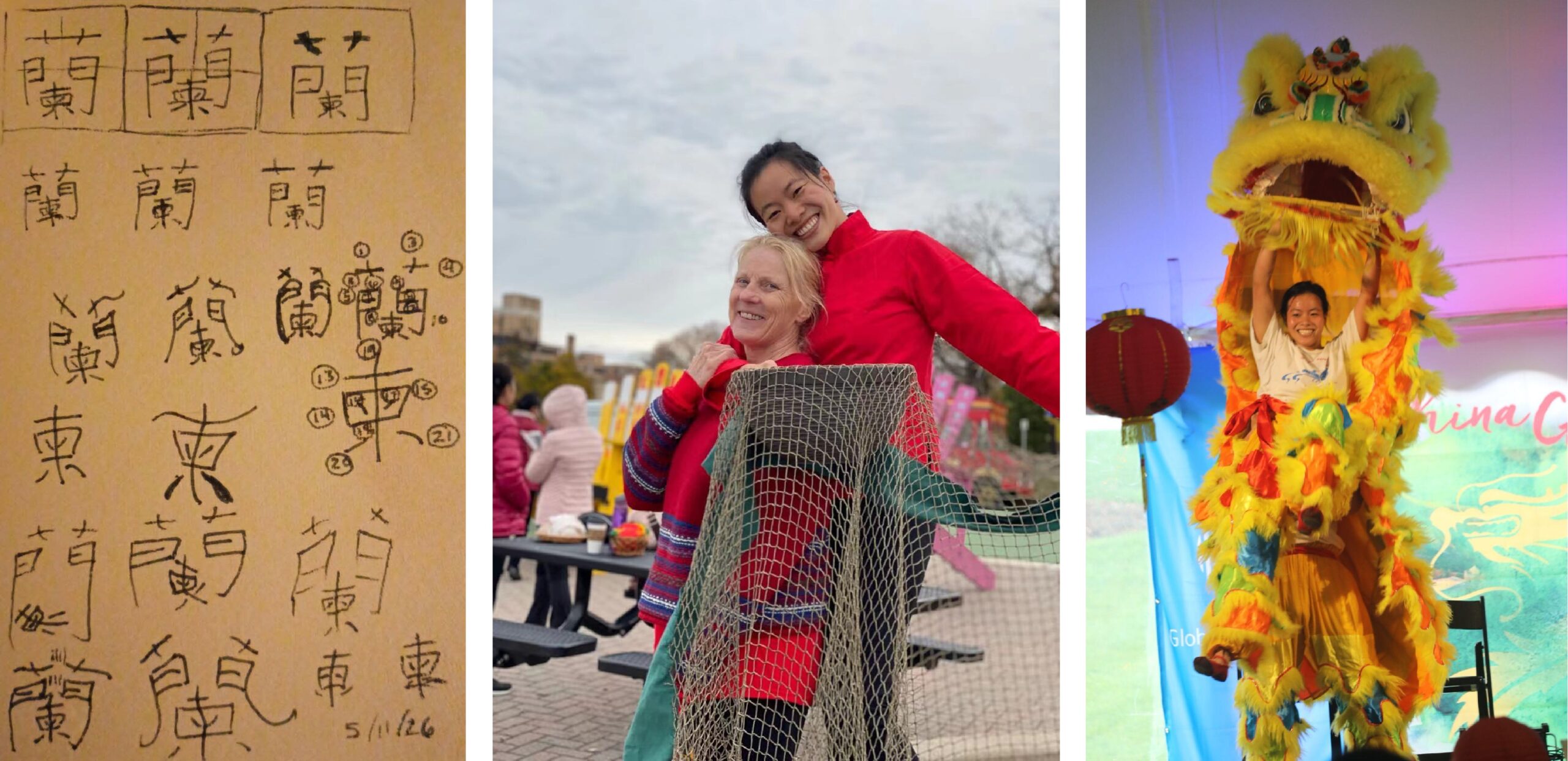
Figure 35 (left): Lan practices writing the Chinese character for ‘Lan’ (Dated 5/11/26).
Figure 36 (middle): Elena and her mom at a 2021 net weaving dance.
Figure 37 (right): Elena Youngdale performs the lion dance in 2018.
Elena has performed in significant principal roles, including at the 2016 Ode to Peace Performance at Bethel University. She danced to “中国妈妈” (Translates to “China Mom”), which describes the story of a young Japanese orphan in China after the Japanese occupation. Lan tells me:
This dance turned gears in my mind and heart. It was one of the first times I was a soloist through an entire dance … I believe part of the reason I could play the role so well was (surprise-surprise) our shared story. I cried real tears for my alternate self when I was briefly utterly forsaken and alone. I let the gratitude and joy of being cared for spring through my body as I threw my hands in the air and hugged my mothers. I came to understand my own adoption and feelings around it with more complexity through this dance.
Elena is mentored by Shen Pei, a master choreographer raised in Shanghai during World War II, who is over 90 years old. She tells me: “My Chinese dance teacher, Shenpei is first and foremost my teacher, but she is also like a grandmother to me. Her home is like my own and through her I’ve been able to have a Chinese grandmother.” Lan quotes from Shen Pei: “Chinese dance isn’t just in the movements – it’s the content, the way a character acts and moves.”
At the Shen Pei Arts Alliance, Shen Pei’s dance studio, Lan has performed as Rose, the female lead role, in the studio’s “Shanghailanders” production for almost three years.
Rose is a strong, elegant, and playful woman … She’s a healer who cares for her community, knows how to swing a sword, and passes secret notes as part of the resistance to the Japanese occupation … Rose and I influenced each other greatly in the ~2.5 years I spent portraying her. I became her; she has become a part of me … Some of Rose’s strength and feistiness/playfulness in the earlier part of the drama very clearly were choreographed for me. When I first told my teacher I wanted Rose to have a sword, she disregarded it- she wanted Rose to be her idea of a graceful Chinese woman … With enough persuasion, Rose obtained a sword!
In 2025, Elena Lan Youngdale received a grant from the Metropolitan Regional Arts Council, where she taught three workshops on concert dance styles from around China – Mongolian, Dai, and Han Classical Chinese history, cultural background, and techniques. Lan will be teaching Chinese sword dance in the Fall and Winter of 2026. “I hope to be the adopted Asian American role model in dance I wish I had growing up,” Elena tells me. She has now become that person.
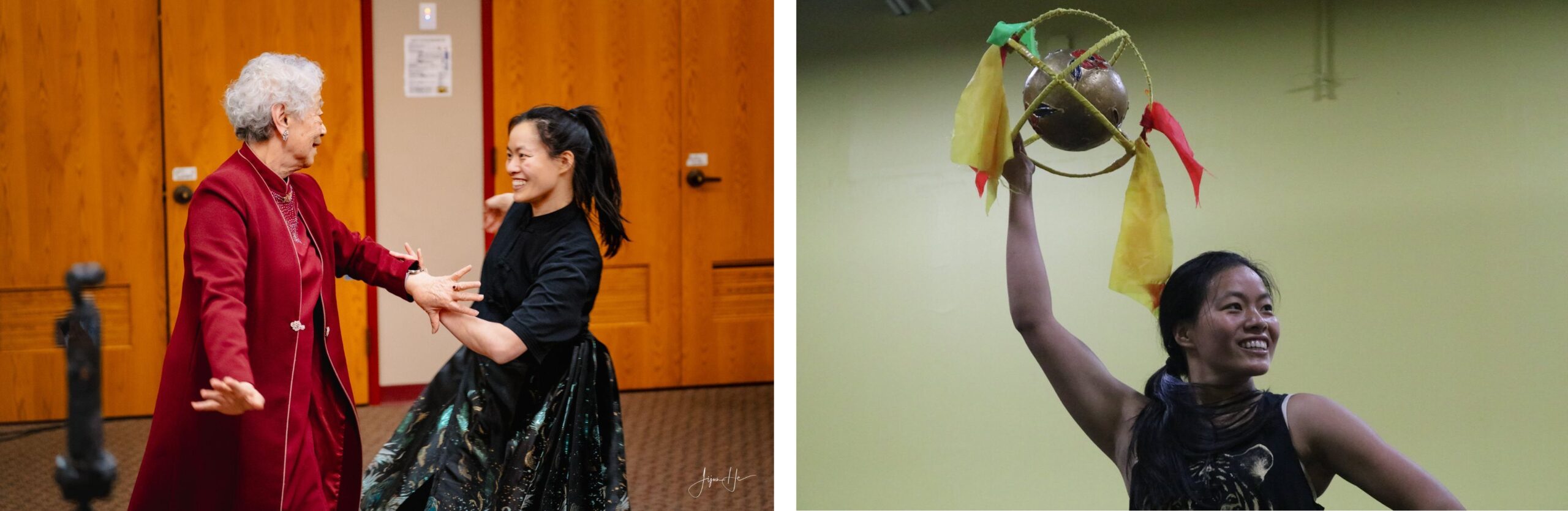
Figure 38 (left): Lan and Shen Pei share a sweet improvised dance of gratitude to Jackie Chan’s song “Thank you for a lifetime” as the final performance for Shen Pei’s 90th Birthday party. Lan mentions: “I was going to do the dance alone, but I had wanted to perform a dance with her for a long time and the time felt right. She refused at first, but joined me just a few movements in. Through our favorite shared language–dance–we thanked each other and all the people who had been in her life.” (credits to Jijun He)
Figure 39 (right): Elena Youngdale in a Lion Tamer practice session (circa. 2018).
She encourages parents interested in adopting transnationally to involve their children in a community tied to their heritage. “Try to genuinely learn about their heritage and help them connect with things in the best, most respectful way you can. Talk about their adoption over and over so you and they remember what happened.”
As the interview closed, I asked Elena what she would tell her younger self if given the chance.
“You were dreamed of, imagined, and hoped for before you were here by your genetic ancestors as well as your family … Never stop being you: be your most authentic self. You’ll find your people.”
“I carry a sense of loss with my adoption, but I’ve also gained so much with it. I am the person I am today because of it – and I love her very much.”
Conclusion
In this article series, I told the stories of twenty Minnesotan adoptees and their families, the majority of which were adopted from Mainland China (exceptions: Jae Nelson was adopted from South Korea, David Cairns was adopted from Taiwan, and Adelyn Yeow was adopted from Taiwan). Six of the adoptees were male (Joshua Hallgren, David S. Cairns, Jae Nelson, Reuben Addington, Sam*, and Michael Munn), while the other fourteen were female. All except one (Adelyn Yeow) were adopted by Caucasian American parents. With the exception of Carolyn (who is deaf and diagnosed with mild cerebral palsy), all the female adoptees were physically healthy. On the other hand, many of the male adoptees had physical impairments, with varying severity (such as Reuben having amniotic band syndrome). Many of the male adoptees chose not to disclose their conditions with me. From my very limited sample pool (which contained more female adoptees), it seems that girls were abandoned based on their gender, while the boys were likely abandoned in part due to their physical impairment. Their parents also had differing motivations for adopting them, from a lifelong desire to adopt, a fascination with East Asia, an inability to have children of their own, or because of religious convictions. I found that parental motivations didn’t correlate with their children’s confidence levels or involvement in cultural activities.
These adoptees were involved in different vocations, ranged in age from elementary school years to young adulthood, were in single- and two-parent families, and were both religious and atheist. Most importantly to me, they ranged in levels of cultural immersion. Some didn’t understand any Chinese, while others spoke it fluently. Some spent a significant portion of their time engaging in cultural activities, while others have only been introduced to Chinese culture. I wanted to gauge how culture, language, and immersion affected an adoptee’s view of their own identity and sense of personal and community belonging.
For the two adoptees who were adopted when they were older, their biggest challenge and crisis they faced were adapting suddenly to the American culture and English language. Michael Munn faced additional difficulties as a legally blind individual who had to adapt to the American accessibility scene. Even though Michael learned English in China, the transition was still difficult, and neither of his adoptive parents understood or spoke Chinese. He earned Cs and Ds his first semester of 6th grade. Sam* was also adopted when he was fourteen and faced similar struggles. He writes:
“My speaking, writing, and reading was really bad. I learned English in China, but we focused on vocabulary and grammar. The first month in America, I barely spoke anything. My parents, friends, and teachers thought I was depressed and traumatized. I wasn’t traumatized, but rather getting used to a completely different way of talking and living … I had to get used to a completely English-speaking environment in a small rural town in Iowa.”
For the adoptees with very little or no cultural immersion (Joshua Hallgren, Robin*, Lily Hubbard, Rachel Yang, David S. Cairns), they were largely raised in rural areas with very little diversity. They all wished that they understood more Chinese and wanted to be more involved in the culture but didn’t know how to begin. The absence of multiculturalism didn’t stop them from having identity crises. In contrast, it seems that not being immersed in their birth language and culture made the crises worse.
For example, college student Joshua Hallgren doesn’t speak Chinese anymore. His parents made the choice to raise their son in their way of life. But Joshua wishes that he understood Mandarin. “When I hear Chinese,” Joshua Hallgren told me, “a part of my brain recognizes it. Part of my brain gets triggered, but I just don’t understand.”
Adoptees whose parents involved them in cultural activities all told me how much they appreciated the opportunity to connect to their heritage. For example, Jae Nelson was involved in and enjoyed Korean drumming. Nine of the fourteen female adoptees interviewed were involved in Chinese dance (Eleanor Bielke, Hannah Ferber, Sarah*, Lily Hubbard, Charlotte, Leslie Keller*, Ginger Johnson*, Sara*, and Elena Youngdale). All of them enjoyed the experience.
- Lily Hubbard enjoyed the cultural immersion Chinese dance brought. Sarah* appreciated how she was exposed to other Chinese Americans and adoptees. Ginger Johnson* complained to her parents after she had to pause dance classes during COVID. Leslie Larson* appreciated how Chinese dance helped her stay connected to her Chinese heritage. Sara* appreciates how Chinese dance provided opportunities to eat traditional food and celebrate holidays with the community. Hannah Ferber enjoys learning more about her culture and expressing emotion through dance, but admits she sometimes feels “too American” when she’s unable to understand Mandarin. Eleanor Bielke enjoys seeing her friends at dance. Through Chinese dance, Charlotte has become a leader in her dance academy, and younger Chinese adoptees look up to her. And Lan Youngdale found her voice through dance: “It’s so much of my life. I live it and breathe it. I couldn’t live without it,” she admitted to me.
- Parents Denise and Zach Bielke tell me: “Without Chinese dance, we would be lost. It is a vital part of our family and a vital part of our family’s identity.” Their daughter Eleanor shares similar sentiments: “But Chinese dance was fun! It was nice seeing my friends. We had great bonds, and the dances were fun to do. Rehearsals can be long though.”
- Adoptees not involved in their heritage, such as Joshua Hallgren, wished their parents involved them in activities. When asked what he wished his parents would have done, he responded: “I wish my parents involved me more with my heritage.” Robin* commented about her cultural involvement: “It wasn’t the most immersive. I wish it had been more. I wish I knew more about my Chinese heritage and culture.”
Language immersion was also a net positive to the adoptees (and many adoptees who didn’t speak Chinese wish they did). It is worth noting that some adoptees, like Leslie Keller*, experienced a trauma response to hearing the language. When her parents placed the young girl in Chinese immersion, hearing Mandarin gave Leslie* a total meltdown. “I couldn’t handle it,” she expressed. “My working theory is that being around Chinese kids reminded me of the orphanage.” Despite the initial trauma, Leslie* would restart her Mandarin journey in college. I also found it fascinating how some of the adoptees who didn’t speak Chinese growing up, like Lily Hubbard, are now making an effort to learn it. Last year, Lily joined a Chinese language group at her university.
- Sara* admits that she feels some guilt when others expect her to speak Chinese because of how she looks. “I wish I knew how to speak Chinese because I feel a sense of obligation to represent Chinese-Americans in America, and it’s more difficult to do so when I don’t speak the language … There have been several times when people speak Chinese to me and I don’t understand. That happens pretty frequently when I’m around any Chinese people who don’t know me.”
- Charlotte’s parents, Tracy and Adam, told me they were happy that their daughter learned Mandarin. Today, Charlotte has a lot of opportunities available to her that adoptees without her skill set would lack. “A lot of people assume you speak it. For adoptees who don’t speak Chinese, it’s awkward [when they can’t understand]. It’s nice for her to be able to listen to native speakers and immigrant families.”
It is also important to note that the majority of adoptees experienced a crisis over identity, despite their level of immersion. When I asked Rachel Yang if she ever had an identity crisis, she laughed. “That’s my whole life.” As a Chinese adoptee raised in a majority homogenous setting, Mrs. Yang envied her Caucasian friends, wishing she looked more “European.”
- Adoptee Sarah* experienced an identity crisis ata summer camp with a lot of Chinese children with Chinese parents. While she was Chinese and looked like her peers, her Caucasian mom made her stand out. She felt a pressure to assimilate into Chinese culture. Sarah* wondered what other experiences she missed and if she truly belonged.
- While Leslie Keller* never experienced a full-blown identity crisis, she admits: “there were times where I felt out of place. I’ve been the only Asian or person of color in the room, but it’s very natural in a white environment. St. Olaf is very white.”
- Sara* experienced an identity crisis as a Chinese person raised in a white-American household that doesn’t speak Chinese and isn’t very familiar with the culture. She told me that she believes Chinese Americans see her as different. “It’s difficult to know who you are and where you belong when everyone sees you as different. So, unless I’m with a community of Chinese adoptees, I’ve learned to feel as comfortable as I can being seen as different.”
- Dancer Hannah Ferber describes her identity crisis at her mostly white school: “I’ve always seen and known myself as different from everyone else based on my physical appearance,” she stated. “When I’m in more diverse places, I see myself blending in more. However, if I’m at my mostly white school, I feel like a bright red fish in a mostly gray fish pond.”
- Despite being involved in Chinese dance her whole life, Lan Youngdale also experienced a brief identity crisis when she was applying for her college study abroad visa. Her visa application was rejected because of how she wrote her name, and the act of unintentionally writing her Chinese name wrong her entire life led Elena to fall into a full-blown identity crisis. “How could I not have known? I feel like I betrayed the Chinese side of myself,” she wrote.
I also found that the adoptees held varying sentiments towards their birth parents. Some want to find their parents, while others are uninterested:
- As a person of faith, Robin* remembered feeling shocked after realizing that China is majority atheist/agnostic. She often used to wonder about her birth parents and realized that there was almost no way she could successfully track down her biological family. Robin* wants to try and search for her birth parents, but hasn’t done the research yet. Her emotions are less intense now, and Robin* is mostly curious to know who her biological parents are and what they’re like.
- On the other hand, Lily Hubbard has no active interest in finding out who her birth parents were, nor is she angry at them. Sometimes, feelings of curiosity would emerge and Lily would wonder if she has biological siblings.
- David Cairns has never felt a deep desire to contact his birth family aside from general curiosity. “It would be interesting to meet my birth family, but I don’t have a burning desire to do so. I don’t have a void that needs to be filled, nor do I feel like I was stolen.”
- Jae Nelson doesn’t think about his birth parents and isn’t interested in contacting them. “I probably think about my [biological] siblings more than my [birth] parents.”
- Similarly, Eleanor Bielke has no desire to connect with her birth parents immediately, but is unsure about the future.
- Ginger Johnson* is interested in getting to know her biological parents and feels confused or lonely when she thinks about them. She took an Ancestry DNA test but had no luck.
- Reuben Addington holds complicated feelings towards his birth parents. “I feel confused,” he acknowledged. “Why didn’t they want me?” He is interested in participating in searching posters if their family is able to return to China.
- Sam* used to feel more emotional about his birth parents, but tells me: “I feel nothing now. Maybe some curiosity on who they are and why they wanted to leave me on the bridge. I feel no emotion, but I have a few questions.”
- Sara* knows nothing about her biological parents and feels indifferent. “To me, they are strangers,” she writes, describing the process as “a lot of effort for minimal reward.”
- In contrast, Rachel Yang desperately wants to find her biological parents, which has garnered mixed reactions from her family. In her search so far, Yang has placed her DNA results in databases and created a searching poster through a searching organization. While her father is very supportive of her search for her birth parents, her mother is less enthusiastic.
I also discovered that many of the adoptees want to visit China (or felt like their previous trips were significant and meaningful), regardless of their immersion and language level.
- Rachel Yang would love to go back and get to know locals without a cultural barrier. She has harsher feelings towards the government and the harm they caused to her and other adoptees.
- Robin* wants to visit China when she has the money.
- Sarah* hopes to visit Guangdong, her place of birth, as well as Beijing. She would love to explore the country and see where she came from. “It’s beautiful nature- and history-wise.”
- Even though Eleanor Bielke understands “very little” Mandarin, the girl has enjoyed her trips to China. She tells me: “We went to China last summer to celebrate 10 years with my family, and went with good friends who were Chinese. We went to my hometown and went back to my orphanage and visited the same people who worked there 10 years ago.”
- While Lauren* enjoys the food, she admits she was a mess when revisiting her orphanage. “ It was very emotional, and I could speak to people who were there when I was a baby, speaking directly without a translator.”
- Hannah Ferber also tells me that she would like to visit China someday. Ms. Ferber hasn’t returned since her adoption, and she is excited to come full circle and see where she was born and all the hotels her parents stayed in.
- Sara* would still like to visit her country of birth. She hasn’t been back since her adoption and is interested in learning more about Chinese culture. “The best way to do that,” she tells me, “would be to visit China.”
- Despite her torn feelings on tracking down her biological family, Leslie Keller* wants to go back to China to eat the local food, especially spicy dishes. She plans on studying abroad in Taiwan.
There were also some unexpected findings from this interview series. I discovered, to my surprise, that many of the adoptees experienced serious trauma, both from the adoption experience and unintentionally by their adoptive parents. This was despite most of them being adopted at a young age (around one or two years old) and not having any memories of China or their orphanage:
- The Bielke family tells me: “The trauma of adoption, medical trauma, and enormous surgery and recovery time brought our family closer.” Eleanor’s complications following her adoption caused a lot of stress and trauma to a young child who had never known comfort and safety. Eleanor developed anxiety, and it took a family therapist years to help the family heal and effectively navigate medical procedures. Eleanor dreams of becoming a doctorand wants to ensure nobody else goes through the same medical trauma she once d But not all adoptees are this lucky.
- Sara* was raised by a single mom and has a sister who was also adopted. During Sara*’s struggles over belonging and identity, her mother and sister weren’t able to adequately help her. Today, the adoptee doesn’t consider herself close with her mom, telling me, “we’re a little distant because we’re both healing from past trauma.” Her sister is also healing, and the siblings currently aren’t in close contact.
- When asked about what she wished her mother did differently, Sara* reflected, “I wish my mother understood and had a handle on her own trauma before raising children with inherent trauma from being adopted … I reflect a lot on my mother’s choices and how I would choose differently while raising a child. I try to be understanding and just take those reflections as learning experiences for myself to be a better parent when the time comes.”
Sara* writes:
Adoption is inherently a traumatic event for the child. Transnational, specifically transracial, adoption is difficult because the child doesn’t automatically have someone that looks like themselves to look up to; an absence of this “genetic mirror” leads to developmental impacts for the child. Therefore, it’s so important that the adoptive family takes into account the trauma of loss and grief that an adoptee will have, while also taking into account the cultural and racial factors that will impact the child’s life.
Adelyn Yeow also experienced trauma, which has led her to cut off contact with her adoptive parents. While she was close with her adoptive parents growing up, Qi-Han began to exhibit trauma responses as a teenager. She became closed off, and the unresolved trauma resulted in severe depression and anxiety, which led to hospitalizations. “To this day,” she tells me, “I have not talked or been in contact with them.” She calls for prospective transnational adoptive parents to be more understanding, as their children are more likely to experience emotional distress and trauma. Adelyn stresses the importance of enforcing the concept of love and family with patience, as well as being transparent about their past.
Finally, I was surprised to find that adoptees had varying viewpoints on their own families, with some wanting to adopt while others desperately wanted their own biological children. Their reasonings all stemmed from their own identity as adoptees.
- Sarah* is very fascinated with people looking like each other and how biological families share traits and characteristics.Sarah* had a lot of opinions about adoption: Whereas she hasn’t fully dismissed the idea, it’s not something she wants to do. Generally, Sarah* maintains, “adoptees would make good adoptive parents. I’m not sure that I would like to though.” She wants biological children, though, and yearns to have someone in the world who looks like her. She tells me: “I don’t know anyone in the world who is related to me. I want a connection to someone.”
- Rachel Yang yearns to be a mother and have her own children. “I have no biological relatives. It is very important to have my own children and connection. To have someone related to me.”
- On the other hand, Robin* wants to adopt because she herself was adopted. As an adoptee, Robin* values human life. “I could have been aborted,” she says. “If we want fewer abortions, we need to do something about it, not just protest or yell at someone. Let’s adopt.”
- Lily Hubbard also mentioned wanting to adopt from China in the future, if possible.
- As a Chinese adoptee, Ginger* was interested in adopting in the future. “I would most likely adopt an East Asian child,” she added.
- Lauren* also wants to adopt. “At this point,” she stated, “the idea of having biological children isn’t important to me.” As a Christian, she has religious motivations for adopting. She tells me, “Christians are all adopted by the LORD, and I want to continue that.”
I’m going to close my findings by sharing advice the interviewees had for prospective adoptive parents:
- Carl* and Angela Johnson* had a few key messages: “Read a lot about Chinese culture in general, learn about the history of the adoption program and the One Child Policy, and find as many Chinese people as you can.”
- Adoptee Hannah Ferber also provided sage advice: “Embrace the culture that the adopted child came from. Remaining connected to cultural traditions has really shaped who I am today and who I am as a Chinese-American person.”
- Rachel Addington cautions: “People need to think carefully about their motivations. They need to consider the amount of energy of adoption – would they be willing to also put some of that energy into family preservation? I’m asking that question of myself as well.”
- Tracy and Adam, parents to Charlotte, also provided practical advice for families interested in adopting children from another culture. “Encourage them to be a part of their tradition, but be a part of it with them,” Tracy urged. “Give them choices in life but don’t ever force it! We gave Charlotte choices for immersion, and she chose them.” “Expect challenges,” Adam warned, “and don’t shy away from things.” He pressed: “Don’t keep things from your children, since comments may come up.”
While I am aware of the limited scope of this biographical series and the relatively small pool of adoptives I interviewed, I have made two critical discoveries:
- Cultural and language immersion is critical to an adopted child’s identity and self-confidence.
- It is vital to be transparent with an adopted child and be proactive to address trauma caused by the adoption.
Summarized succinctly by Elena Youngdale, “Try to genuinely learn about their heritage and help them connect with things in the best, most respectful way you can. Talk about their adoption over and over so you and they remember what happened.”
—
As the sunrise dawned, I realized that I had been typing late into the night. The stories of these adoptees have changed me forever and left a permanent mark in our nation’s history.
Over three decades, more than 160,000 Chinese children were adopted transnationally. Half would grow up in the United States of America.
Each of these adoptees has their own story. It is impossible to tell them all.
So I gift you, dear readers, with the legacies of twenty.
Acknowledgements
Thank you to all the Chinese adoptees and their families who so graciously let me into their lives and shared their beautiful stories with me. Without you, this project would not have been possible.
Adoptees: Joshua Hallgren, Robin*, Lily Hubbard, Rachel Yang, David S. Cairns, Jae Nelson, Sarah*, Eleanor and the Bielke Family, Ginger* and the Johnson* family, Lauren*, Leslie* and the Keller* family, Sara*, Hannah Ferber, Carolyn and Reuben and the Addington family, Michael Munn, Sam*, Adelyn Yeow, Charlotte and her parents, and Lan Youngdale.
I also extend my heartfelt gratitude to Rosemary Lofstrom and David Cairns, my proofreaders. And finally, I am eternally thankful to Mari Evans and Megan Ellefson, my close friends and the editors for this series. You both poured countless hours making corrections throughout the entire process. Thank you.
This project took a village, and I am grateful for you all.
Additional Resources
- Thank you for following the Chinese adoptees series on China Insight!
- Part One: A Missing Piece in the Puzzle: The Experience of Chinese American Adoptees (Part One of Chinese Adoptees Series) – China Insight
- Part Two: Embracing the Gray Areas: The Experience of Chinese American Adoptees (Part Two of Chinese Adoptees Series) – China Insight
- Part Three: A Bright Red Fish in a Mostly Gray Pond: The Experience of Chinese American Adoptees (Part Three of Chinese Adoptees Series) – China Insight
- You can read more about me in my memoir: The Phoenix and the Eagle, Growing up in America – China Insight
- Author Linktree: Jenny Liang Official: Instagram | Linktree
- Author Google Scholar:
Sources
- beautiful inheritance demo.m4a – Google Drive
- China ends transnational adoptions
- Changsha | History, Neolithic Sites, Industry, Map, Population, & Facts | Britannica
- travelchinaguide.com
- Baijiu, The Punchy Chinese Spirit, Isn’t Meant To Be Mixed — Here’s Why
- https://www.google.com/url?q=https://www.adoptionliteracy.com/counseling&sa=D&source=docs&ust=1783717113009161&usg=AOvVaw01MhbzHKxYapd0_KTWqTwD
- What White Parents Should Know about Transracial Adoption: The Workbook
- Amniotic Band Syndrome: Causes, Symptoms & Treatment
- China Adoption Fast Facts
- Michaels weekly perspective.
- Michael’s Testimony Speech.
- The Monster Route | National Federation of the Blind of Minnesota
- Hunan Tourist Attractions, 12 Best Things to Do in Hunan, 2026
- Home – OneSky
- Welcome to Great Wall China Adoption
- Fertility of Women in the United States: 2024
- Zhejiang Travel Guide: Map, Climate, History, Top Attractions, Local Products
- WeGene – Personal Genetic Testing Platform
Publisher’s Disclaimer:
The opinions expressed in this article are solely the views of the author and do not necessarily reflect the opinions and beliefs of China Insight. The information presented is provided for general informational purposes only. While every effort has been made to ensure the accuracy and reliability of the content, the publisher claims no responsibility in the conclusions set forth by the author, who can be reached at [email protected].