
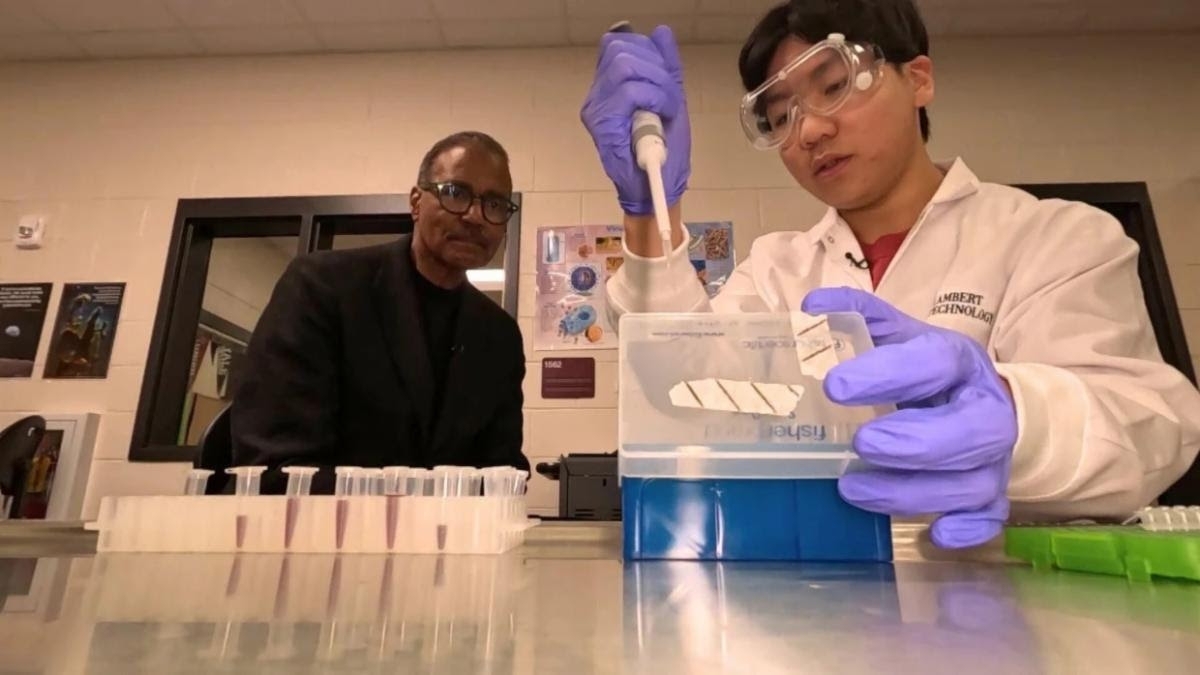
An all-Asian American team from Georgia’s Lambert High School developed CRISPR-based early Lyme disease detection, finishing top 10 at iGEM in Paris—the only US team to place, amid federal funding uncertainty.
A team of all-Asian American students at Lambert High School in Georgia has developed a method using CRISPR gene-editing technology to detect Lyme disease within two days of infection, far faster than the two weeks required by current methods. The team won the “Best Software Tool” award at the International Genetically Engineered Machine (iGEM) competition in Paris at the end of October and ranked among the top ten globally in the high school category, the only American team to make the list.
The remaining top ten spots were occupied by teams from China and South Korea, with the overall championship won by the Shenzhen Greater Bay Area team. Lambert High School is located in Forsyth County, a suburb of Atlanta, and its student body is predominantly Asian American.
According to CBS, this year’s participating teams were “almost entirely composed of children of immigrants,” with some families even relocating from out of state or overseas to the school district just to give their children the opportunity to participate in the project.
Drew Endy, co-founder of iGEM and a professor at Stanford University, commented that the work “appears to have developed the best-in-class diagnostic tool for Lyme disease to date.” However, federal funding for such projects is facing uncertainty. Earlier this year, the Trump administration cut federal grants to the iGEM project on the grounds of “diversity, equity, and inclusion” (DEI). A judge temporarily reinstated the funding, but it remains unclear whether it will continue beyond May 2026. Professor Endy pointed out that the United States’ leading position in synthetic biology is declining, while China has listed it as a national priority.
Source: HCA,CBS News