
Zhang Yuhan, Postgraduate, Hunan University of Technology and Business
Gu Xiu’er, Postgraduate, University of Texas at Austin
Supervised by Dr. Zhang Ling, VP/Professor, Hunan University of Technology and Business
Director, Center for Sino-Africa Industrial Culture of Economy and Trade Projecting
Anhua County, the origin of dark tea, is located in north central Hunan Province between 110°43′07″e – 111°58′51″e longitude and 27°58′54″n-28°38′37″n latitude, at the northern foot of the Xuefeng Mountain Range, and in the middle reaches of the Zi River. It has 85% of the world’s glacial moraine land and a subtropical monsoon climate with four distinct seasons, abundant rainfall, and a short cold period. All of these provide favorable conditions for the formation of the excellent quality of Anhua Dark Tea, which is a specialty of Anhua County, Yiyang City, Hunan Province, as well as a National Geographical Indication Product in China.
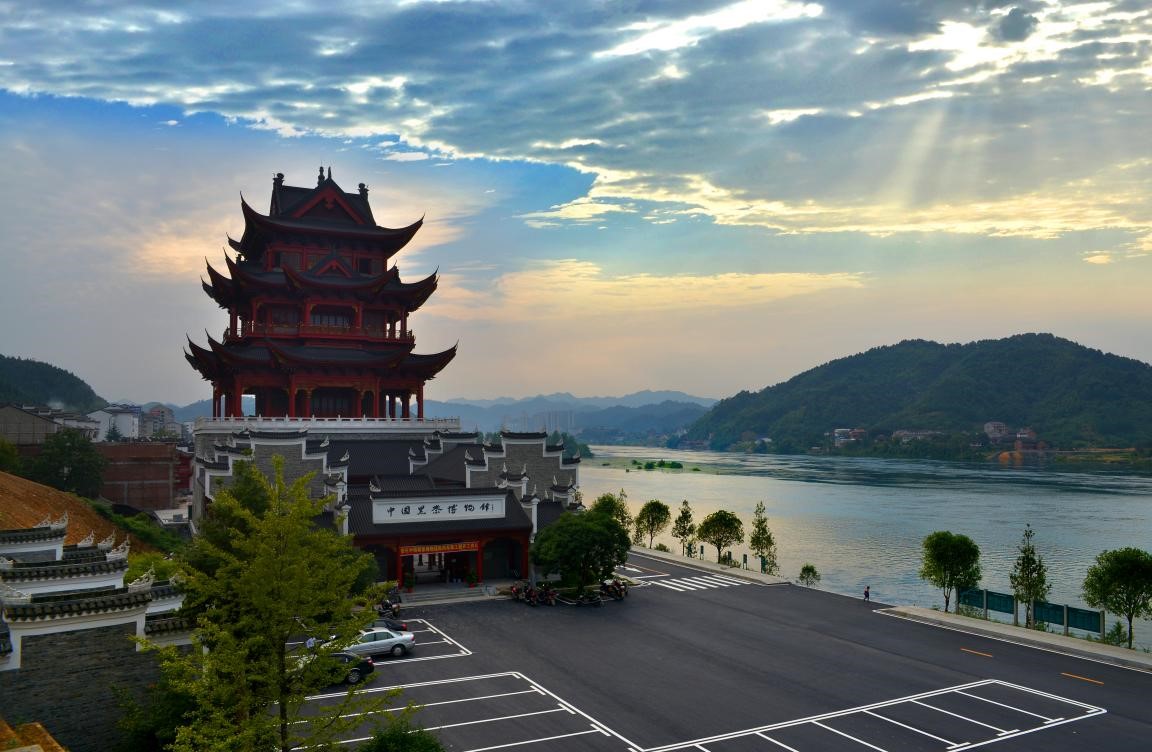
Anhua Dark Tea Museum, Anhua County (Photo by Zhou Liuyang)
The origins of Anhua Dark Tea can be traced back to the tea flakes of Qujiang Mountain at Anhua County during the Qin and Han Dynasties. In the Tang Dynasty, Anhua Dark Tea had been supplied to the royal family and sold in Jiangling and Xiangyang in Hubei Province. During the Song Dynasty, tea thrived at Anhua County and many wild tea plants grew along the cliffs and waterfronts. In the early Ming Dynasty, inspired by the production skills of Sichuan Wucha Tea, Anhua Dark Tea was improved and especially became popular among the ethnic minorities in the northwest. During the 23rd year of the Wanli reign of the Ming Dynasty (in year 1595), the government controlled the production and sale of Anhua Dark Tea, and authorized it as an official tea. Wen Huiming, a painter and calligrapher of the Ming Dynasty, wrote a poem singing Anhua Dark Tea like, “The early winter of Lingnan teems with misty drizzle, the oil lamp indoor looks more heartwarming. I sit in front of a tea table tasting the new dark tea, the fireplace warms the house like spring.” At the late Ming and early Qing Dynasties, Shanxi merchants and Anhua tea growers jointly opened up the “Thousands of Li Tea Road” to Russia and Mongolia, the unrivaled sales prosperity of Anhua Dark Tea industry attracted a myriad of tea merchants and consumers.
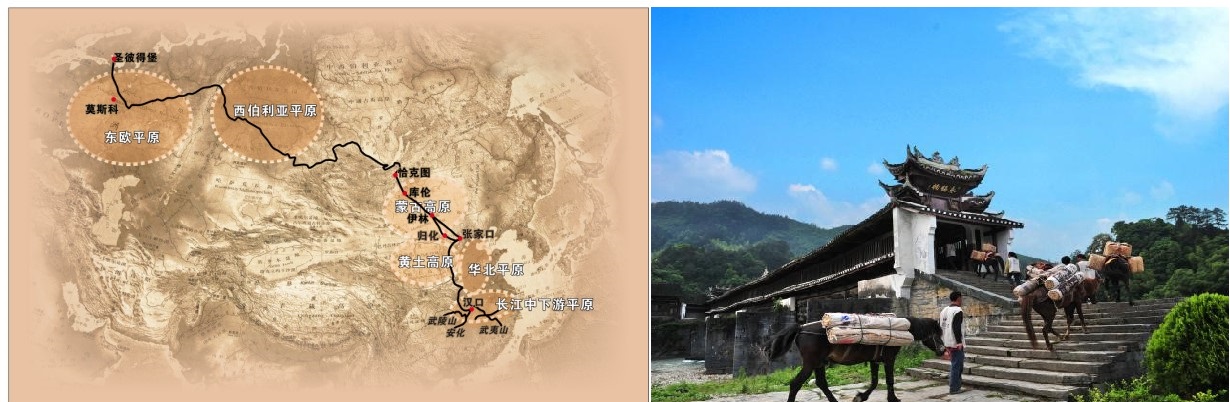
Thousands of Li Tea Road (Photo by Zhou Liuyang)
The production process of Anhua Dark Tea is extremely complex, which is generally divided into two stages: initial production and refining. The initial production stage has five procedures: green removing, initial rolling, pile ferm
entation, re-rolling and drying. The product after these procedures is called “raw dark tea” and can be directly brewed. In the refining stage the raw dark tea, through different processes and techniques, will be made into different products, such as Qianliang dark tea, Tianjian dark tea, Poria dark tea, brick dark tea, flower-brick dark tea, etc.
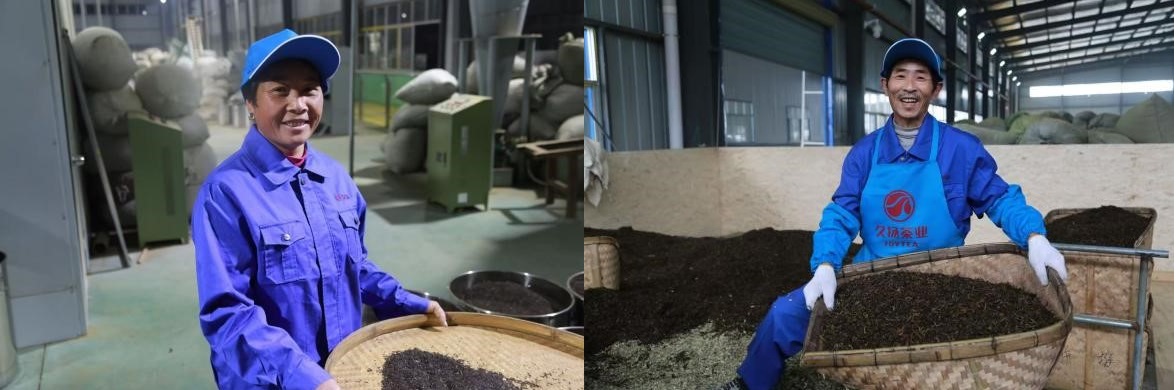
Anhua Dark Tea Production Process (Photo by Hunan Provincial Jiuyang Tea Industry Co., Ltd.)
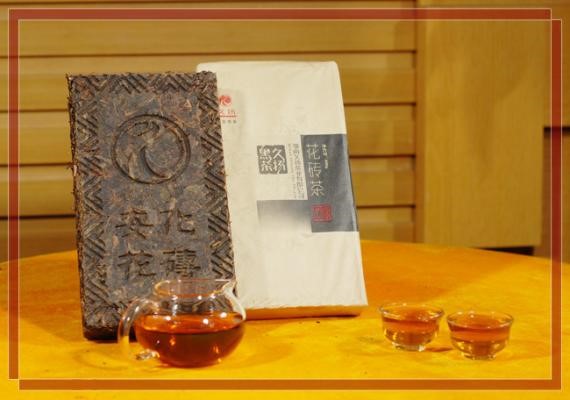
Anhua Dark Tea is a post-fermented tea, mainly consisted of two types, compressed tea and loose tea, which is referred to as “three bricks, three tips and one roll”. The“three bricks” are tightly pressed into brick-like shapes whereas the latter two have loose tea leaves. Tao Shu, a renowned inspector and writer in the Qing Dynasty, praised Anhua Dark Tea in his poem. “People prefer fresh tea with a mellow taste, Anhua Dark Tea yet tends to have a haughty and aloof flavor. With an antique ray glowed against its deep dark color, a sip of its drinking fills the mouth with a unique aroma.” These lines accurately depict the characteristics of Anhua Dark Tea, as one cannot ignore its deep black in color, strong in taste, and orange-yellow in liquid, as well as its distinct in light pine fragrance. Researches have shown that Anhua Dark Tea contains abundant selenium substances and can delay aging, improve health, remove grease, lower blood sugar level and blood lipid, provide antioxidant benefits, and prevent radiation damage, etc.
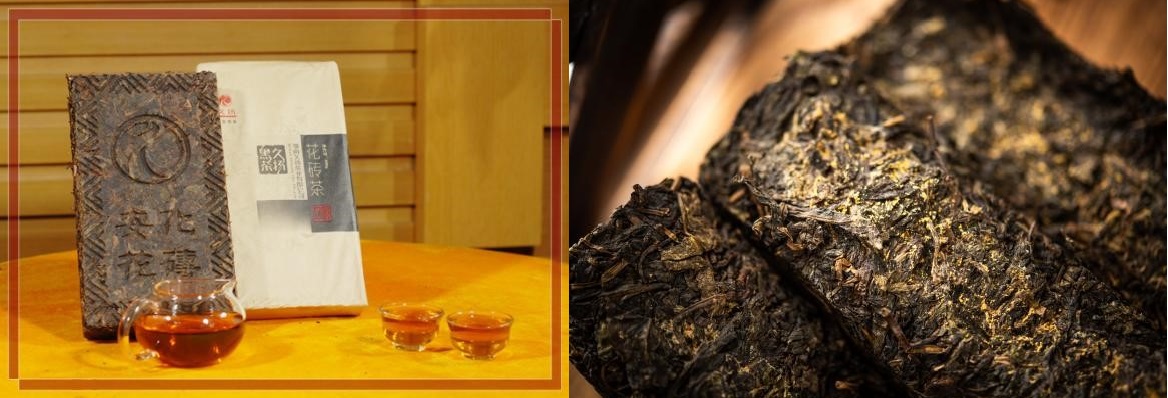
Anhua Dark Tea Bricks (Photo by Hunan Provincial Jiuyang Tea Industry Co., Ltd.)
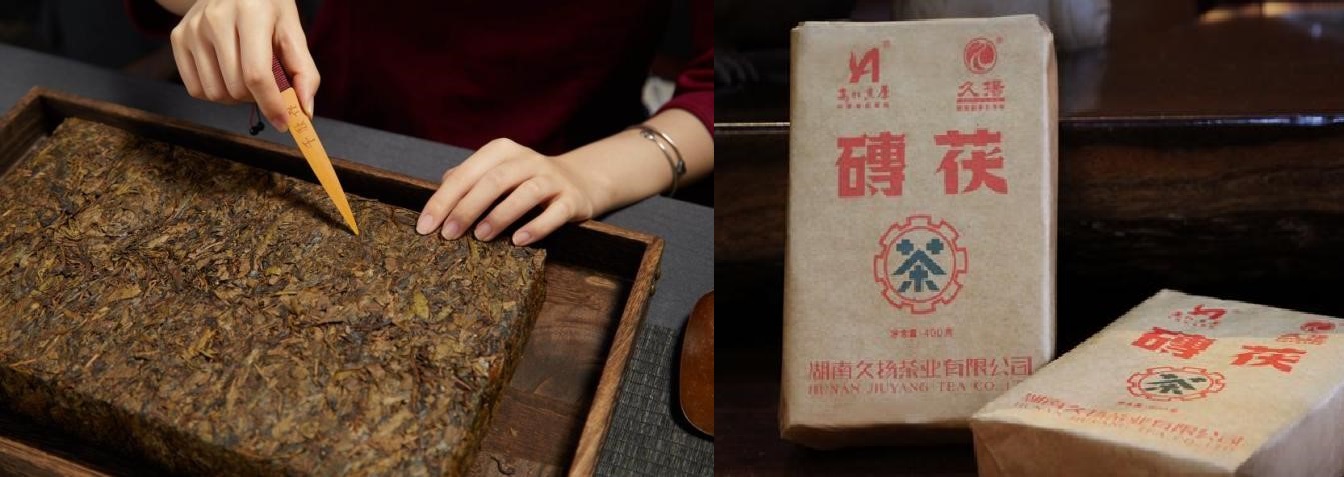
Anhua Poria Tea Brick (Photo by Zhou Liuyang)
In 1829 of the Daoguang period in Qing Dynasty, the centuries-old Yongtaifu Tea Company was founded, specializing in Qianliang tea, and owned a large-scale of tea plantation. In 1902, Shanxi merchants set up the Baishaxi Tea Company, presently a famous tea trademark in Hunan, mainly selling products of Poria Tea, Qianliang Tea and 5301 bud-tip tea. Nowadays, there is a modern comprehensive enterprise China Tea (Wooden House Century) Co. Ltd, which integrates tea production, research and sales, tourism development and operation, as well as dissemination of tea culture. Anhua Dark Tea was mainly sold to Russia, Mongolia, Japan, South Korea, the United States and France in the early days. With the Belt and Road Initiatives, Anhua Dark Tea has been sold to countries along the Belt and Road route, and has a rapidly rising export volume and export value.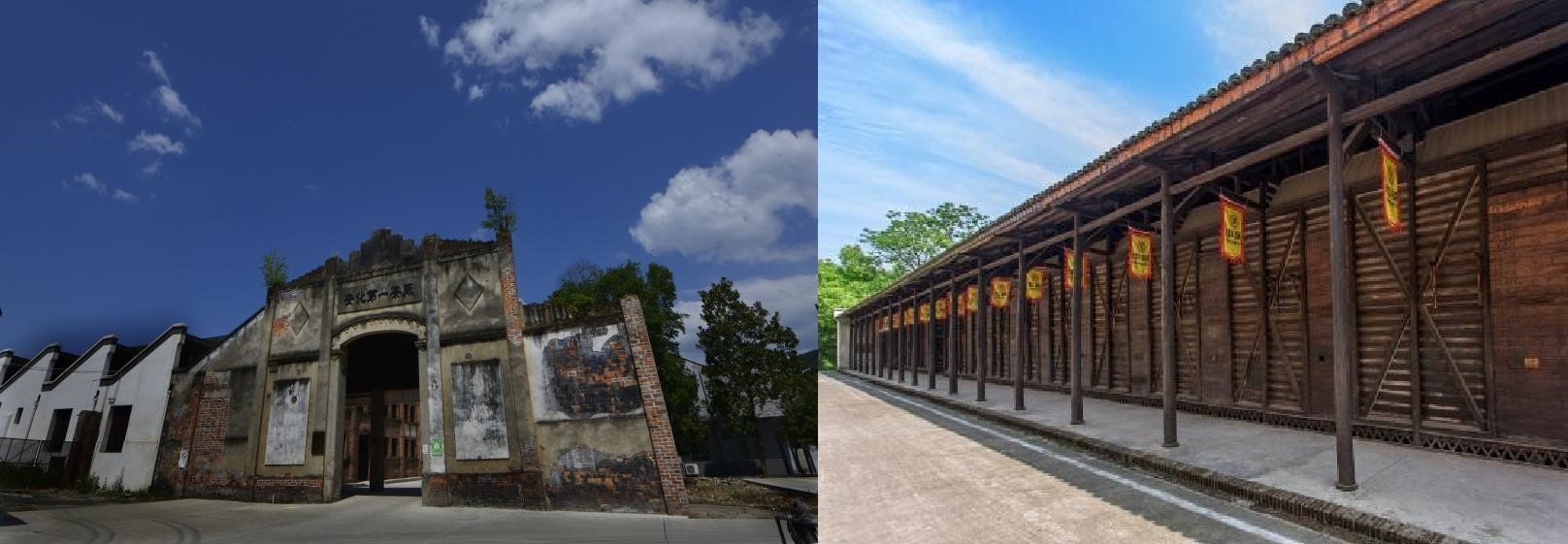
The first Tea Plant in Anhua County (Photo by Zhou Liuyang)
In 2008, the production technique of Anhua Dark Tea had become China’s national intangible cultural heritage. In 2020, it was included in the UNESCO Representative List of the Intangible Cultural Heritage, which showed that people all over the world had recognized its unique quality and its historical and cultural value. In November 2019, Anhua Dark Tea was selected in the List of Chinese Agricultural Brand. And in 2024, it was chosen as a pilot project for the Base of National Quality Infrastructure Integration Service.
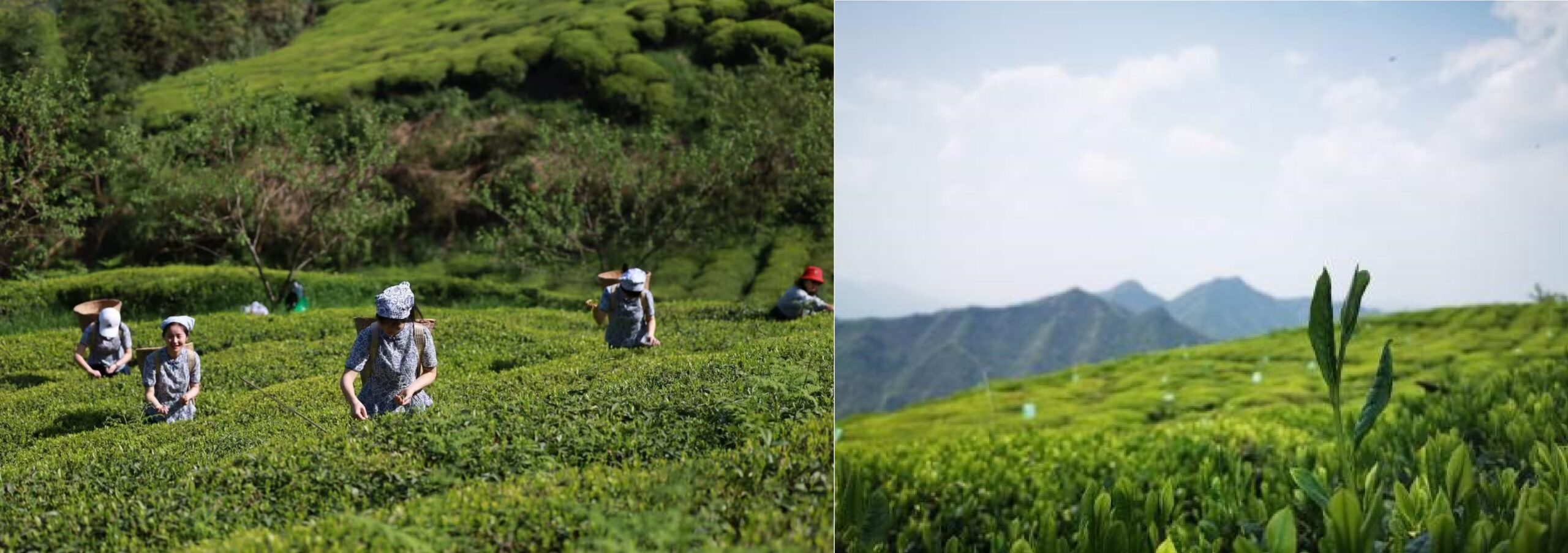
Anhua Tea Mountains (Photo by Hunan Provincial Jiuyang Tea Industry Co., Ltd.)
Beneath the Xuefeng Mountain range, Anhua Dark Tea’s aroma swirls albeit time passing by for more than two thousand years. Currently, as it steps onto the global market, the revival of tea culture and people’s pursuit for healthy drinks, will gain Anhua Dark Tea the love of more consumers, and a best sale at home and abroad. With its unique flavor and function acknowledged internationally, Anhua Dark Tea has already served as a cultural ambassador bridging the world.
Editor’s Note: China Insight hopes you found this article informative and educational since we were selected to publish this exclusively. You can find additional articles about the Dong people and region by searching our website and entering “Dong People” and other key search terms to access the many special articles in our archive that have published over the years.