
Zeng Weiwei, Postgraduate, Hunan University of Technology and Business
Huang Ruiqin, Postgraduate, New York University
Gu Xiu’er, Postgraduate, University of Texas at Austin
Supervised by Dr. Zhang Ling, VP/Professor, Hunan University of Technology and Business
Director, Center for Popularizing Sino-Africa Industrial Culture of Economy and Trade
Jingzhou Hmong and Dong Autonomous County is located in the valley of Huaihua City, Hunan Province between 109°16’14’e – 109°56’36’e longitude and 26°15’25’n – 26°47’35’n latitude. Its mountain ranges, distinct seasons, mild climate, unique humid environment and soil conditions have jointly bred an exceptional Chinese herbal medicine – Jingzhou Poria Cocos, which is well recognized in the medicinal market at home and abroad. There is a saying that in traditional herbal therapy, nine formulas in ten include Poria Cocos, among which 70% come from Jingzhou.

Jingzhou Hmong and Dong Autonomous County (Photo by Liu Gang)
Jingzhou Poria Cocos is characterized by its large size, with diameters ranging from 10 to 70 cm and forming irregular spheres or ellipsoids. Its rough outer skin is brown or purplish-brown, with a pericarp thickness of 1.7–2.3 cm. Its flesh is white or milky-white, soft while fresh but hardening upon drying. It is rich in nutrients such as alcohol-soluble extracts (≥2.5% w/w), total ash (≤2%), and moisture (≤18%). Together with unique medicinal efficacy in different parts, Poria holds a vital position in traditional Chinese medicine (TCM), and has been a most common ingredient of herbal remedies all along. Additionally, as a homology of medicine and food (dual function of both medicine and food), Poria can be used to cook porridge, soups, tea, or pastries. There were medical books recording the “White Poria Porridge” during the Song Dynasty. By the Ming and Qing Dynasties, Poria had transitioned from medicinal use to a folk health supplement.
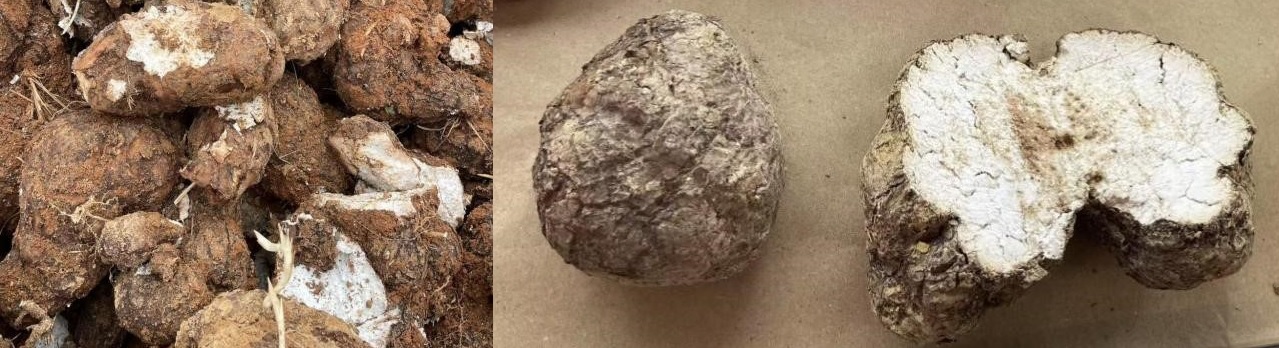
Jingzhou Poria Cocos (Photo by Yang Lianhua)
Jingzhou has achieved remarkable success in the Poria industry. As China’s largest hub for Poria Cocos species breeding and production, the county has established a Strain Breeding Research & Development Center, conducting research on wild spore selection and strain rejuvenation. This has led to the independent cultivation of the new “Xiangjing-28” Poria species, which has even undergone space mutagenesis breeding. Today, Jingzhou’s Poria Cocos species are sold in over 20 provinces across China, with an annual sales volume reaching 70 million packages. Thousands of technicians and brokers carry these Poria species and have established over 200 cultivation bases in South Africa, Madagascar, Southeast Asia, and about 20 Chinese provinces, covering a planting area of 58,000 mu (≈3,867 hectares), and yielding 60,000 tons of Poria Cocos annually.

Jingzhou Poria Cocos Planting Area (Photo by Dai Wenxin)
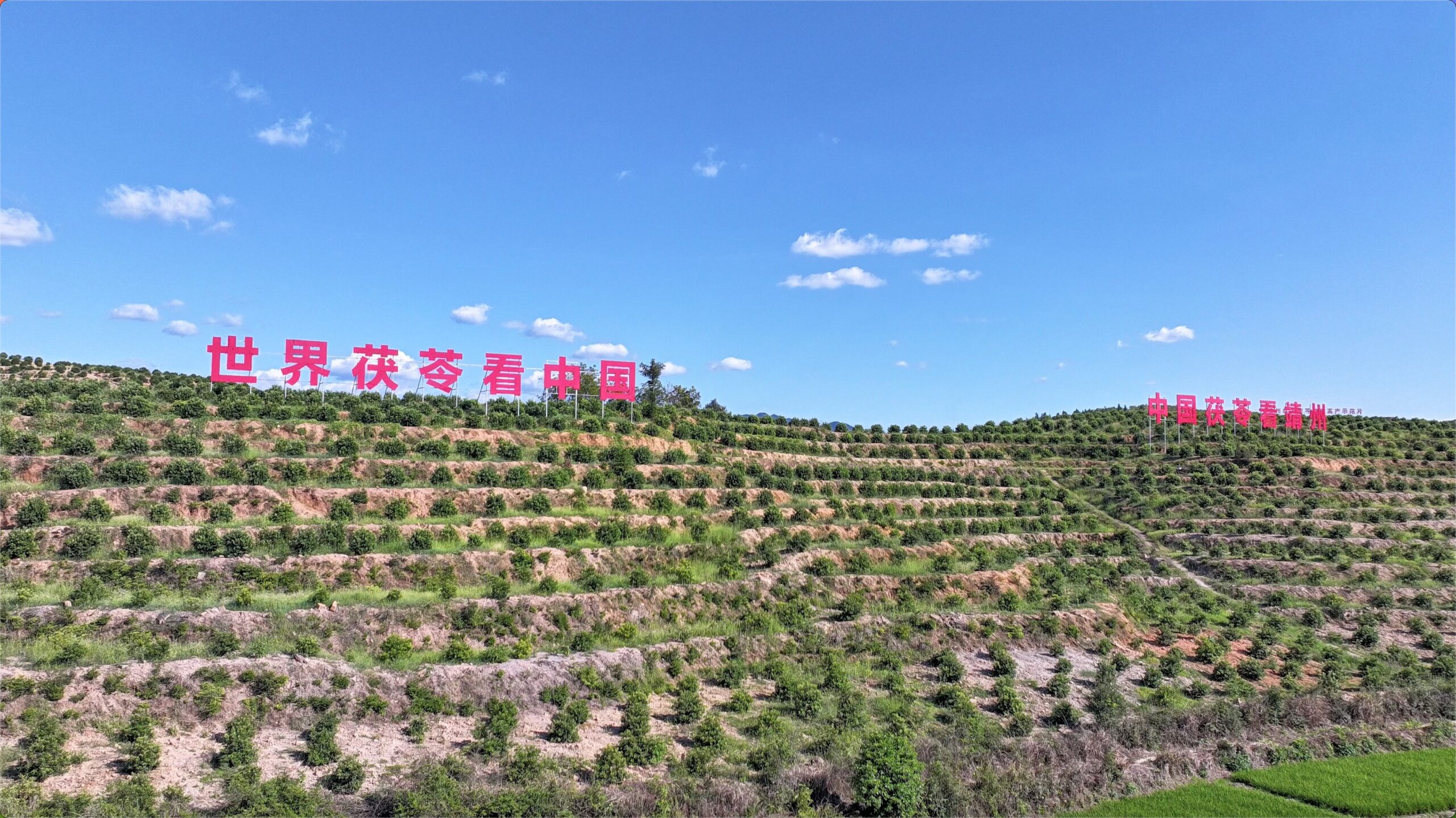
Jingzhou Poria Cocos Planting Area (Photo by Chen Junming)
Jingzhou is also China’s largest processing and trade hub for Poria. A multifunctional Poria Cocos Science and Technology Industrial Park is built up, which has the integrated functions of processing trade, small and medium enterprises incubation, exhibition, e-commerce, warehousing and logistics, sci-tech popularization, quality inspection, and fresh product markets. Series of Jingzhou Poria products are exported to around ten foreign countries and regions, including the U.S.A, Japan, South Korea, and Malaysia, with an annual transaction of 80,000 tons of fresh Poria and 50,000 tons of dried Poria, accounting for 73.6% of China’s total Poria export trade volume (2023 data). Furthermore, Jingzhou boasts the most complete Poria industry chain in China, covering strain cultivation, planting, processing, and trade, alongside a national e-commerce platform for Poria products.
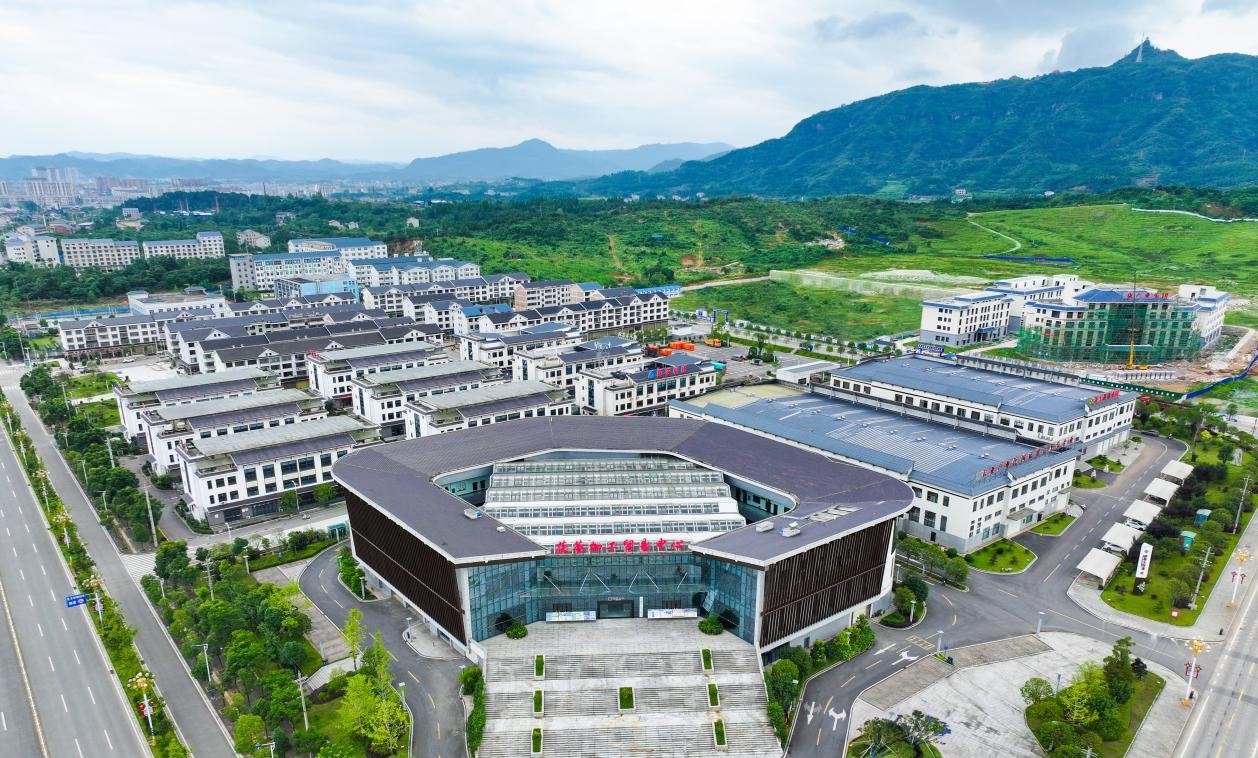
Jingzhou Poria Cocos Sci-Tech Industrial Park & its Processing Trade Center (Photo by Shu Zhaobing)
In 2004, Jingzhou Poria Cocos was officially approved as a National Geographical Indication Protection Product. In recent years, it has won multiple national and provincial awards and accolades at exhibitions, earning Jingzhou the title of “China’s Hometown of Poria Cocos”. In 2023, Xiuzheng Pharmaceutical Group set up a branch at Jingzhou, injecting new vitality into the industry. Collaborative innovation has led to the development of two exclusive national new drugs: “Poria Polysaccharide Oral Liquid” and “Compound Ginkgo Tongmai Oral Liquid”, along with six other National Medical Products, and over 300 health supplements and cosmetics.
In February 2024, ISO 21780:2024 Traditional Chinese Medicine – Poria Cocos – was officially approved and adopted, which regulated the quality, safety requirements, and testing methods for the sale and usage of Poria products in global trade, and greatly enhanced its international influence. Furthermore, the standard of National Technical Regulations for Poria Cocos Species Production was officially approved in May 2024. Jingzhou’s deep-processed Poria products were awarded the Gold Medal at the Panama-Pacific International Exposition, while Hunan Provincial Quality Inspection and Testing Center for Poria Cocos and its Products successfully passed the national accreditation. With the brand influence of Jingzhou Poria Cocos reaching new heights, industry output value is projected to exceed RMB10 billion yuan in 2025.
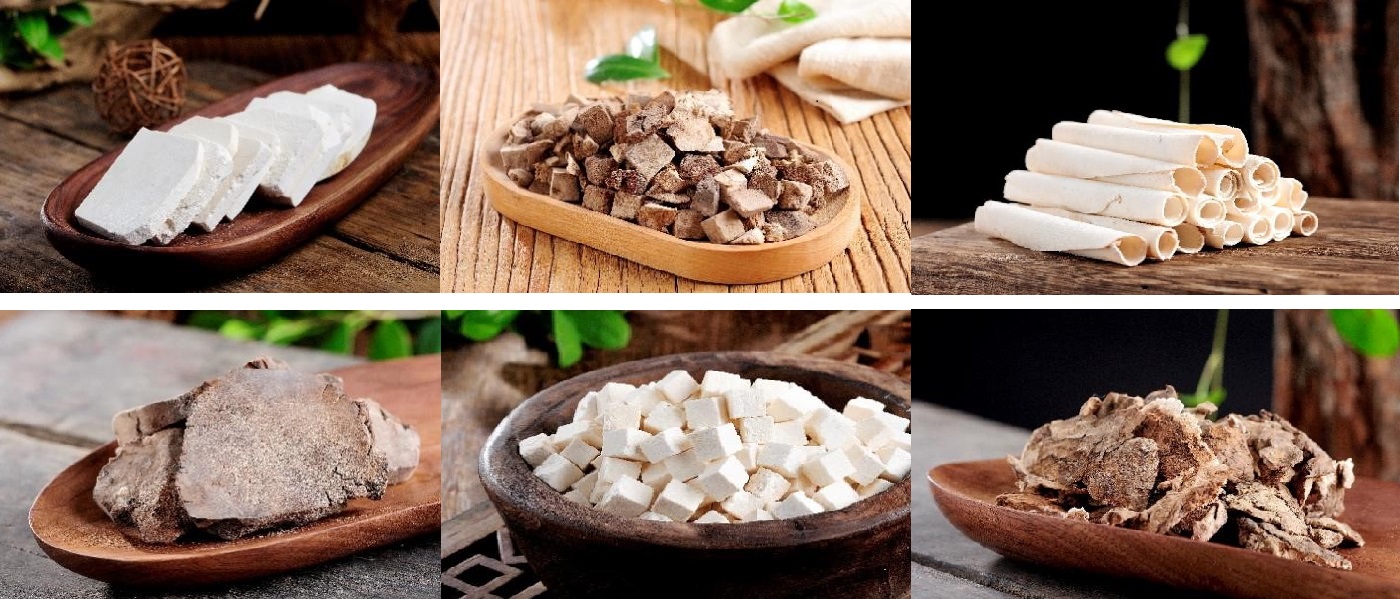
Different Grades of Jingzhou Poria Cocos (Photo by Dai Xinwen)
As health-conscious consumers increasingly embrace the concept of “medicinal-food homology”, Jingzhou’s Poria Cocos is poised to be more fully integrated with people’s daily life. Poria’s dual use as medicine and food may enable it to appear on shelves of supermarkets all across the land so that people can easily shop for it. We are confident that the Poria industry of Jingzhou will continue to flourish, bringing more well-being to the area and becoming a representative industry of the area.
Editor’s Note: China Insight hopes you found this article informative and educational since we were selected to publish this exclusively. You can find additional articles about the Dong people and region by searching our website and entering “Dong People” and other key search terms to access the many special articles in our archive that have published over the years.