
By Greg Hugh
Lunar New Year — also commonly called Chinese New Year — marks the start of the new year based on lunar calendars, or monthly cycles of the moon’s phases.
The lunar new year starts with the first new moon of the lunar calendar and ends on the first full moon, about 15 days later. The lunar calendar is based on moon cycles, so the dates of the Lunar New Year celebration changes slightly each year.
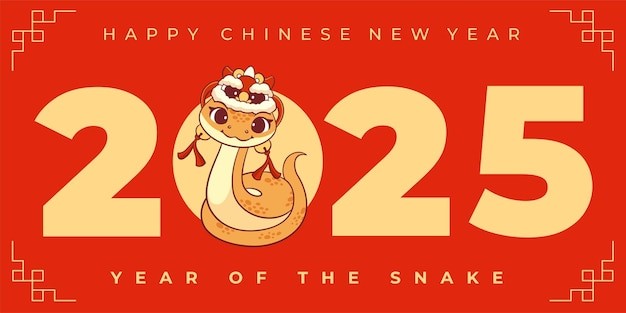
Lunar New Year is also associated with the animals of the Chinese zodiac, and 2025 is the Year the Snake.
Following are a few facts about Lunar New Year/Chinese New Year 2025 which starts on Wednesday, Jan. 29, 2025 and ends on Feb. 12, 2025. Chinese New Year celebrations typically last 16 days, but only the first seven days are considered public holidays – from Jan. 29 to Feb. 4. Which, according to the Chinese Lunar Year, is the year 4722.
The Lunar New Year is celebrated in China, South Korea, Vietnam, Malaysia, Singapore and other countries with a significant Asian population. Since the Lunar New Year is the celebration of the arrival of spring. It is also known as the Spring Festival in China.
About 10 days before the Lunar New Year, houses are cleaned to remove any bad luck. This is called “sweeping of the grounds,” according to Britannica.
Chinese New Year traditions center on ushering out the old year and bringing luck and prosperity into the new one. Firecrackers, fireworks, red clothes and decorations are used. Young people are given money in red envelopes. There is a feast, and relatives who have died are honored.
In Vietnam, parades include the Mua Lan, a symbol of strength which is a hybrid lion, dragon and unicorn. Other Vietnamese traditions for Lunar New Year include burning incense and inviting ancestors to join in celebrations.
In Korea, it is traditional for people to wear the formal hanbok, but nowadays people prefer informal clothing. There is a tradition of Sebaetdon, which is offering paper money in silk bags with traditional designs.
The last event of Chinese New Year is the Lantern Festival, where people hang glowing lanterns in temples or use them in a nighttime parade. The dragon is a Chinese symbol for good fortune, so a dragon dance is commonly performed, according to Britannica.
All of these traditions and more have made their way to the United States and other countries where people celebrate Lunar New Year.
Unlike most western civilizations, the Chinese New Year is determined by the traditional lunar calendar that is based on the cycles of the moon. In fact, in other countries that celebrate Chinese New Year, it is usually translated as the Lunar New Year. In any case, the Chinese New Year celebrates what the traditional calendar labels as the beginning of spring. Chinese New Year usually falls during the first week or two of February, although it can occur as early as late January. Chinese New Year this year falls on February 10, 2013 and according to their calendar is the year 4711.
In Chinese tradition, each year is dedicated to a specific animal which comprises the Chinese Zodiac. The Dragon, Snake, Horse, Ram, Monkey, Rooster, Dog, Pig, Rat, Ox, Tiger and Rabbit are the twelve animals that are part of this tradition and t his year we will be celebrating the Year of the Snake which symbolizes wisdom, intuition and transformation while offering personal growth and change opportunities. Twelve animals comprise the Chinese zodiac.
Naturally no Chinese celebration is complete unless food was involved, so here are seven lucky foods to eat during the Chinese New Year:
- Yú (fish), said to bring an increase in prosperity.
- Jiaozi (dumplings), for wealth.
- Chun Juan (spring rolls), for wealth.
- Tang Yuan (glutinous rice balls), for family togetherness.
- Good Fortune Fruit, for fullness and wealth.
- Nian Gao (sticky rice cakes), for a higher income or a higher position.
- Chang Shou Mian (Longevity Noodles), for happiness and longevity.
There are many legends of how the Lunar New Year festival originated.
One legend that dates back thousands of years is that of Nian, a beast who ate human flesh on New Year’s Day. Nian was scared of the color red, loud noises and fire, so red paper decorations were put on doors, lanterns were lit and firecrackers were used to keep the beast away.
Editor’s Note: To learn more about the history and tradition of Chinese New Year, please check with many other information services or SEARCH key words on this website and feel free to attend any of the many events posted throughout the website. Gung Hei Fat Choy!