
By Jenny Liang*
Where vultures appear, the folk saying goes, death is sure to follow. Throughout various cultures across the anthropological landscape, the vulture has become nearly synonymous with death and the unpleasant realities of the natural world. During the bloodletting of the twentieth century, the Great Wars and the accompanying ethnic cleansing resulted in the annihilation of villages, demolished cities, and countless unidentified corpses scattered along the battlefields of the Pacific Theatre, East European landscapes, and East Asian terrain. The vultures, many have concluded, played a critical role in the consumption of the countless millions deceased. While other creatures shielded away from death, vultures have thrived in the land of the dead, their biology evolving to consume bones and rancid flesh. Although the undeniable traumas and reminder of the depths of human wickedness continue to linger, the natural landscape has largely returned. Through bloodletting and torment, nature continues on.
The nation of China, now the People’s Republic of China (PRC), suffered great losses in human life during World War II. Like an immortal phoenix, however, the Chinese people have continued to persevere and thrive. The phoenix has been intertwined with Sinospheric mythology and culture for millenia, said to rise heroically from the ashes of their predecessor in a never-ending cycle of regeneration. Through the dynastic periods, massive wars and foreign takeovers resulted in the tremendous loss of human life and destruction of Han culture. Nonetheless, each time, the Chinese people continue on. Despite the tens of millions who perished during the Cultural Revolution, despite the current surveillance state and governmental regulation of religion and free speech, there is no doubt that the Chinese people will still be there, prepared to overcome the present obstacle for a more promising future.
Unlike its present Eastern political rival, the United States of America has a brief history with official nationhood dating less than three centuries. Formed by zealous fringe colonists infuriated with British oppression and an unquenching thirst for personal liberties and freedoms, the thirteen original breakaway colonies expanded from the East Coast bordering the Atlantic Ocean to the Pacific Coast. The purchase and seizure of land from the local indigenous populations, although acquired in inhumane and horrific methods, resulted in a young nation fabulously wealthy with natural resources. Ever since the eagle was placed on the Great Seal of the United States following the independence of the thirteen colonies, the North American bird has symbolized the fierce independence, freedom, and lofty aspirations of the American people, which elevated the young nation into a World Power, gaining strength through the immigration of various peoples around the globe with similar aspirations and hopes. America is unique because it was founded by immigrants and continues to flourish through the brainpower of new immigrants throughout Asia, the Middle East, Europe, Africa, and South America.
My parents were Chinese immigrants, both originating from a rural village in the Northern Shandong (山东)province. Their ancestors had been peasant farmers, who had been tied to the land and the village. Their love and shared dream to immigrate to the West resulted in a move to Singapore, then the United States.
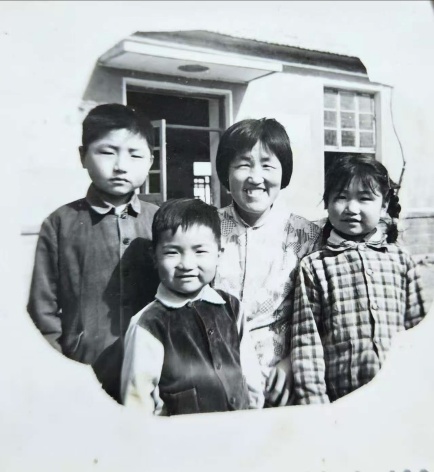
Father’s side of the family: A portrait from the countryside.
I was born in New York City. Although I have little recollection of my early childhood, my father’s academic excellence and incredible ambition earned him a prestigious EB-1A, the highest immigration category for foreign nationals seeking permanent residency in the United States. My parents were alone in a foreign nation half-way across the globe, forced to learn and assimilate to an unfamiliar language and culture. Two decades later, I can proudly say that they have thrived in America.
As I grew up in the suburbs of Minnesota, my childhood was spent in an isolated orb of ignorance and naiveness. I was a socially awkward and introverted soul, spending my days at home curled up with a pile of books and speaking Mandarin with my beloved 奶奶 and my time as school struggling to find a community that accepted me. I soon began to realize that I was different from those around me. My peers had light blue eyes, which reminded me of the Minnesota lakes and rivers. As I looked at my reflection in the mirror, I gazed at my dull brown eyes. My eyes are the color of the dirt, I thought sadly. Their light blond or brown hair was attractive, some having fascinating waves or curls. My black hair was straight and remained straight, no matter how long I kept them in braids.

Elementary school years.
Although I realized that I was ethnically different from those around me, I viewed myself as wholly American. I was not affected until my teenage years, when the combined peer-pressure, puberty, and longing to belong and assimilate began to lead to an identity crisis and cultural dysphoria. When I returned to visit my relatives in China, I was treated by all the locals as a foreigner and outsider. “外国人,” they would call me, even before I opened my mouth. I was confused: I looked the same as them. What have I done, that they would treat me like this? I had heard of American-born Chinese (ABC) being compared to a banana. We appear “yellow” on the outside, but inside, after you peel away our physical characteristics, our personalities and identities are culturally “white.”
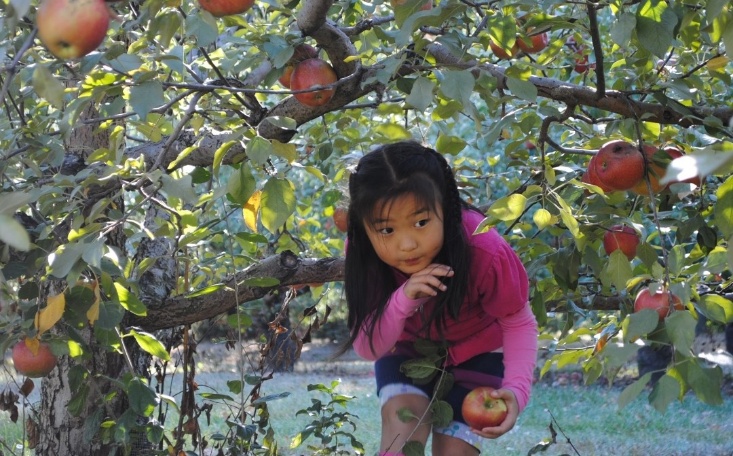
Nostalgic memories.
During my time in school, I was a loner, a shy and awkward kid that nobody wanted on their team or group project. I was always picked last, and during seating arrangements, I would typically end up at a table by myself. It was fine, I constantly reassured myself. It doesn’t matter. But it did. I was mired in self-loathing, believing I was an unwanted mutt, a mixed-breed that no culture fully accepted. Who am I? Where do I belong? I began to actively push out Chinese culture, even flat-out refusing to speak Mandarin. China didn’t want me, I thought, so why pretend to be Chinese?
During the deepest valleys of my teenage angst, I began to turn to musical expression and composition. In an incredible series of events, I began to play and perform on the erhu (二胡), a classical snake-skin bowed instrument. The erhu is said to be the instrument that most closely resembles the human voice, able to mimic anguished cries of heartbreak. Although unconsciously, my wholehearted embrace of this instrument led to a slow return to my Chinese roots.
As a Politics, History, and Economics (PHE) major at the University of Northwestern, I was introduced to a law firm that specializes in employment-based permanent immigration. During my two years interning and managing EB-2 NIW, EB-1A, EB-1B, and O-1 cases, I began to realize the hardships immigrants face when attempting to achieve naturalization. I had always taken my American citizenship for granted, but through the realities of millions desperate to permanently reside and work in the United States, I was forced to realize my privileged position.
Before, I saw myself as a cultural mutt, an unwanted mixture of two rival political and World Powers. Torn between the phoenix and the eagle during my childhood and teenage years, I began to isolate myself and fall into a never-ending cycle of self-loathing. As I am preparing for law school and envisioning dreams for my future, I realized that I had understood myself so tragically wrong, failing to realize that I was the embodiment of the American dream. I may not be fully Chinese, and I may sometimes speak words with an accent. I still have difficulties reading some characters. But that is alright. I am an Eagle. I am a Phoenix. I am myself.
 |
|