
Fu Jiaxi, Freshman, Hunan University of Technology and Business
Huang Ruiqin, Postgraduate, New York University
Gu Xiu’er, Postgraduate, University of Texas at Austin
Supervised by Dr. Zhang Ling, VP/Professor, Hunan University of Technology and Business
On the shores of Hunan Province’s Xiang River in China, a treasure passed down for millennia has been preserved, fashioned from its clay intertwined with flames. The ancient town of Changsha Tongguan, the cradle of the global multicolored under-glaze ceramics, continually carries forward a rich and brilliant history of ceramic production. Together it also discloses its legendary stories of the Chinese civilization.
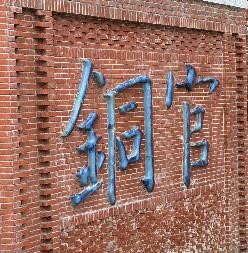
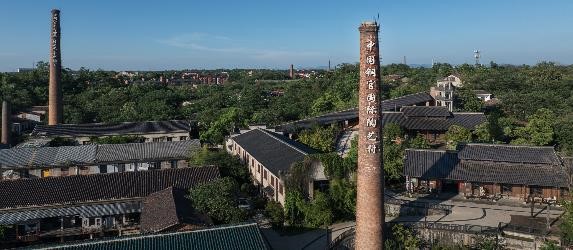
Changsha Tongguan Kiln (Photo by Chen Wang/Jin Min)
Dating back to the end of Sui Dynasty (581-618 AD) and the beginning of Tang Dynasty (618-907 AD), fires have been lit in the kilns founded in Changsha’s Tongguan township. As one of the most significant three sites which produces exporting ceramics in ancient China, its unique production techniques and exquisite porcelains have ever since attracted the attention of people. There are a number of ancient ceramic kilns, all of which are historical treasures, and all of which have witnessed the splendor of Tongguan ceramics. With its exquisite under-glaze coloring techniques, the kilns of Tongguan initiated a new chapter in ceramic development: “Southern Blue, Northern White, and Changsha Color”. Its techniques, including under-glaze coloring, mound patterning, engraving, decaling and hollowing, have been passing down until today. Here, the ceramic craftsmen, dedicated to the art of clay and fire, have become the backbone of the Tongguan ceramics renaissance.
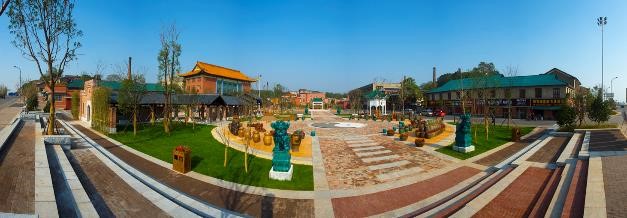
Changsha Tongguan Town (Photo by Wu Qi)
In the ancient alleys where the Tongguan kilns are still found, those ceramic craftsmen have remained true to their original mission, persisted in this mastery for their lifetime, and kept the kiln fire burning for a thousand years. The characteristics of the products divide into two major categories, depicting various fields of our lives. The most famous uniqueness is its pioneering of under-glaze color in the ceramic market.
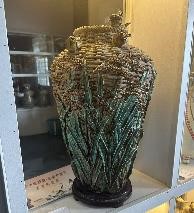
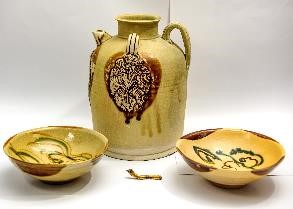
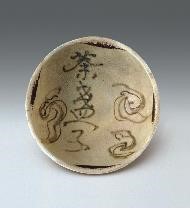
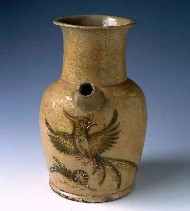
Tongguan kiln’s under-glaze coloring ceramic productions (Photo by Chen Wang/Wu Qi)
In Tongguan’s Old Street, brilliant ceramics displayed publicly all along the ancient street are like colorful scrolls, exuding an earthy scent from the street corner to the alley, and inviting every traveler who steps into this place to embark on an artistic journey across time and space. The ceramics of the Tongguan kilns are not only indispensable utensils in daily life, but the epitome of the efforts and wisdom of dozens of generations of craftsmen. They carry a deep cultural heritage and artistic soul. Each piece of work, under the interweaving of light and shadow, appears unique and full of vitality, narrating moving stories about ingenuity, innovation and inheritance.
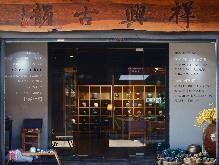
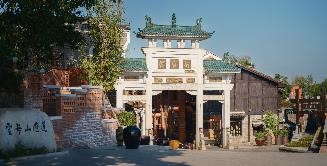

Tongguan old street scene (Photo by Xie An/Wu Qi)
The other characteristic is its products embedded with rich and diverse decorations. Using poetry as decoration is an important feature of the decorations of Changsha Kiln. Its representative “Changsha Kiln Green Glaze Pottery Ewer with Inscribed Brown Color Poem in Tang Dynasty” embodies the significant decoration characteristics of Changsha Kiln in the Tang Dynasty. The mouth of this ewer flares outward, with a thick neck and a short spout. There is a handle on the back, a melon-shaped body, and a flat bottom. On the body of the ewer, a poem is inscribed in brown color: “Spring water fills the spring ponds; spring grass grows in spring time. Spring people drink spring wine; spring birds twitter spring songs.” This poem vividly depicts the vitality of spring and the delights of people life in the Tang Dynasty, ingeniously combining poetry and wine together. This was an initiation in Chinese ceramics history.
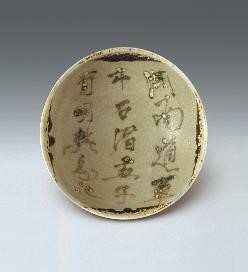
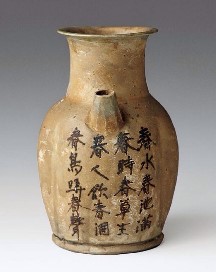
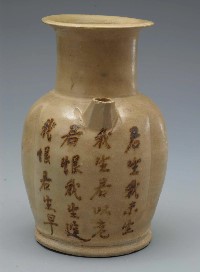
Pottery Ewer with Inscribed Brown Color Poem (Photo by Wu Qi)
There are some scenery spots at Tongguan old street as well. Du Fu, a famous poet of the Tang Dynasty (618-907 AD), left Shu Kingdom (current Sichuan Province) by boat in his later years and encountered a gale. He moored his boat in Tongguan Islet (the site where the kilns were built). Seeing the spectacular scene, he was overwhelmed with emotion and wrote the famous article Defending the Wind at Tongguan Islet. In order to commemorate Du Fu’s experience and his immortal poem Defending the Wind at Tongguan Islet, the “Shoufeng Pavilion” (in Chinese meaning “defending the wind”) was built in the Tongguan kilns.
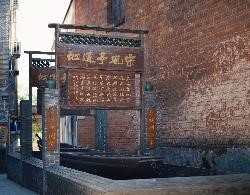

The site of Shoufeng pavilion (Photo by Chen Wang/Wu Qi)
Hidden in the depths of the alley is the Xia Guo’an Art Museum. Mr. Xia Guo’an built this museum brick by brick, a painstaking labor of more than 20 years. Along the street all the way to the north, the thousand-year-old camphor trees recall and maintain the slow-paced halcyon atmosphere that those frequenting the ancient street long enjoyed.
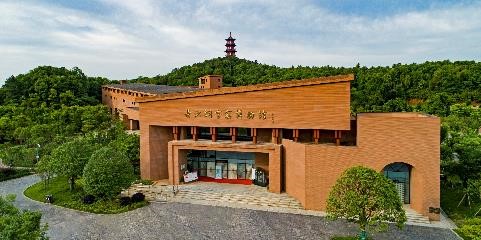
Changsha Tongguan kiln museum (Photo by Wu Qi)
The banks of the Xiang River next to the ancient street are characterized by a lakeside grassland biome, with white clouds and calm blue skies. The scenery is beautiful to the eyes. Thus, it is little wonder that the clay of this place becomes beautiful art when it is fired. Each fragment of ceramic history, when held in the hands, imparts its own charm. The pottery workshops throughout Tongguan allow the visitor to experience directly the ceramic production processes of turning clay into greenware, gradually taking shape in the artisan’s hands. The transformation from formless to shaped, from rough to refined, impresses one with the glamour of the ceramic arts, imparting the deep significance of inheritance and innovation to modern cultural development.

Tongguan kiln on the shore of the Xiang River (Photo by Wu Qi)
In year 2012, Tongguan ceramics was recognized as the Chinese national geographical indication product by China Administration of Quality Supervision, Inspection and Quarantine, Notice (2012) No. 135. And in year 2011, Tongguan Kiln ceramic firing skills was included in the third batch of the Chinese Intangible Culture Heritage by China Ministry of Culture. On this land, the kiln fires which have been passed down are still roaring brightly. Everyone is a part of this cultural heritage. May the millennial kiln fires and their clay treasures continue their legend.