
University of Minnesota professor Jian-Ping Wang developed the world’s first high-powered rare-earth-free permanent magnet, with his company Niron Magnetics addressing critical supply chain vulnerabilities.
Jian-Ping Wang, a professor in the Department of Electrical and Computer Engineering at the University of Minnesota, spent over two decades developing the world’s first rare-earth-free, high-performance permanent magnet, offering a solution to ending dependence on rare-earth materials from China. In 2010, Wang’s team successfully synthesized an iron-nitrogen permanent magnet (Fe₁₆N₂ ) compound , which boasts 18% higher magnetic properties than comparable products on the market, and achieved permanent magnetization in 2011. In 2014, with support from the University of Minnesota and Silicon Valley venture capital, he founded Niron Magnetics, a company dedicated to completely replacing rare-earth materials with iron-nitrogen permanent magnets. Wang has filed 99 disclosures and 118 patents at the University of Minnesota, the most of any current faculty member, and was named a 2025 Faculty Innovator.
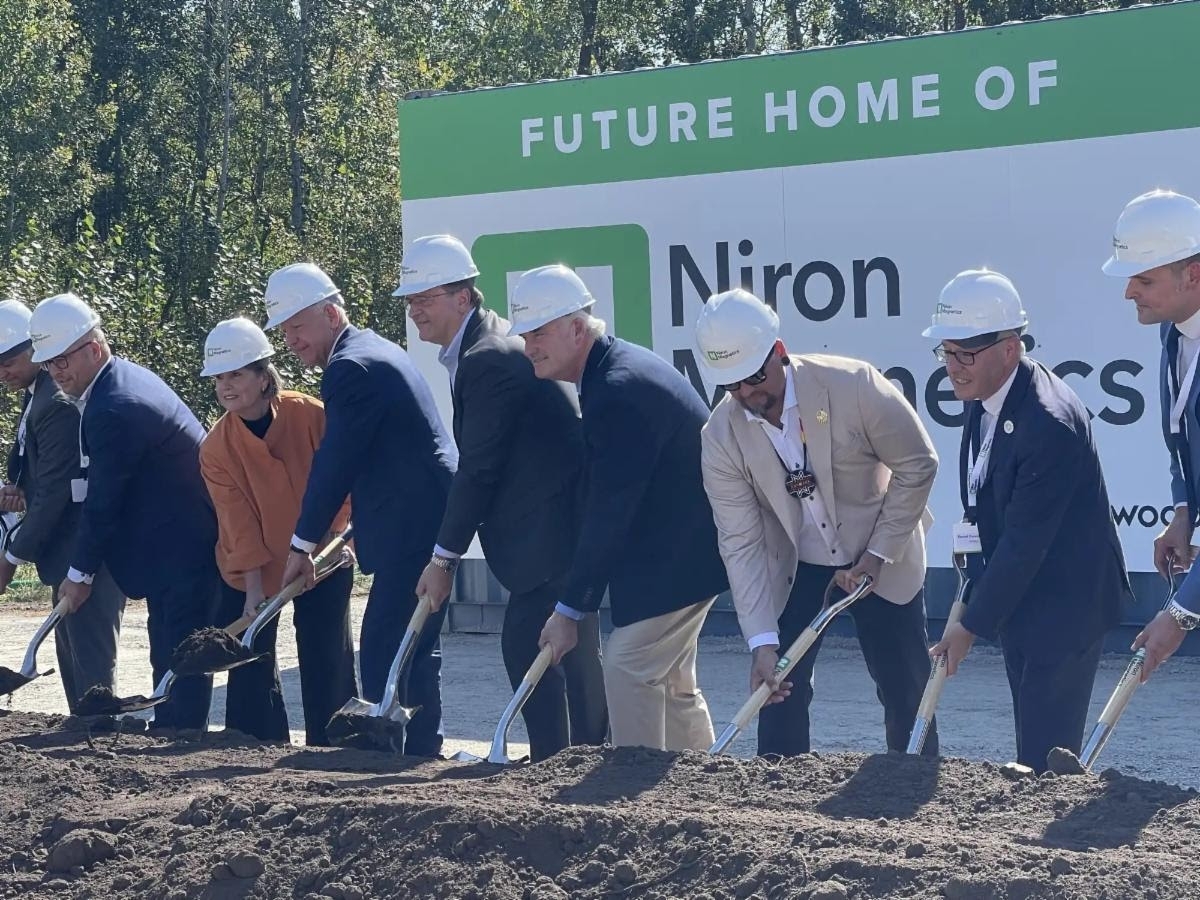
Currently, 90% of the world’s rare earth materials are produced in China. Earlier this year, during the Sino-US trade dispute, China halted exports of these materials to the US, highlighting the vulnerability of the supply chain. Niron Chief Operating Officer John Larson revealed that he received a call for help from a procurement officer at a $90 billion company the day the tariffs were announced. The company has secured over $100 million in funding from investors including Volvo Cars and Western Digital, and was named one of Time magazine’s Best Inventions of 2023. Niron recently launched a commercial pilot plant in northeast Minneapolis and plans to open a full-scale production facility in Sartell, Minnesota, in early 2027, creating 175 high-paying jobs.