
Zhou Jingkun, undergraduate, Hunan University of Technology and Business
Lin Xuyang, Postgraduate, Hunan University of Technology and Business
Supervised by Dr. Zhang Ling, VP/Professor, Hunan University of Technology and Business
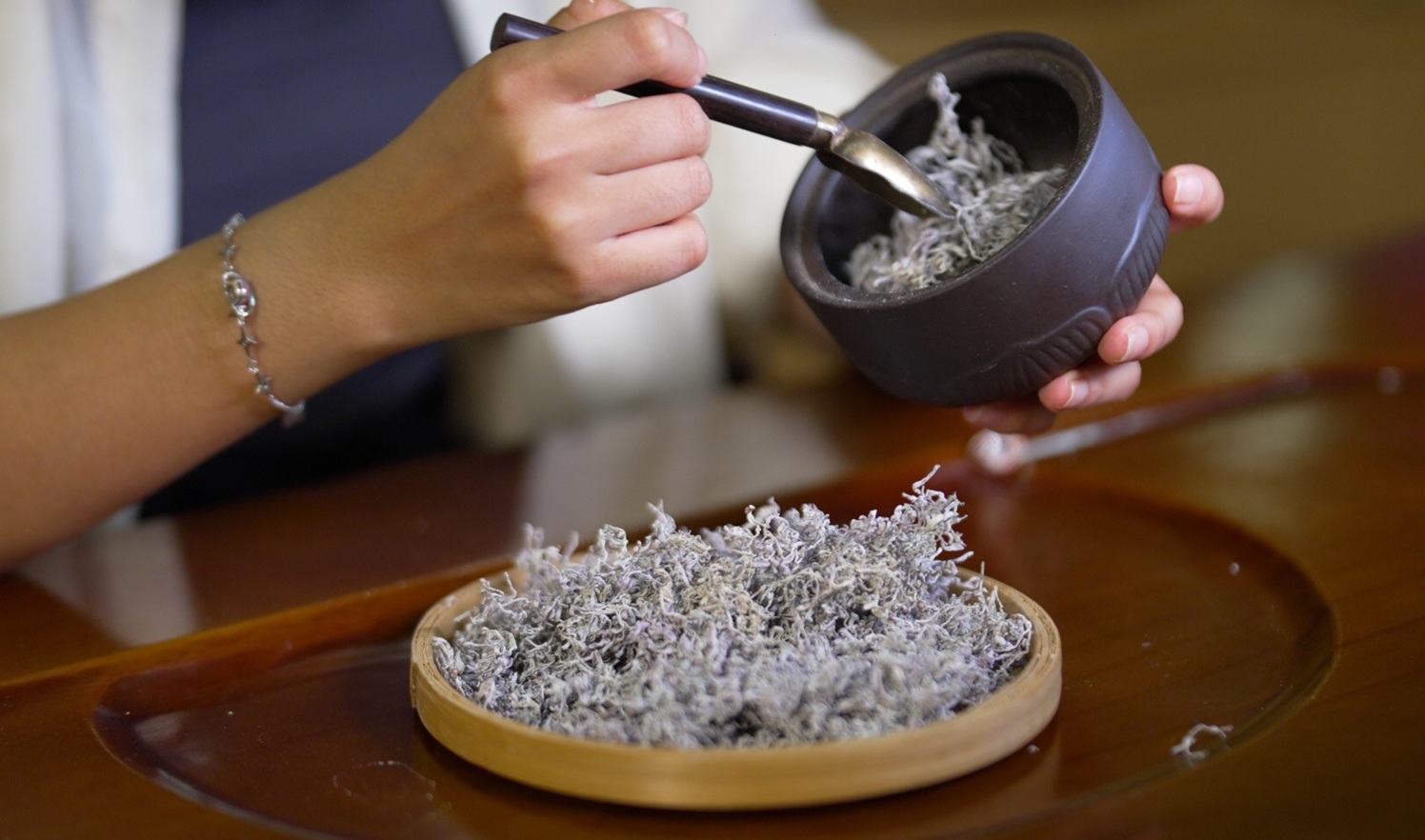
Dried Meicha, Fully Coated with White Frost (Photo by Zhou Jingkun)
Nestled among the rolling mountains of Yongshun County, Xiangxi Tujia and Miao Autonomous County, Hunan Province, grows a remarkable vine known as Yongshun Berry Tea (Yongshun Mei Cha), hailed as the “King of Plant Flavonoids.” In April 2020, the Ministry of Agriculture and Rural Affairs of China approved the registration and protection of “Yongshun Berry Tea” as a National Geographical Indication for Agricultural Products, under registration certificate number AGI02957. Its protection area covers 122 administrative villages across 11 towns and townships in Yongshun County, including Maoba Township, Runya Township, and Wanping Town, with the geographical location between 109°38’59” and 110°13’34” East longitude, and 28°55’40” and 29°27’13” North latitude. Nestled in the heart of the Wuling Mountains, at an elevation of 300 to 1,000 meters with a forest coverage rate exceeding 80%, the area is shrouded in mist year-round and blessed with naturally selenium-rich soil. This irreplicable geographical environment is highly conducive to the accumulation of flavonoids. Yongshun Mei Cha is not a conventional tea; instead, it is made from the tender buds and leaves of wild Ampelopsis grossedentata through a meticulous process of fixing, rolling, and air-drying to induce natural frosting, securing a unique position in the functional tea market.
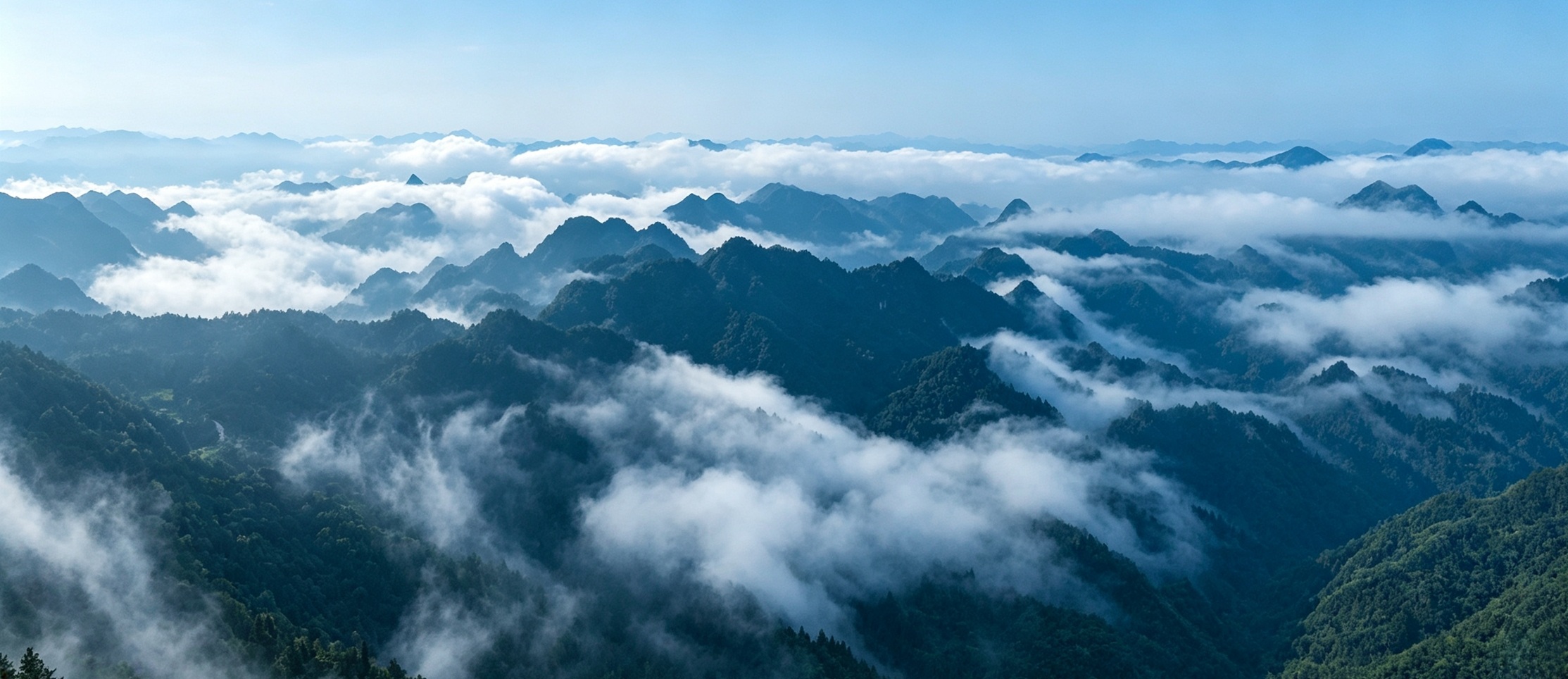
Wuling Mountain Range (Photo by Lin Xuyang)
Yongshun Mei Cha features tight, curly, and uniform strips fully coated with a silvery-white frost. When brewed, it emits a clear, uplifting aroma, yielding a bright yellow, translucent liquor with a mellow, sweet aftertaste and tender yellow, bright leaves. This uniform white frost is the crystallized form of flavonoids. Authoritative tests show that the flavonoid content in Yongshun Mei Cha is no less than 3.5%, with dihydromyricetin content no less than 25%, and can reach up to 40% in young stems and leaves, earning it the title of King of Plant Flavonoids in the medical community. What makes it particularly special is that Yongshun Mei Cha is completely free of caffeine and theophylline, making it safe to drink at any time of day or night and especially friendly to caffeine-sensitive individuals.
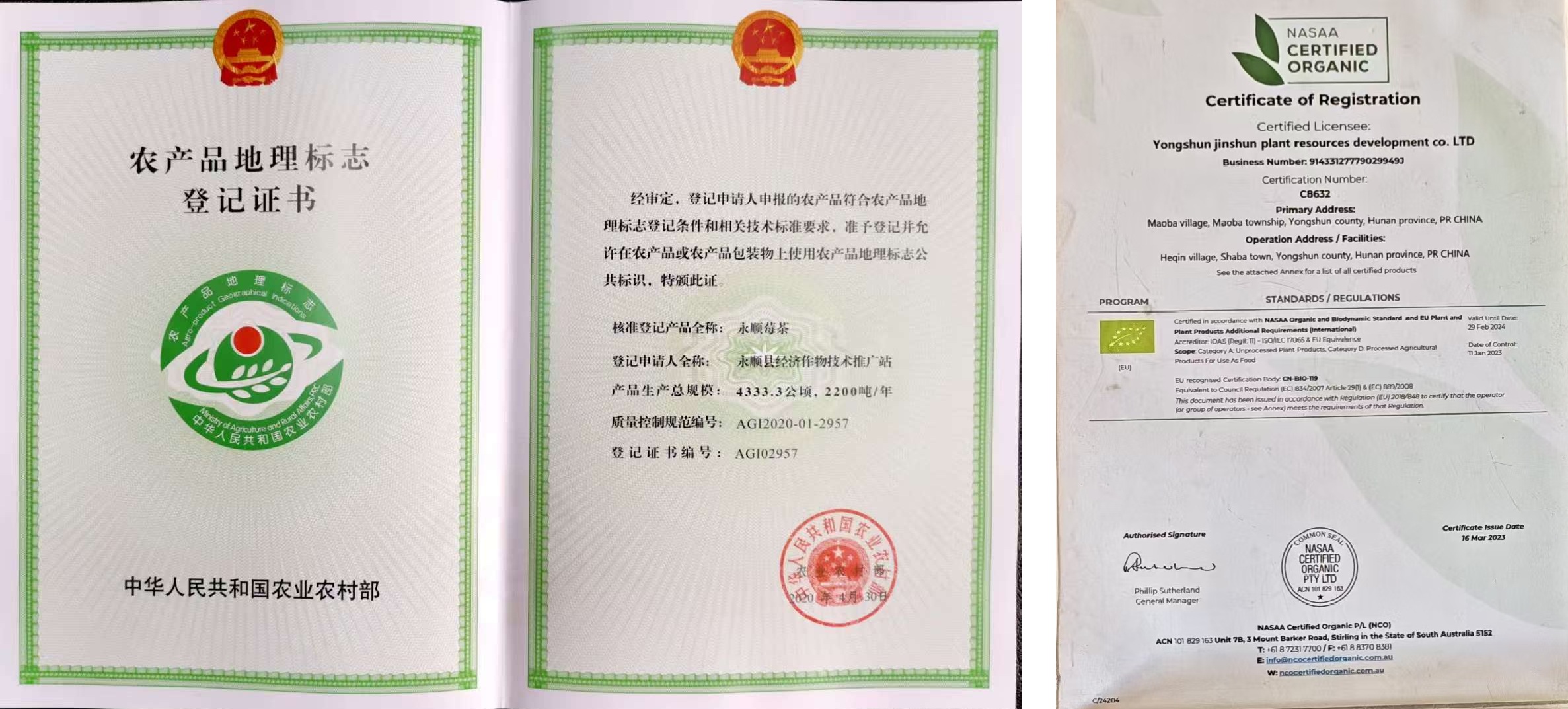
Yongshun Mei Cha: an organic planted tea (Photo provided by Lin Xuyang)
The historical record of Yongshun Mei Cha runs deep. In Tang Dynasty, the third volume of the Yongshun County Gazetteer reveals: “Lingxi County of Xizhou City presented tea buds as tribute… … and among the wild teas, there is the Guanyin parasitic white flower tea.” In 1376 (the ninth year of the Hongwu reign of Ming Dynasty), the History of Ming records in its Biographies of Huguang Tusi that Yongshun Tusi Peng Tianbao “sent his younger brother Yibao to pay tribute of horses and local products.” Local historical records show that these “local products” included Mei Cha, which was subsequently listed as a tribute item by the Tusi. During the Jiajing era (1522–1566), Yongshun native troops were sent to the southeast coast to fight Japanese pirates. The History of Ming praises their campaign as “the foremost military achievement in the southeast,” and local accounts add that the soldiers relied on Mei Cha they carried to relieve diarrhea, thus sustaining their fighting strength. In 1934, the Second and Sixth Red Army Corps established the Hunan-Hubei-Sichuan-Guizhou Revolutionary Base Area in Yongshun. Local residents used Mei Cha to treat those wounded Red Army soldiers, earning it the name “Red Army Tea.”
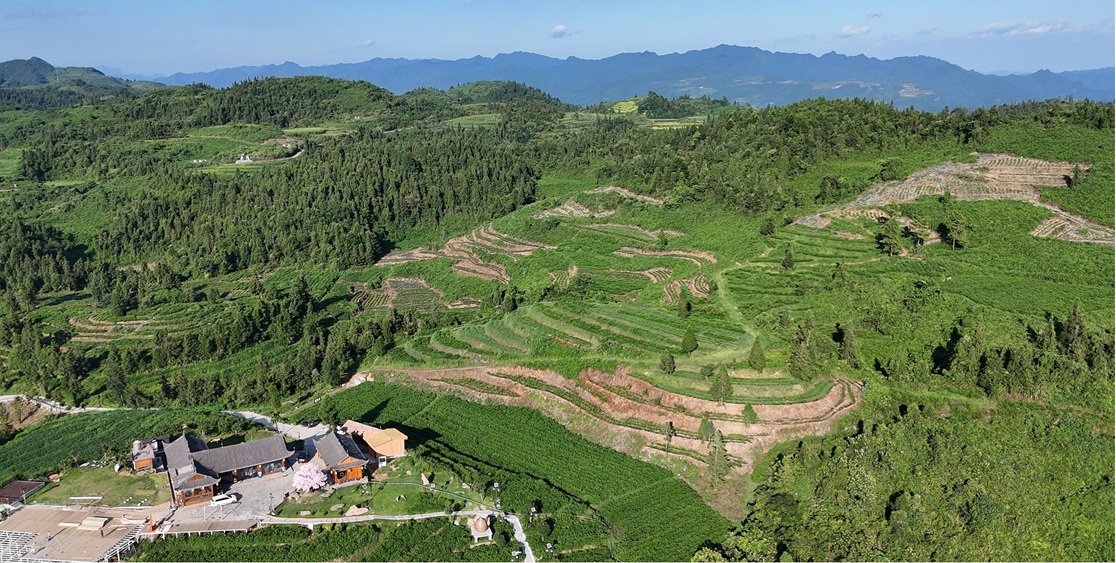
A Mei Cha Garden at Yongshun (Photo by Lin Xuyang)
The production of Yongshun Meicha follows a rigorous traditional process. Every mid-to-late April, tea farmers pick newly sprouted shoots of Ampelopsis grossedentata (no longer than 10 cm), which then goes through eight major steps. First is spreading and withering: fresh leaves are placed in withering troughs with forced ventilation to dispel the grassy smell and make the leaves pliable. Second is high-temperature fixing, which deactivates oxidative enzymes and locks in flavonoids to prevent oxidation; at this stage a light frost begins to appear on the leaf surface and the grassy smell disappears. The leaves are then rolled while still hot to break down cell structure and allow juice to ooze slightly, laying the groundwork for frost formation. After rolling comes loosening and yellowing: the leaves are packed hot into cloth bags and kept warm for several hours until the leaf color brightens and abundant frost seeps out. This is followed by air-drying to induce natural frosting—the core process that distinguishes Yongshun Meicha from other teas. The leaves are spread in a ventilated, shaded place for natural air-drying; under suitable temperature and humidity, flavonoids such as dihydromyricetin gradually crystallize out of the leaves and coat the strips, forming the signature natural silvery-white frost. The frosted tea is then transferred to a baking machine for low-temperature aroma enhancement until fully dry, with moisture content below 8%. Finally, the tea is graded, packaged, and sealed for light-proof storage. In December 2021, the Tujia Meicha making technique of Yongshun was inscribed on the fifth batch of Provincial Intangible Cultural Heritage Representative Items list, granting official recognition and protection to this manual tea-making wisdom rooted in folk tradition.
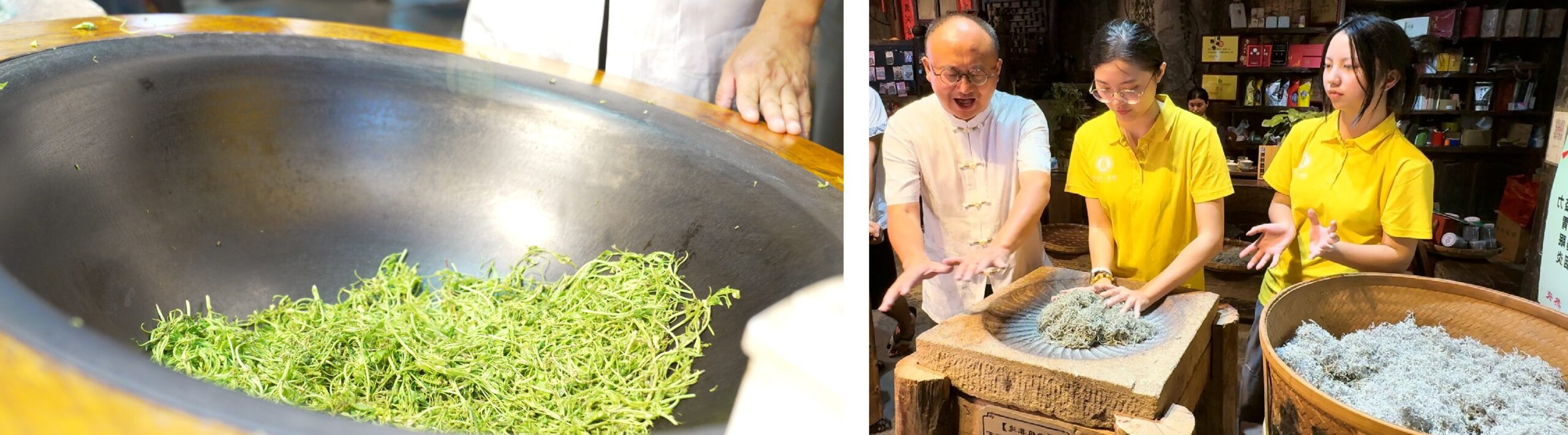
Inheritor Qu Zhangxun Teaching How to Fix and Roll Mei Cha (Photo by Zhou Jingkun &Lin Xuyang)
Among the varieties of Yongshun Meicha, there is a rare variant—Purple Tea, whose representative brand is “Zijin Mei.” Around 2003, inheritor Qu Zhangxun discovered an unusual purplish-red individual plant on Zijin Mountain near the old Tusi tomb area of Yongshun County, and after years of selection and breeding, developed a stable purple tea variety. Purple tea is rich in flavonoids and anthocyanins. Its anthocyanin content far exceeds that of regular varieties, forming a dual antioxidant combination with high flavonoids. In its early days, due to its unusual color and low yield, it was looked down upon by farmers and discounted by dealers in places such as Maoba, Shaba, Runya, Shidi, and Kesha. Qu Zhangxun purchased the purple tea at premium prices, transplanted it to his base in Fashu Village, Furong Town, for scaled cultivation, and repeatedly refined the processing technique. In just two years, he participated in nine exhibitions with his purple tea brand “Zijin Mei” and won five gold medals. In 2023, it attracted attention at the Shanghai International Tea Trade Expo (SITTE), in 2024, it won gold at the 14th International Dingcheng Tea King Competition, and its story was included in the 2024 Yongshun County Economic Work Conference report.
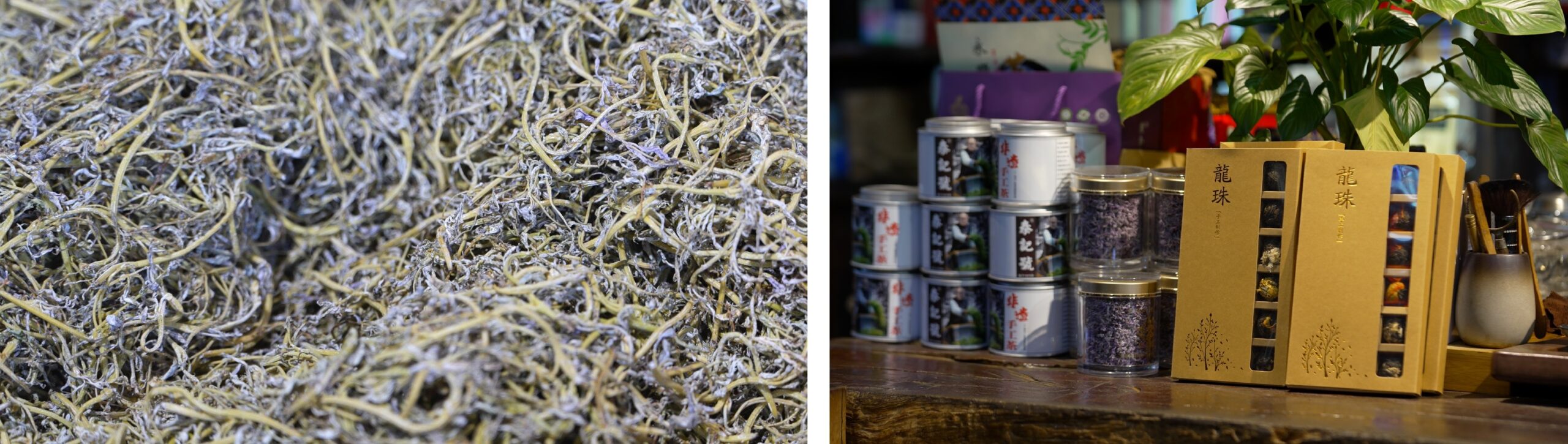
Yongshun “Zijin Mei” (Photo by Lin Xuyang)
The caffeine-free, high-flavonoid, and naturally selenium-rich properties of Yongshun Mei Cha perfectly align with the growing global trend toward health-conscious consumption. In 2019, Ampelopsis grossedentata was approved as a new food ingredient by the National Health Commission of the PRC and included in the Medicinal & Food Homology, further expanding its application in the health food sector. In December 2021, the Yongshun Tujia Mei Cha making technique was inscribed on the fifth batch of Intangible Cultural Heritage Representative Items list of Hunan Province. In 2023, Yongshun Mei Cha was showcased at the HKTDC Food Expo & Hong Kong International Tea Fair. In 2024, it appeared at the 6th China (Xiamen) International Cross-border E-commerce Exhibition, successfully entering markets in Kenya and other African countries.
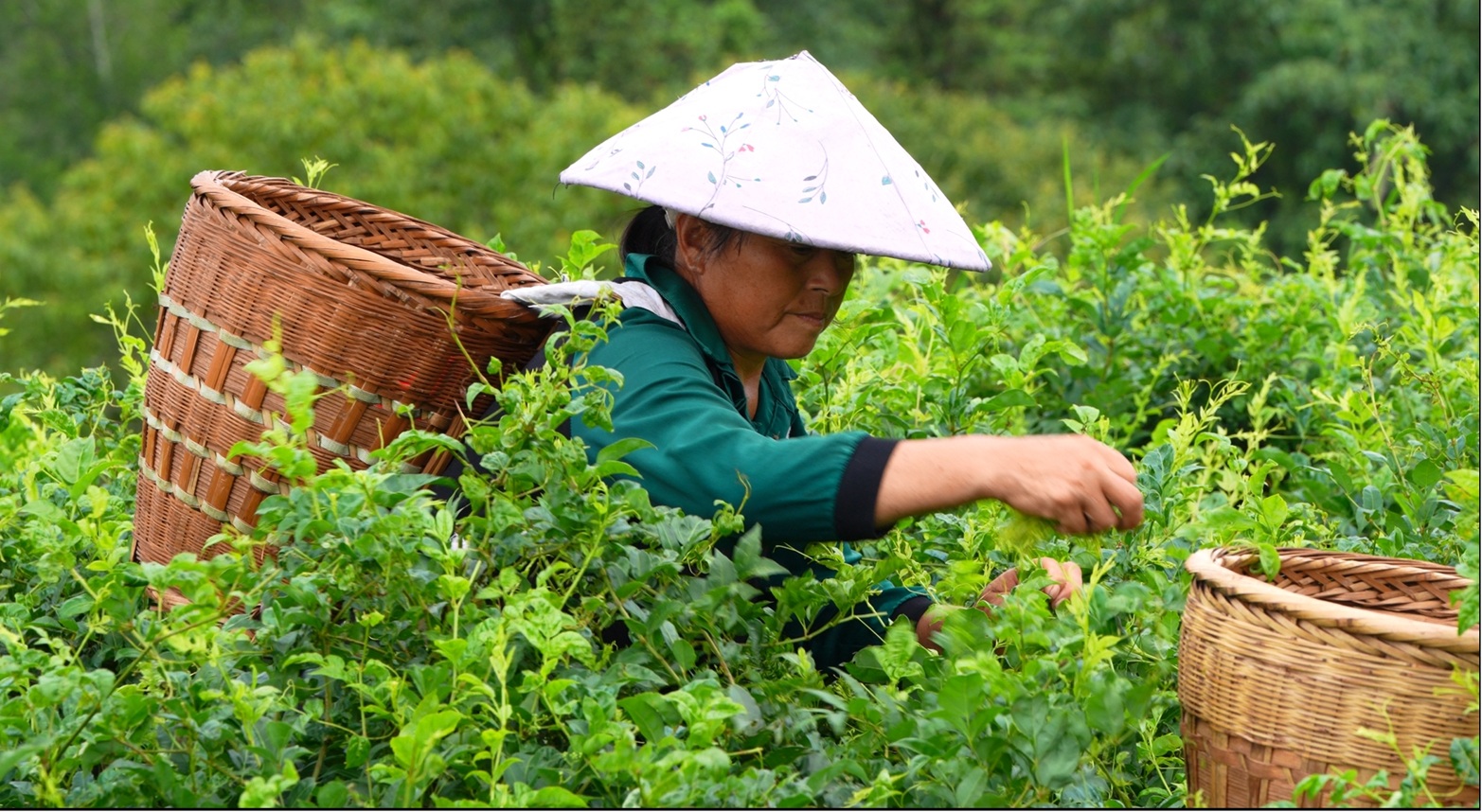
Mei Cha Picking (Photo by Zhou Jingkun)
After more than three decades of development, Yongshun Mei Cha has grown from a wild vine in the deep mountains into a scaled specialty industry with an integrated system of planting, processing, and sales, reaching overseas markets through cross-border e-commerce. In Maoba Township, Xiang Bin, a military veteran who returned home in 1985, devoted himself to the Mei Cha industry. His brand “Sicheng Tribute Tea” obtained an international registration under the Madrid System in February 2020, earned the Certified Chinese Green Food Product label in April the same year, and went on to secure EU Organic Certification in March 2023—widely regarded as one of the world’s most rigorous organic standards. This milestone confirmed that Yongshun Mei Cha had met the requirements to access Europe’s premium market, effectively giving the product an international passport to go global.
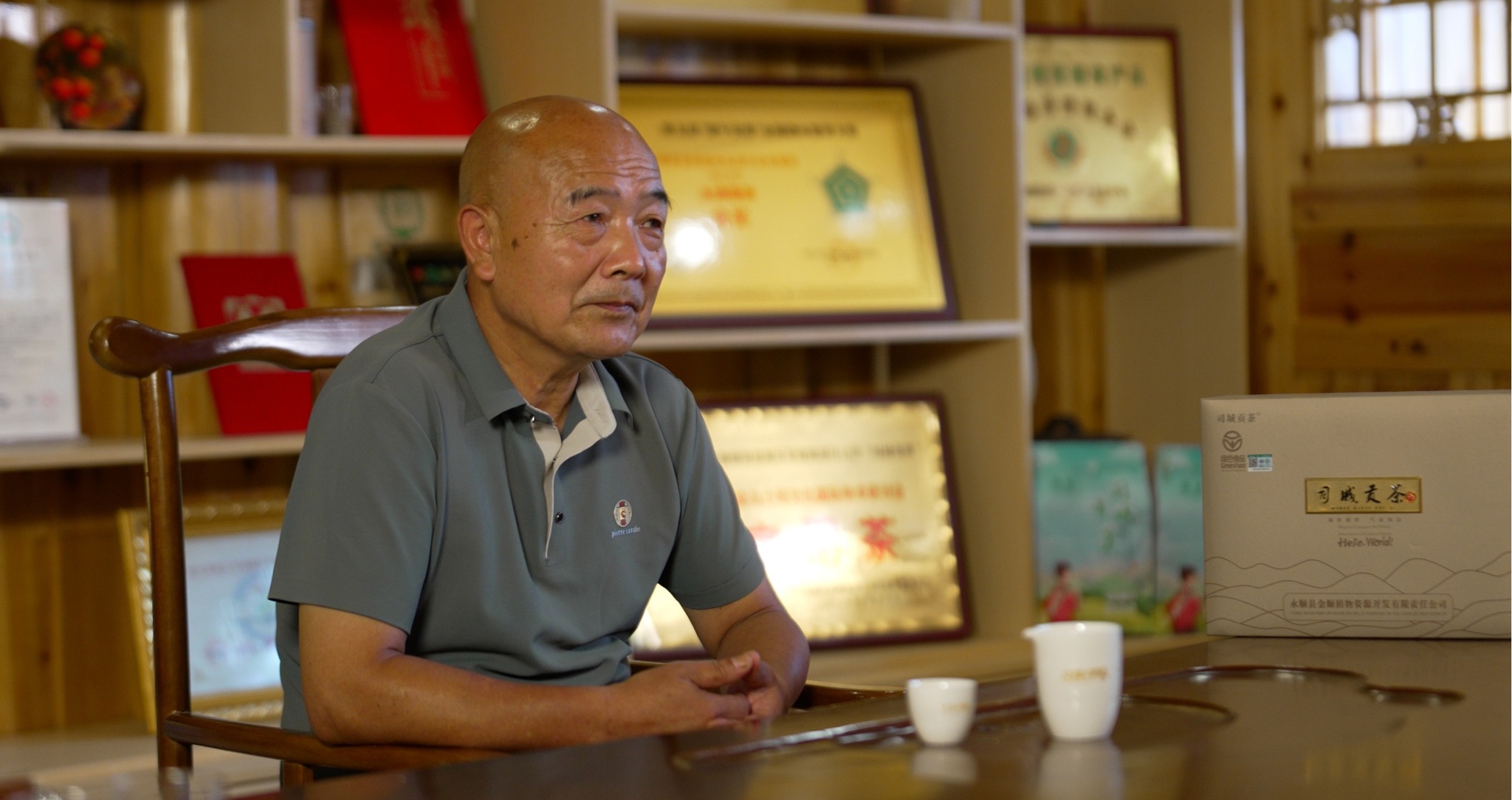
Meicha Making Master Mr. Xiang Bin (Photo by Zhou Jingkun)
From its accidental discovery in the Shang and Zhou dynasties to today’s annual output value of 1.28 billion yuan, the transformation of Yongshun Mei Cha is a vivid illustration of the concept that “lucid waters and lush mountains are invaluable assets.” Every leaf of Meicha, covered with natural frost, embodies the wisdom and hard work of the Tujia ethnic people, carrying profound cultural heritage and revolutionary roots. As the concept of “medicinal and food homology” takes deeper hold in the public consciousness, Yongshun Mei Cha is bound to step out from the deep mountains into a broader world, continuing to write a new chapter for this “leaf of common prosperity.”