
By Greg Hugh
Yes—but “American Chinese food” is a niche rather than mainstream cuisine in China.
A few distinctions are useful:
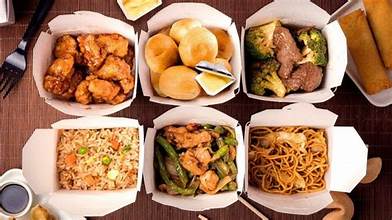
- Some dishes are known in China, especially things like sweet-and-sour chicken, General Tso’s chicken, fortune cookies, and American-style fried rice. But many Chinese people recognize them as American creations or adaptations, not traditional Chinese dishes.
- General Tso’s chicken is a good example.The dish is extremely popular in the U.S., but it is not a standard dish in most Chinese restaurants in China. There are related Hunan flavors and cooking traditions, but the American version developed largely in the United States.
- Chinese-American restaurant food can taste quite different from food in China.American versions tend to be sweeter, heavier, and more focused on large portions and familiar proteins. Regional Chinese cuisines are much more diverse and often emphasize ingredients, texture, freshness, and regional flavor profiles.
- There is some curiosity about it.Younger Chinese people who travel to or study in the U.S. sometimes enjoy trying American Chinese food, partly because it offers an interesting look at how Chinese cuisine evolved overseas.
- The reverse is also happening:Chinese restaurants in the U.S. are increasingly offering more authentic Sichuan, Yunnan, Xi’an, Cantonese, and other regional foods as American diners become more familiar with Chinese cuisine.
Interestingly, American Chinese food itself is part of Chinese-American history. Dishes developed by Chinese immigrants became an important part of American culture, even though many of those dishes would seem unfamiliar to someone from China.
So I would describe it this way: Chinese food is enormously popular in China; American Chinese food is recognizable and occasionally interesting, but it isn’t generally considered a major cuisine category in China.
When Chinese people in China first encounter American Chinese food, the reaction is often a mixture of curiosity, amusement, surprise, and sometimes genuine appreciation.
- “This is Chinese food?” 😄
Probably the most common reaction is surprise. Someone from China may recognize the ingredients—chicken, beef, broccoli, soy sauce—but find the combination and preparation unfamiliar.
For example, General Tso’s chicken may look unmistakably “Chinese” to an American, while a Chinese visitor might think, “I’ve never seen this dish in China.”
- “Why is everything so sweet?”
American Chinese dishes often use considerably more sugar or sweet sauces than many traditional Chinese dishes.
Sweet-and-sour sauce, orange chicken, honey walnut shrimp, and General Tso’s chicken can therefore be eye-opening. Some Chinese diners love the flavors; others find them excessively sweet.
- “The portions are enormous.”
This is another frequent observation. A typical American Chinese entrée can be designed as a substantial individual meal, whereas Chinese dining traditionally often involves several dishes shared around a table.
So a Chinese visitor may be surprised to receive a huge plate of one dish.
- “Where’s the rice?”
Interestingly, this can go both ways.
In a traditional Chinese meal, rice is often an important accompaniment, but many American Chinese restaurants treat rice as an optional side. A Chinese diner might wonder why the main dish is so substantial without rice—or why fried rice is treated almost like a separate entrée.
- “The vegetables are different.”
American Chinese restaurants commonly feature broccoli, carrots, celery, onions and bell peppers.
Those vegetables certainly exist in China, but the combinations and cooking styles can be quite different. A Chinese diner may think the vegetables are familiar but the way they’re cooked feels Western.
- “This isn’t authentic—but it’s actually pretty good.”
This is probably the most interesting reaction.
Once someone understands that American Chinese cuisine isn’t trying to reproduce everyday Chinese food exactly, they may appreciate it on its own terms.
Some Chinese people describe it essentially as:
“It’s not Chinese food, but it’s good American food with Chinese influences.”
And that’s actually a pretty fair description.
🍴 There’s an important generational difference
A younger Chinese person who has traveled abroad may be much more familiar with American Chinese food than someone who has never left China.
And Chinese people living in major international cities such as Beijing, Shanghai, Shenzhen, or Guangzhou are accustomed to many foreign cuisines. Their reaction is likely to be more:
“Interesting—so this is how Americans interpret Chinese food.”
rather than simply “This isn’t Chinese food.”
The fascinating part
American Chinese food is actually a cultural bridge in reverse.
Chinese immigrants adapted their cuisine to American ingredients, tastes, restaurant economics, and eating habits. Over generations, Americans came to regard that adapted cuisine as quintessentially Chinese.
Now, when people from China encounter it, they sometimes discover something surprising:
They are seeing a version of Chinese culture that developed outside China.
That’s similar to how Americans might encounter a traditional dish that immigrants have adapted overseas and discover that it has evolved into something quite different.
In that sense, American Chinese food is less a “fake version” of Chinese food and more a piece of Chinese-American history that happens to be edible.