
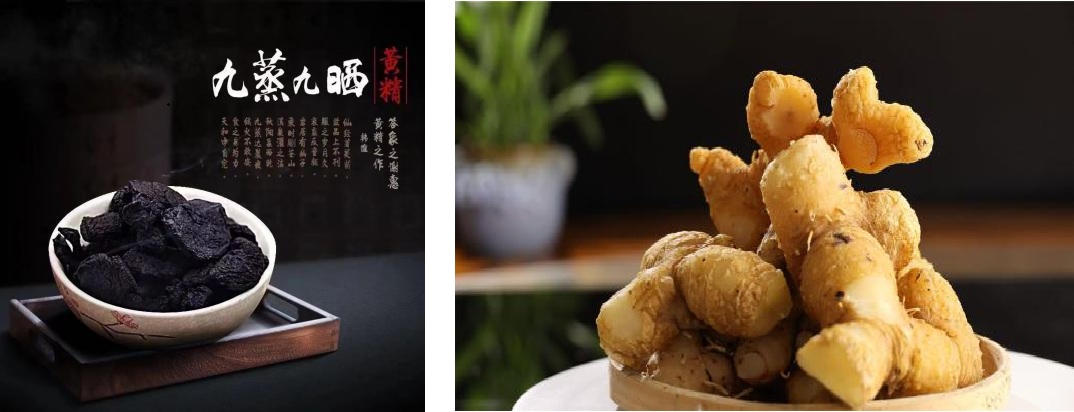
Xinhua Solomonseal Rhizome (Photo from Xinhua County Huangjing Industry Association)
Ouyang Zimo, Postgraduate, Hunan University of Technology and Business
Huang Ruiqin, Postgraduate, New York University
Supervised by Dr. Zhang Ling, Professor, Hunan University of Technology and Business
Xinhua County, located at Loudi City, Hunan Province, China, is known for its abundant production of solomonseal. It is an authentic Chinese medicinal herb and has become a geographical indication production in China in year 2008 with the certification mark No.24981458. Its protection area includes 28 towns and townships and forestry centers in Xinhua County, namely Shangmei Town, Shichongkou Town, and Ketou Township, etc. And its geographical coordinates range from east longitude 110°45′ – 111°41′ to north latitude 27°31′ – 28°14′. Xinhua County has a subtropical monsoon humid climate with a high and steep terrain. It owns the reputation of “Under the pine forest many Poria cocos grow, and deep in the white clouds solomonseal flourishes.” Owing to the crisscrossing streams, lush vegetation, and loose soil rich in organic materials, Xinhua’s unique geographical and climatic conditions provide a superior growth environment for solomonseal, achieving its excellent quality of thick tubers with an average polysaccharide content of over 16% and 19.3% at maximum, far exceeding the 7% standard according to the Chinese Pharmacopoeia. Modern medical research shows that solomonseal rhizome can lower blood pressure, blood sugar, and blood lipid, prevent atherosclerosis, delay aging, and fight bacteria. Also, the solomonseal polysaccharide can activate the immune system.
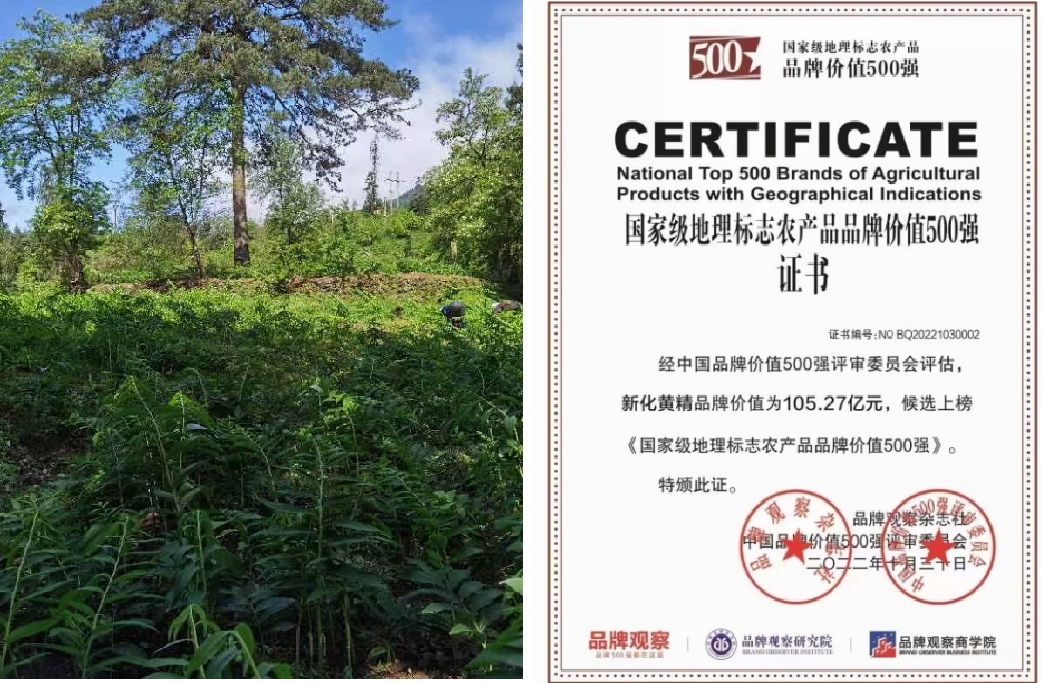
Xinhua Solomonseal (Photo by Cao Minhui)
The cultivation and collection of Xinhua solomonseal have a long history. The Ming Dynasty (1368-1644) poet Liao Kong once wrote, in Xinhua “Wild vegetables in the mountains are free, and purple bamboo shoots and Solomonseal fill the roadside”, vividly reflecting the abundance of local solomonseal. Xinhua County Annals during the Ming and Qing dynasties (1636-1912) recorded that Xinhua produced over 20 types of traditional Chinese herb medicine, with solomonseal ranking the first. According to the Tongzhi Emporor edition of the Xinhua County Annals in Qing Dynasty, solomonseal was an important traditional Chinese herb medicine in Xinhua with an annual output of over 100 tons.
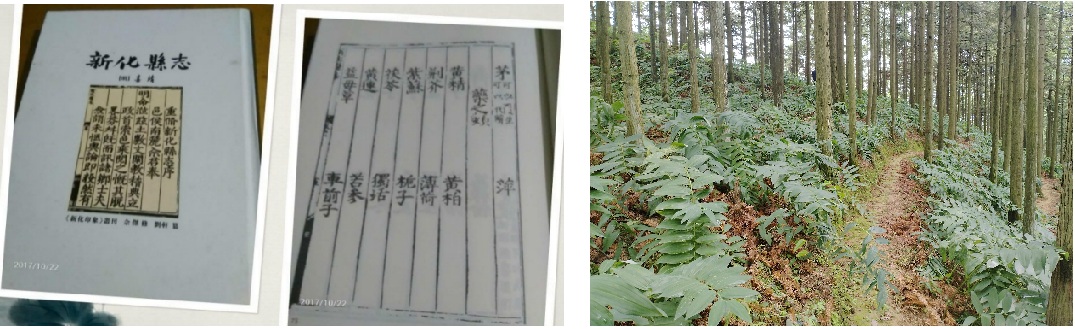
Xinhua County Annals (Photo from Xinhua County Huangjing Industry Association)
Xinhua solomonseal rhizome tastes sweet and mellow. Both as food and medicine, solomonseal rhizome can be used both raw and processed, but raw food stings the throat and numbs the tongue. It is better to process it, especially by using the method of nine steaming and nine drying to absorb the essence of nature’s sunshine and dew through repeated steaming and sun drying. The main procedure goes like this: firstly, remove impurities from fresh solomonseal rhizome, clean it thoroughly, cut it into thick slices, and air dry it to 80% dryness. Secondly, boil in water for half an hour, place in a pottery jar, add yellow wine and simmer until fully absorbed. Then, put it into the steamer again, steam it over water for one hour, and take it out again to dry. Repeat this process nine times which takes over a month to complete. The solomonseal rhizome processed in this way presents a unique effect of “black as paint, smooth as oil, and juice absorbed completely”. As the number and time of high-temperature steaming increase, the weight of solomonseal rhizome decreases continuously, and the polysaccharide components gradually decompose, resulting in a darker color.
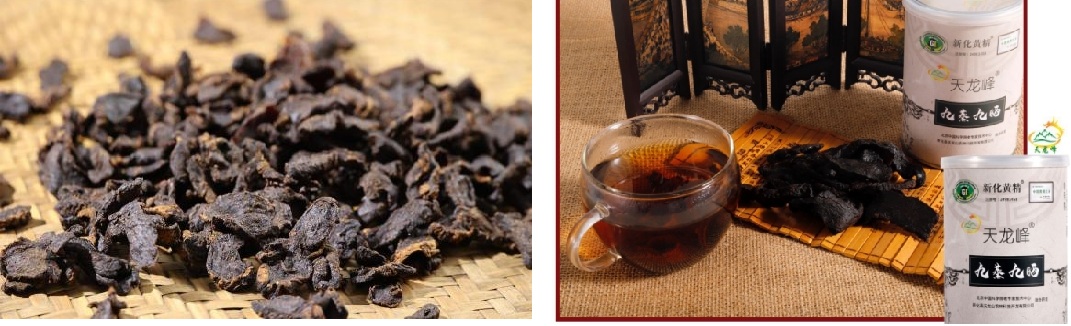
Xinhua Solomonseal Rhizome (Photo from Xinhua County Huangjing Industry Association)
Xinhua is a major forestry county, a traditional Chinese medicine planting county, and a national forest economy demonstration base county in China. With 894 species of Chinese medicine resources and 1.1 million mu of wild solomonseal, Xinhua is known as the “Medicinal Valley of Central Hunan”. Xinhua solomonseal has developed 20 series of products, including solomonseal tablets, essence, tea, wine, beverage, and noodles, with an annual production and processing capacity of over 5,000 tons. Relying on natural endowments and resource advantages, Xinhua County has promoted the development of the full chain of the solomonseal industry. The county has planted 92,000 mu of solomonseal and has more than 400 solomonseal planting and processing enterprises and cooperatives, with a combined output value of 820 million yuan. Xinhua County has gained the titles of “Hometown of Solomonseal in China” and the “Distribution Center of Solomonseal in China”. Xinhua solomonseal, as a traditional Chinese herbal medicine with high nutritional and medicinal value, has gradually entered the international market in the recent years and become well-liked by overseas consumers, especially in Asian regions, such as, Japan, South Korea, and Singapore.
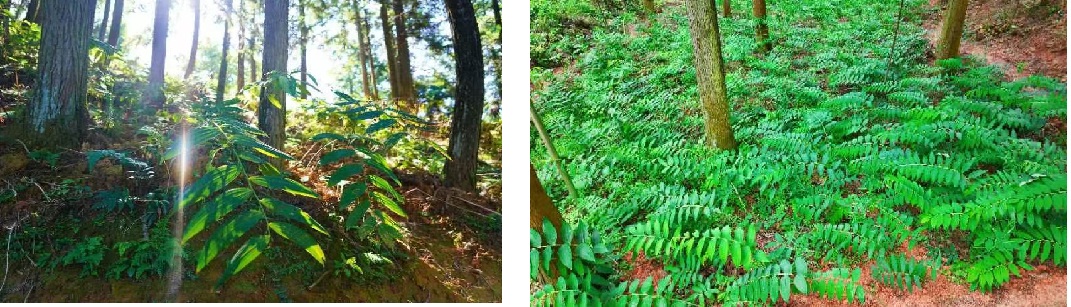
Wild Solomonseal Plant (Photo by Cao Minhui)
Solomonseal, as a medicinal herb, is the integrated crystallization of human wisdom and natural ecology, carried a profound local memory. As people pay more attention to living a healthy life, solomonseal rhizome will be increasingly valued by people.