Lessons of Environmental Stewardship for Minnesotan Chinese
By Jing Li & Grace Li, Edited by Joshua Grace and Jenny Liang
Whenever we open our eyes, we are constantly bombarded with pessimistic news on global pollution and how our waste is damaging the environment.
Americans produce some of the most waste globally, totaling around 262.4 to 292.4 million tons of trash annually (Dumpsters.com). We as Americans produce around 5 pounds of solid waste each day (US EPA). Imagine all that waste, plastic and styrofoam and packaging, seeping into our waterways, being dumped into ever-growing landfills, and rotting for thousands of years before they disintegrate.
Is change possible? And will we live to see that day?
ZIRAN, a Taoist-inspired Minnesotan environmental nonprofit, seeks to spur change through tangible action. On Saturday, September 14, 2025, members gathered bright and early at a permaculture farm along the north shore of Greenleaf Lake. The occasion was a celebration of sustainable agriculture and farming, a method that worked with the site’s natural resources rather than against it. Attendees further elevated their love for the environment by learning how to minimize the waste from their festivities.
Permaculture and Sustainable Farming
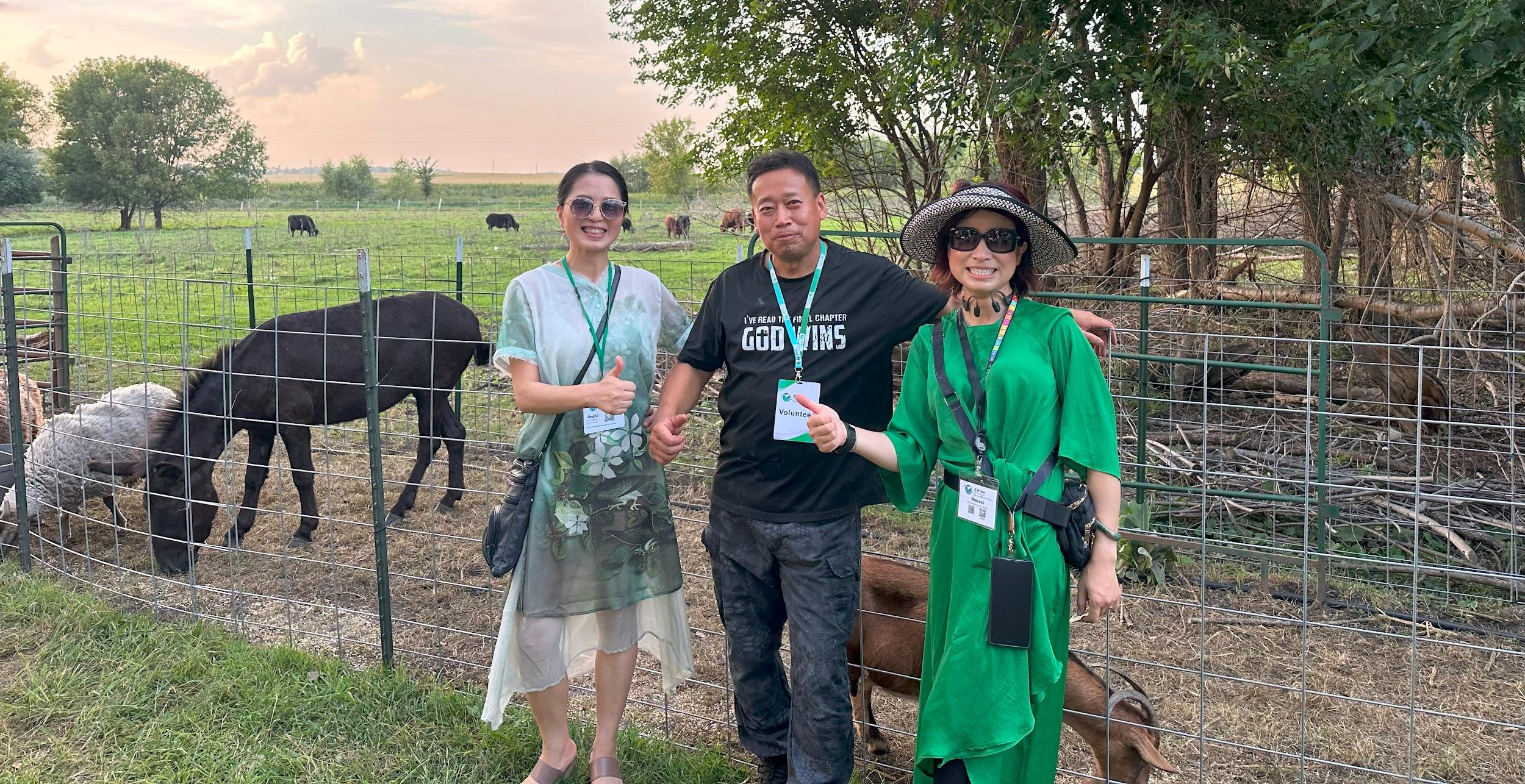
The event’s host, Mr. Lei Xu, explained that the farm was once an abandoned lakeside residence. It spans approximately 20 acres of land and 1,200 feet of shoreline. Over the past five years, he has been working to transform this land into an organic farm modeled on permaculture (also called sustainable agriculture).
Permaculture is a farming or agricultural model that works in harmony with the land’s natural biodiversity. It focuses on developing mutually supportive relationships between plants and animals, as well as the recycling of resources. It is one of the agricultural systems closest to a natural ecosystem.
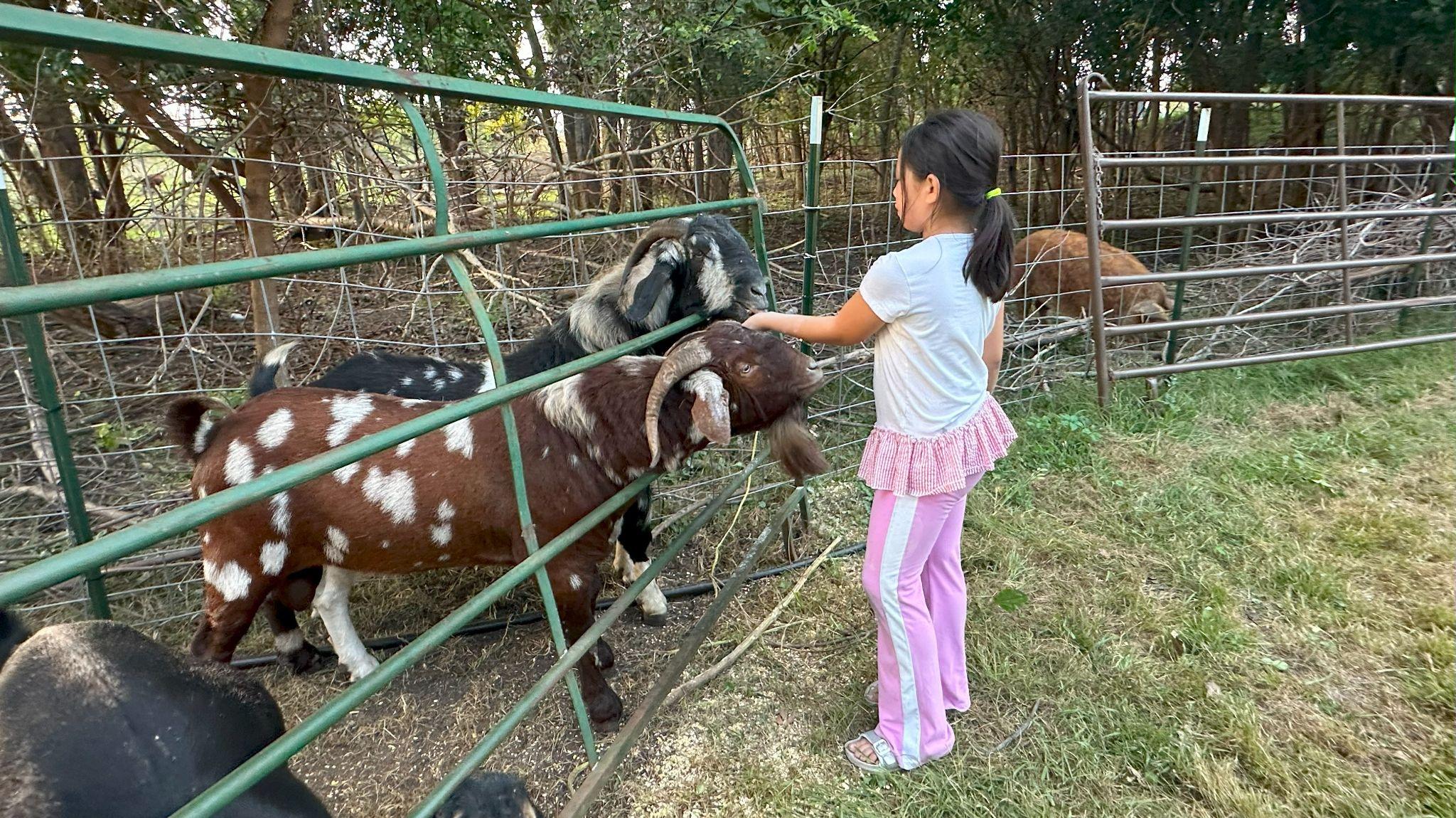
Today, thanks to Mr. Xu’s hard work, the farm is home to more than 500 fruit trees and berry bushes. It raises seven breeds of cattle. Over half are Wagyu; the rest are Texas Longhorns, Belted Galloway, Dexter cattle, Highland cattle, Jersey cattle, and yak. There are eight breeds of sheep, Hungarian Mangalitsa pigs, miniature donkeys, ponies, and birds like emus, peacocks, chickens, ducks, and geese.
Festivities at the Farm
As guests arrived, some helped start roasting a whole lamb while the host shared sweet glutinous corn from his own fields. Many volunteers were excited to help with the husks. At the farm, corn husks that people in the city would usually throw away are collected to feed the animals.
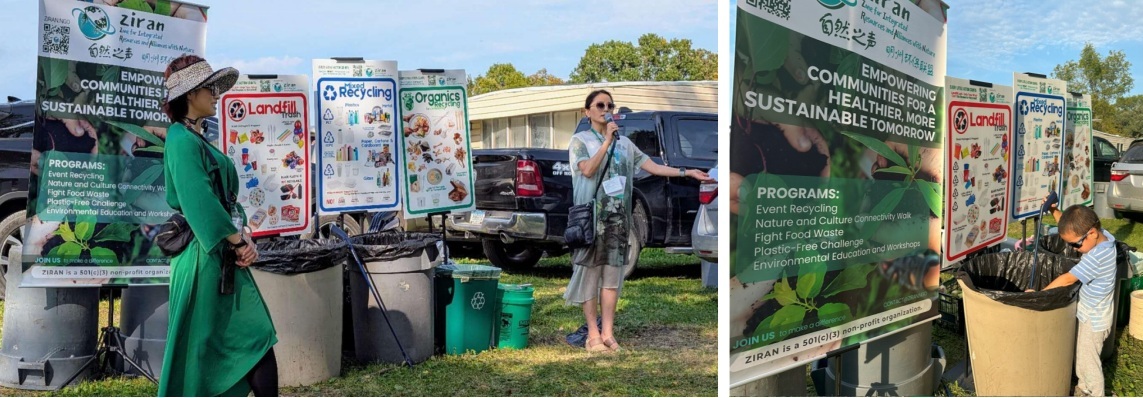
ZIRAN co-founders Jing and Dan Li had heard about the farm earlier at a Shandong Hometown Association gathering organized by Mr. Xu, and they were excited to finally visit. Arriving early, they set up a minimal waste station and put away scattered trash bins around the farm. Their experience had taught them that without guidance or signage, attendees would inevitably create more landfill waste than they intended.
Something critical is that when people mix too much non-recyclable waste into the recycling bin, the waste management company treats the ENTIRE bin as garbage and sends it to the landfill.
Thus, proper signage needs to be displayed to help attendees sort as much compostable materials correctly as possible and avoid contaminating their recycling materials.
Something important to Jing is educating the community on composting and other forms of organic waste recycling. People who take the time to recycle their organic waste can transform their scraps into nutrient-rich compost that can feed plants and gardens.
Organic waste recycling is also an important step toward reducing landfill waste, as approximately 25% of household trash is composed of organic materials. Finally, composting and other organic waste recycling prevents the release of methane that happens when food decomposes in landfills.
Methane is the primary component of natural gas and potent greenhouse gas. Accordingly, reducing the amount of food waste going to landfills not only helps keep our land cleaner but also helps combat climate change.
One such helper was Richard He, a leader from the West Metro Chinese Church (WMCC). WMCC started sorting their waste at all their gatherings, and within a year’s practice, they had become highly proficient.
Another helpful volunteer was a young boy who was just tall enough to peek over the bin. After learning that napkins and paper towels can be recycled as organic waste, he took a trash grabber and stationed himself by the bin, carefully fishing out misplaced tissues one by one. Though he struggled a little with the size of the tool, he remained determined. Working diligently, he successfully transferred every misplaced napkin or paper towel from the recycling and landfill to the organic waste bin. The boy was small in stature, but he embodied a great will to keep our earth clean.
Results Worth Celebrating
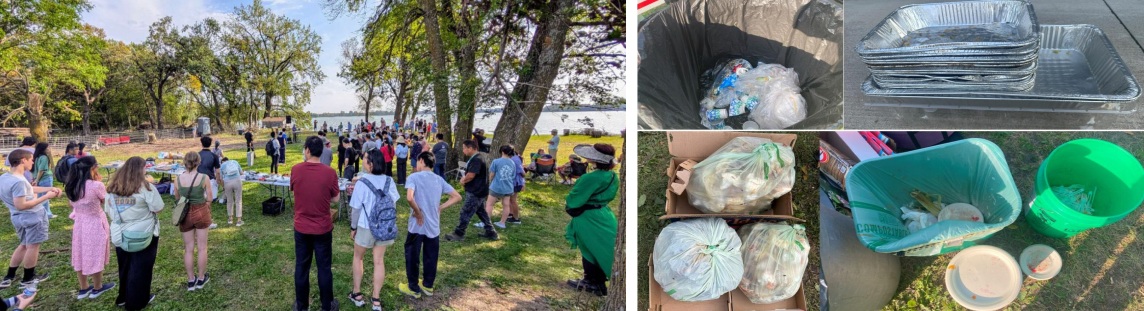
Thanks to everyone’s collective effort, this gathering of 200 people produced less than half a bin of landfill trash. Instead, the guests diverted the day’s waste into one bin of recyclables, three full bags of food scraps, and one bag of compostable plates, which were neatly stacked to save space. Additionally, compostable forks and chopsticks were separated to avoid tearing the bags, and aluminum pans were rinsed and stacked for recycling. Ultimately, the event achieved a waste diversion rate of over 70%.
Minimizing Waste and Maximizing Sustainability
Even more inspiring, Mr. Xu explained that there was no need to haul the organic food scraps to a distant commercial composting facility. They could be used directly to feed animals here. No food was wasted, and resources were returned to the land, fully embodying the key concept of recycling resources in permaculture.
At the close of the event, Grace Li shared her heartfelt thanks for everyone’s participation:
“We are so grateful to Mr. Xu for opening this beautiful farm to everyone! He has prepared for weeks for this event, day and night. Today’s special ‘Love and Nature’ gathering gave us a chance to escape the noisy city and enjoy a joyful autumn day in the peaceful countryside. Thanks also to every friend who helped keep the event clean. ‘Many hands make light work!’ Because of teamwork, we managed the waste quickly and effectively. We couldn’t have done it without you. We wish Mr. Xu’s farm continued growth and success!”
Looking into the Future
Instead of pursuing a commercial, single-crop model, Mr. Xu intends to continue to maximize the farm’s biodiversity. He hopes he can use his farm to spark children’s interest in nature, encouraging them to step away from screens and games.
Within the next few years, the farm’s many fruit varieties will grow and become more abundant, and they will cater to more people’s needs: 15 types of apples, 15 types of pears (including 8 Asian varieties), 10 peaches, 6 apricots, 6 plums, 10 grapes, 4 persimmons, 2 pawpaws, 4 kiwis, and numerous berries.
Part of the farm also operates as a registered nonprofit, Graceful Hands Ministry, to serve children with autism and patients battling cancer. Mr. Xu took advantage of this day of celebration to formally introduce the nonprofit to the public. To further the nonprofit’s goals, the farm will feature a Noah Petting Zoo and a Song of Songs Garden, as well as a diverse orchard and greenhouses that showcase all the plants mentioned in the Bible.
Ready, Set, Action!
In a landscape of negativity, why not join a movement bringing light? ZIRAN is community-oriented, and run by locals for the greater good of Minnesota, and ultimately, the world!
ZIRAN needs volunteers in a variety of roles, including internships and volunteer hours for interested high school and college students!
What better organization is there to be a difference with your time and contributions?
Contact Us
To learn more about ZIRAN, visit https://ziran.ngo/.
Would you like to volunteer? Email Jing Li: [email protected]